
Service Dominance
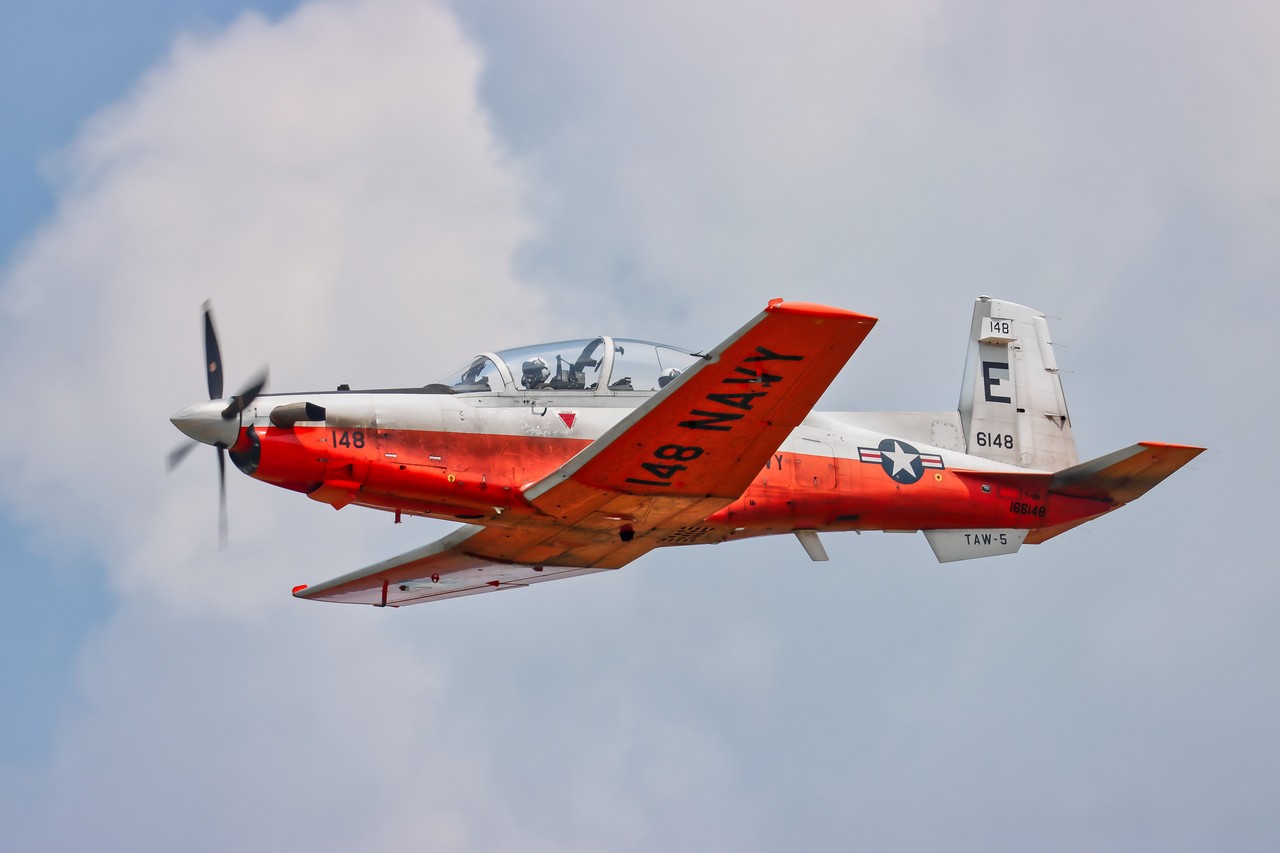
Since entering service in 2000, the T-6 Texan II has become the backbone of American military pilot training. The aircraft completely replaced the aging Cessna T-37B Tweet in Air Force service and the T-34C Turbo Mentor in Navy operations. Between 2000 and 2010, Raytheon delivered 452 T-6As to the Air Force and 328 to the Navy, establishing the type as the standard primary trainer for both services. International sales brought total production to approximately 1,217 aircraft worldwide, with operators including the Royal Thai Air Force, which placed orders worth over $300 million for 20 aircraft between 2020 and 2021.
Combat Evolution
The T-6 platform evolved beyond training with the development of the AT-6E Wolverine, an armed variant designed for light attack and close air support missions. In 2018, the Air Force tested two Wolverines at Davis-Monthan Air Force Base, Arizona, operating them with the 81st Fighter Squadron until 2022. The Wolverine received military type certification in July 2022 and was subsequently transferred to the United States Naval Test Pilot School for further evaluation. This combat variant demonstrates the versatility of the basic T-6 design for multiple mission profiles.
The Manufacturer Legacy
Raytheon Aircraft Company developed the T-6 Texan II in the late 1990s as their entry in the Joint Primary Aircraft Training System (JPATS) competition. The company based their design on the proven Swiss Pilatus PC-9, adapting it with American systems and manufacturing techniques. Raytheon later became Hawker Beechcraft before being acquired by Textron Aviation, which continues T-6 production today. This corporate evolution reflects the consolidation of the general aviation industry, with Textron now operating as one of the world's largest aircraft manufacturers.
Swiss Heritage, American Engineering
The T-6's design success stems from its Pilatus PC-9 ancestry, modified extensively by Beechcraft engineers. The aircraft features a cantilever low-wing design with retractable tricycle landing gear, pressurized cockpit, and advanced avionics package. Martin-Baker MK16LA zero/zero ejection seats provide safety for both instructor and student pilots, while an onboard oxygen-generating system supports high-altitude training missions. The integration of commercial-off-the-shelf (COTS) subsystems reduced development costs while maintaining military reliability standards.
Powerplant Excellence
The Pratt & Whitney Canada PT6A-68 turboprop engine delivers 1,100 shaft horsepower through a four-bladed constant-speed propeller measuring 97 inches in diameter. This powerplant choice proved exceptional, as the PT6A series ranks among the most reliable turboprop engines in aviation history. The engine enables the T-6 to reach cruise speeds of 320 mph, climb to service ceilings of 31,000 feet, and withstand G-forces ranging from +7.0 to -3.5 Gs during aerobatic training maneuvers.
Pilot's Machine
Pilots praise the T-6 Texan II for its forgiving handling characteristics and comprehensive training capabilities. The aircraft bridges the gap between basic flight training and advanced jet aircraft, preparing student pilots for the demanding world of military aviation. With a maximum takeoff weight of 6,500 pounds and fuel capacity of 149 imperial gallons, the T-6 provides a range of 1,035 miles for extended training missions. The digital cockpit familiarizes students with modern avionics while maintaining the fundamental stick-and-rudder skills essential for military flying.
Training Revolution
The $5.5 billion T-6 program transformed American military pilot training from Cold War-era methods to 21st-century standards. Moody Air Force Base received the first T-6As in May 2000, followed by Randolph Air Force Base later that year. The Navy began operations at Naval Air Station Pensacola in 2003, completing the transition for both services. This modernization ensured that American military pilots train on equipment matching the technological sophistication of front-line combat aircraft, maintaining the United States' competitive edge in military aviation training excellence.