
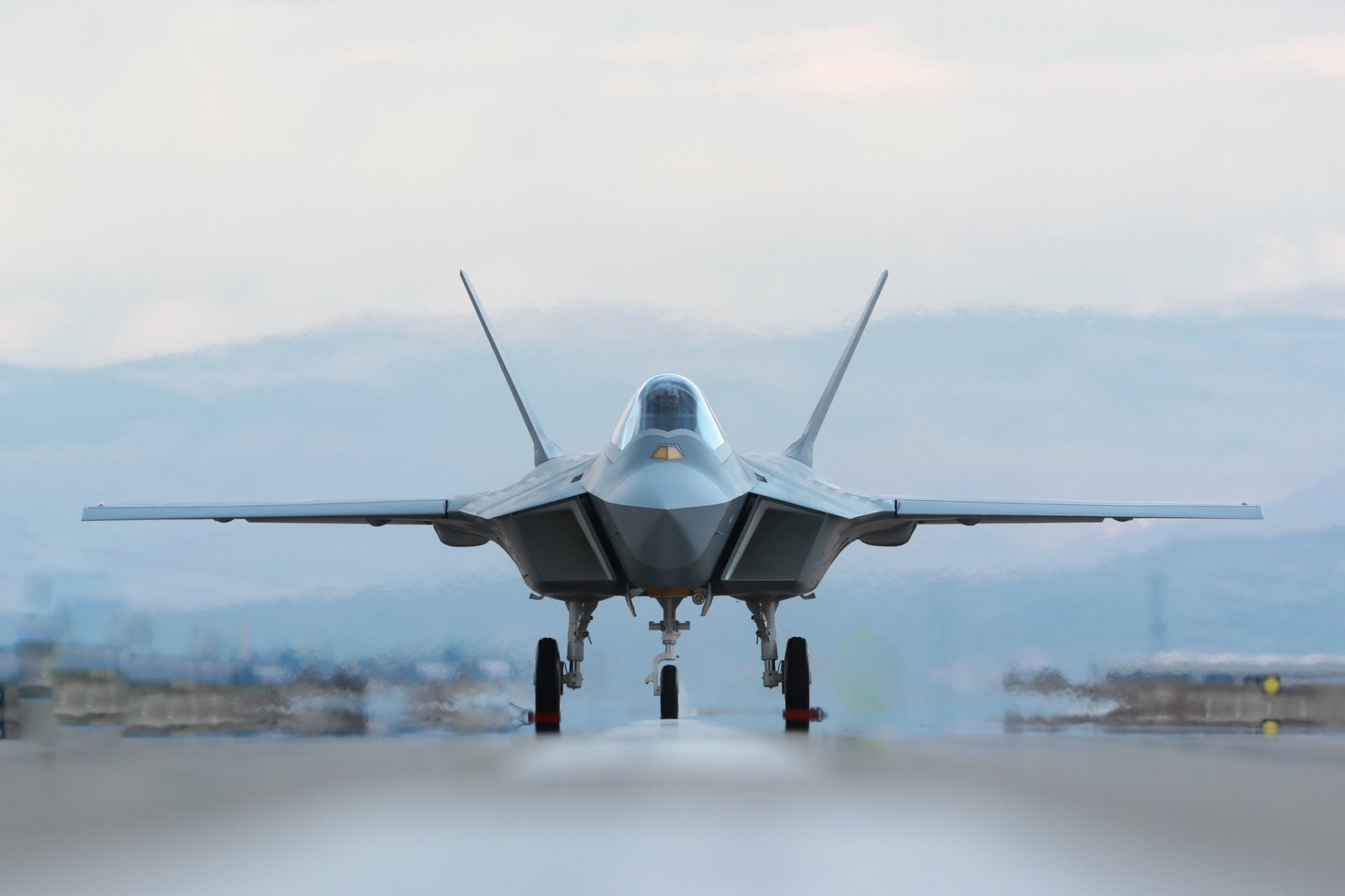
The TAI Kaan, originally designated as the TF-X or Milli Muharip Uçak (MMU), is a fifth-generation, twin-engine stealth fighter developed by Turkish Aerospace Industries (TAI). The program began in the early 2010s, with a concept design contract signed for approximately 20 million USD. The aircraft is designed to provide the Turkish Air Force with a multi-role air-superiority platform capable of both air-to-air and air-to-ground missions, eventually replacing the aging F-16 Fighting Falcon fleet starting in the 2030s.
Designed as a corporate effort by TAI in partnership with Aselsan for avionics and mission systems, the Kaan features low-observable shaping and internal weapon bays to reduce its radar cross-section. Its armament configuration includes two side bays for short-range missiles and a large central bay capable of holding up to four larger munitions, such as the MBDA Meteor. The aircraft is equipped with a domestic AESA radar, an electro-optical tracker, and a digital fly-by-wire system with a panoramic cockpit and helmet-mounted display (HMDS). TAI has also integrated artificial intelligence and neural networks into the architecture, including an "ANNA-3" system for controlling combat drones.
Technical specifications indicate a length of approximately 21 meters and a wingspan of 14 meters, with a maximum takeoff weight of 34,750 kg. The aircraft is projected to reach a maximum speed of Mach 1.8 and a service ceiling of 16,764 meters. While the design is oriented toward supercruise, this capability has not yet been formally demonstrated. Current prototypes are powered by U.S.-made General Electric F110-GE-129 low-bypass afterburning turbofans, though TAI intends to transition to indigenous TF35000 engines produced by TEI by 2032.
The Kaan performed its maiden flight on February 21, 2024, reaching an altitude of 8,000 feet and a speed of 230 knots over 13 minutes. A second test flight occurred on May 6, 2024. To date, three prototypes (P0, P1, and P2) have been developed. While serial production has not yet begun, the Turkish Air Force signed a contract in May 2026 for an initial batch of 20 Block 10 aircraft, with deliveries planned for 2028–2030. International interest is already evident, with Indonesia reporting a deal for 48 aircraft.