
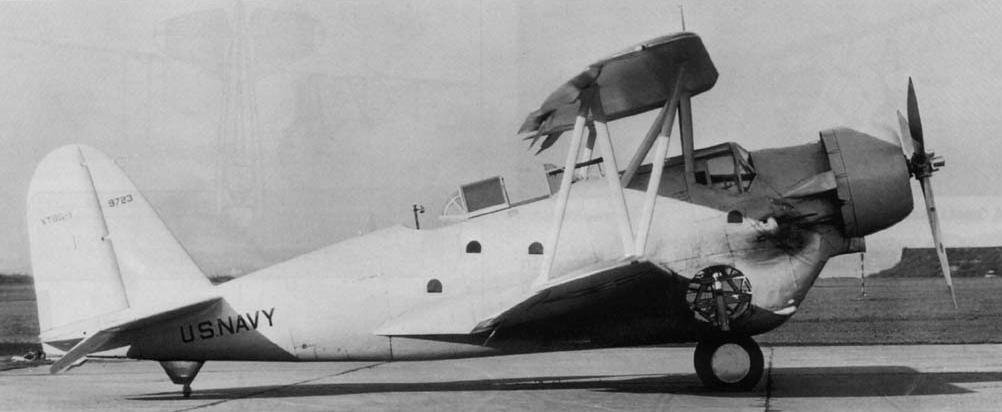
The Great Lakes XTBG-1 was a single-prototype torpedo bomber developed in the mid-1930s for the U.S. Navy. Designed as a carrier-capable aircraft, the XTBG-1 was intended to fulfill the Navy's requirements for a specialized strike aircraft. The project was characterized by a three-seat configuration and a biplane design, reflecting the aviation standards of the era. In terms of propulsion, the aircraft was associated with an 800 hp Pratt & Whitney XR-1830 engine, although the provided records do not explicitly confirm the final installation or flight status of this specific powerplant on the prototype.
The aircraft was manufactured in Cleveland, Ohio, by the Great Lakes Aircraft Company. This company had been established in October 1928 following the relocation of Glenn L. Martin's operations to Baltimore, with production officially commencing in January 1929. The XTBG-1 was one of the final efforts by the firm to secure a significant military contract. However, the aircraft underwent evaluation by the U.S. Navy around 1935 and was ultimately not accepted for production. The primary reason for this rejection was that the design failed to keep pace with the rapid technological advances occurring in aircraft development during the prewar period.
Because the XTBG-1 never entered production, its operational history is limited to its time as an evaluation prototype. There is no record of the aircraft entering operational service, being assigned to specific squadrons, or seeing combat deployment. Following the failure of the XTBG-1 to secure a production contract, the Great Lakes Aircraft Company ceased operations shortly thereafter; historical accounts vary slightly, noting the company's production ended in 1935 or that it faced bankruptcy in 1936. Today, the company is described as dormant. The XTBG-1 remains a historical footnote, illustrating the volatile nature of naval aircraft design in the 1930s, with no known surviving airframes or museum examples documented.