
Service History
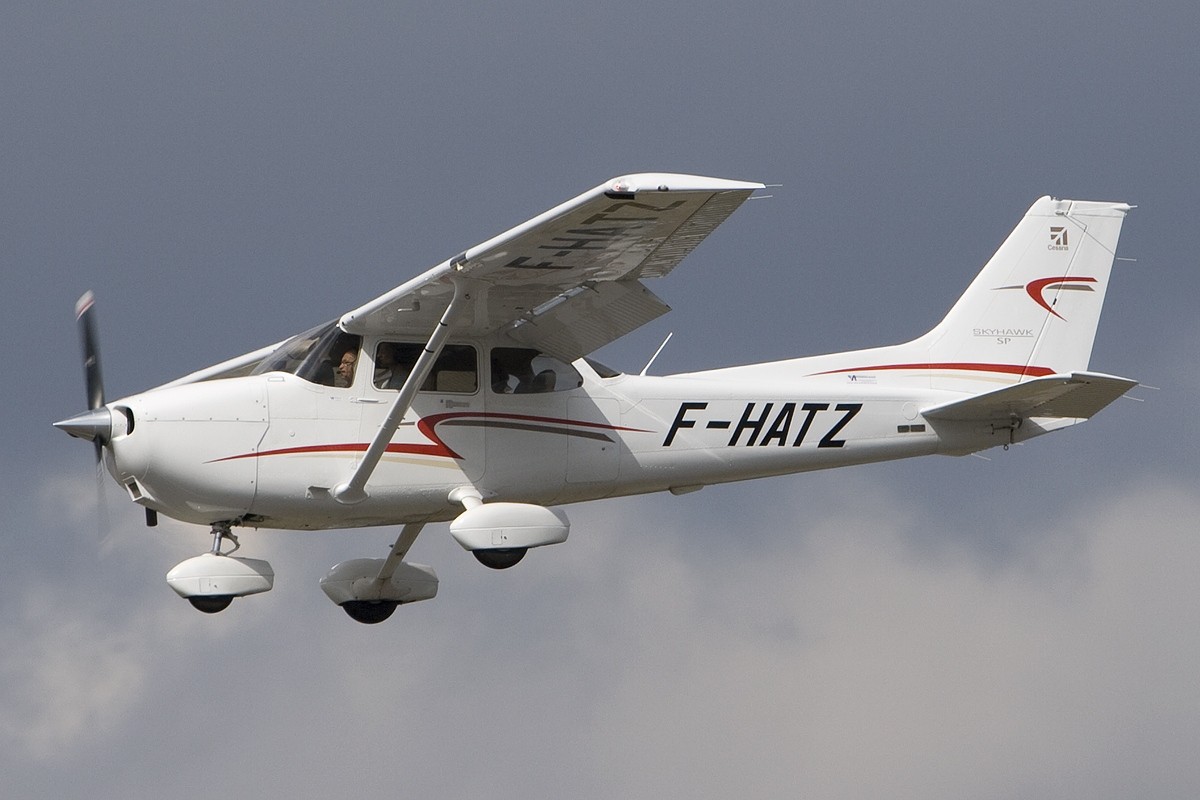
The Cessna 172S emerged in 1998 as the latest evolution of the world's most successful training aircraft, capturing the general aviation market with unprecedented dominance. Since its introduction, more than 2,000 units of the 172S variant alone have rolled off production lines, contributing to the overall 172 series total exceeding 44,000 aircraft. Flight schools worldwide have built their entire training programs around this aircraft, with the 172S serving as the backbone of pilot education from initial certification through commercial rating preparation.
The aircraft's influence extends far beyond training operations, with private owners, charter operators, and recreational pilots embracing its combination of forgiving flight characteristics and practical utility. The 172S variant specifically addressed market demands for improved performance and modern avionics, establishing itself as the definitive four-seat trainer for the 21st century.
Military Heritage
While the 172S itself serves primarily civilian roles, its lineage includes significant military contributions through earlier variants. The T-41A Mescalero, based on the 172F model, trained U.S. Air Force pilots throughout the Vietnam War era, with over 500 units delivered for primary flight training. The U.S. Army operated the T-41B variant, while various international air forces adopted T-41C and T-41D configurations for basic pilot instruction and light reconnaissance duties.
These military applications validated the 172's fundamental design philosophy of stable, predictable flight characteristics that build pilot confidence while maintaining safety margins essential for training operations.
The Manufacturer
Cessna Aircraft Company, founded by Clyde Cessna in Wichita, Kansas in 1927, survived the Great Depression by adapting to custom aircraft construction before emerging as a general aviation powerhouse. The company's fortunes intertwined dramatically with the 172 series, which became both its greatest success and source of significant challenges when product liability issues forced production suspension from 1986 to 1996.
General Dynamics acquired Cessna in 1985, followed by Textron's purchase in 1992. Under Textron's ownership, Cessna resumed 172 production in 1996, introducing the fuel-injected 172R before launching the improved 172S variant. Today, operating as Textron Aviation, the company continues manufacturing the 172S at its original Wichita facility, maintaining an unbroken connection to Clyde Cessna's original vision.
Engine & Technical Excellence
The 172S incorporates the 180-horsepower Lycoming IO-360-L2A engine, representing a significant advancement over earlier Continental O-300 and Lycoming O-320 powerplants used in previous variants. This fuel-injected engine, manufactured by Lycoming Engines (also a Textron division since 2010), delivers improved reliability, reduced maintenance requirements, and enhanced cold-weather starting compared to carbureted predecessors.
Lycoming's IO-360 series has powered millions of flight hours across decades of service, establishing an exceptional reputation for durability in training environments. The fuel injection system eliminates carburetor icing concerns while providing consistent fuel metering across varying flight attitudes, crucial advantages for student pilot operations.
Pilot Perspective
Pilots consistently praise the 172S for its docile handling characteristics and wide margins for error, making it ideal for building fundamental flying skills. The high-wing configuration provides inherent stability and excellent ground visibility, while the tricycle landing gear eliminates the directional control challenges associated with conventional tailwheel aircraft.
Performance specifications include a service ceiling of 14,000 feet, a climb rate of 730 feet per minute, and a range of 640 nautical miles with standard fuel capacity. The 126-knot maximum speed, while modest by contemporary standards, proves perfectly adequate for training missions and recreational flying. Students particularly benefit from the aircraft's predictable stall characteristics and gentle recovery requirements.
Production & Legacy
Continuous production since 1998 has established the 172S as a cornerstone of modern aviation training infrastructure. The variant's success stems from its integration of proven aerodynamic design with contemporary powerplant technology and modern avionics options, including glass cockpit configurations that prepare students for advanced aircraft transitions.
Thousands of 172S aircraft remain in active service worldwide, accumulating millions of flight hours annually across training schools, flying clubs, and private operations. Museums, including the Museum of Flying in Santa Monica, California, preserve earlier 172 variants as testament to the series' historical significance in democratizing flight training.
The aircraft's cultural impact extends beyond aviation circles, appearing in films, television productions, and serving as the archetypal "small airplane" in popular consciousness. This recognition reflects the 172's fundamental role in transforming flight training from an exclusive pursuit into an accessible pathway for aspiring pilots worldwide, a legacy the 172S continues to extend into the modern era.