
Service History
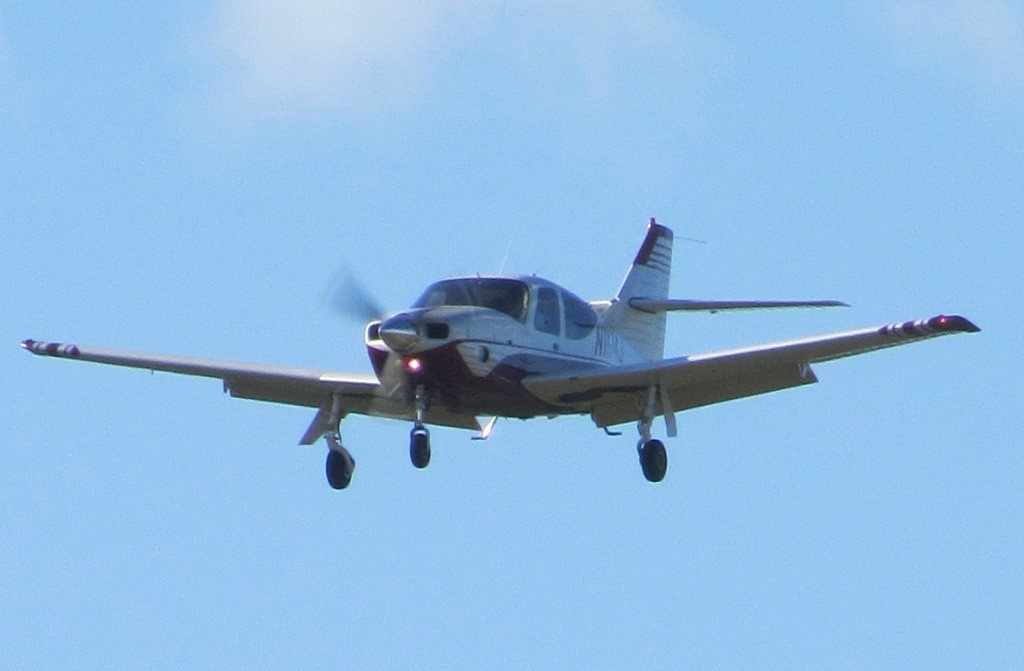
The Commander 112 entered the general aviation market in 1972 priced at $24,750 base, with typically equipped aircraft selling for approximately $36,750. During its eight-year production run under Rockwell International, the aircraft captured a respectable share of the premium four-seat retractable gear market, competing directly with Beechcraft's Bonanza and Piper's Cherokee Arrow. The 112's spacious cabin and modern design attracted private owners and business travelers seeking comfort and performance in cross-country travel.
The Manufacturer
North American Rockwell's Aero Commander Division developed the 112 as part of an ambitious late-1960s light aircraft program. The company had established credibility in general aviation through successful production of Twin Commander and Sabreliner business aircraft. In 1978, Rockwell International sold its General Aviation Division to Gulfstream Aerospace Corporation, which continued 112 production at reduced rates until 1980. The design rights subsequently passed through multiple ownership changes, with Commander Aircraft Corporation reviving production from 1992 to 2002, manufacturing an additional 200 units before permanently ceasing operations.
Engine & Technical Details
The production Commander 112 utilized Lycoming's proven IO-360 four-cylinder, horizontally-opposed engine rated at 200 horsepower. This air-cooled powerplant, manufactured by Avco Corporation's Lycoming division, represented one of general aviation's most reliable engine families. The turbocharged 112TC variant, introduced in 1976, featured the TO-360-C1A6D engine producing 210 horsepower, enabling operations at altitudes up to 20,000 feet. The aircraft required a single pilot and accommodated three passengers in its spacious four-seat cabin.
Development Challenges
Rockwell's initial development program included two prototypes: the fixed-gear Commander 111 priced at $15,995 and the retractable-gear 112 at $19,995. The company focused exclusively on the 112, believing retractable gear would better appeal to target customers. Early flight testing revealed structural deficiencies when one prototype experienced tail section failure, forcing engineers to redesign the empennage and delaying certification. Additionally, early production aircraft suffered from poorly fitting fiberglass composite doors that leaked significantly, prompting Rockwell to switch to aluminum doors that resolved both water intrusion and cabin noise issues.
Performance Characteristics
The Commander 112 delivered respectable performance for its class, with the standard model achieving cruise speeds competitive with contemporary retractable-gear singles. The turbocharged 112TC variant excelled at high-altitude operations, maintaining 160-knot cruise speeds at 20,000 feet where naturally aspirated competitors lost significant power. Maximum takeoff weights varied by model: 2,750 pounds for the base 112, 2,800 pounds for the 112B, and 2,850 pounds for the 112TC. The 112B offered approximately 1,000 pounds useful load, providing practical payload capacity for four occupants and baggage.
Production Legacy
Rockwell manufactured approximately 600 Commander 112 aircraft across five variants during the original production run. The breakdown included 364 Commander 112A models (1974-1976), 46 Commander 112B aircraft (1976-1979), 108 turbocharged 112TC variants (1976-1980), and 160 112TCA Alpine Commander models (1978-1980). Combined with the 200 additional aircraft produced during Commander Aircraft Corporation's 1990s revival, total production exceeded 800 units. While never achieving the market dominance of competitors like the Bonanza, the Commander 112 established itself as a comfortable, well-built alternative that emphasized cabin space and structural integrity over ultimate performance. Today, many examples remain active in the general aviation fleet, testament to the aircraft's solid engineering and enduring appeal among pilots who value comfort and reliability in cross-country travel.