
Dominance in Flight Training
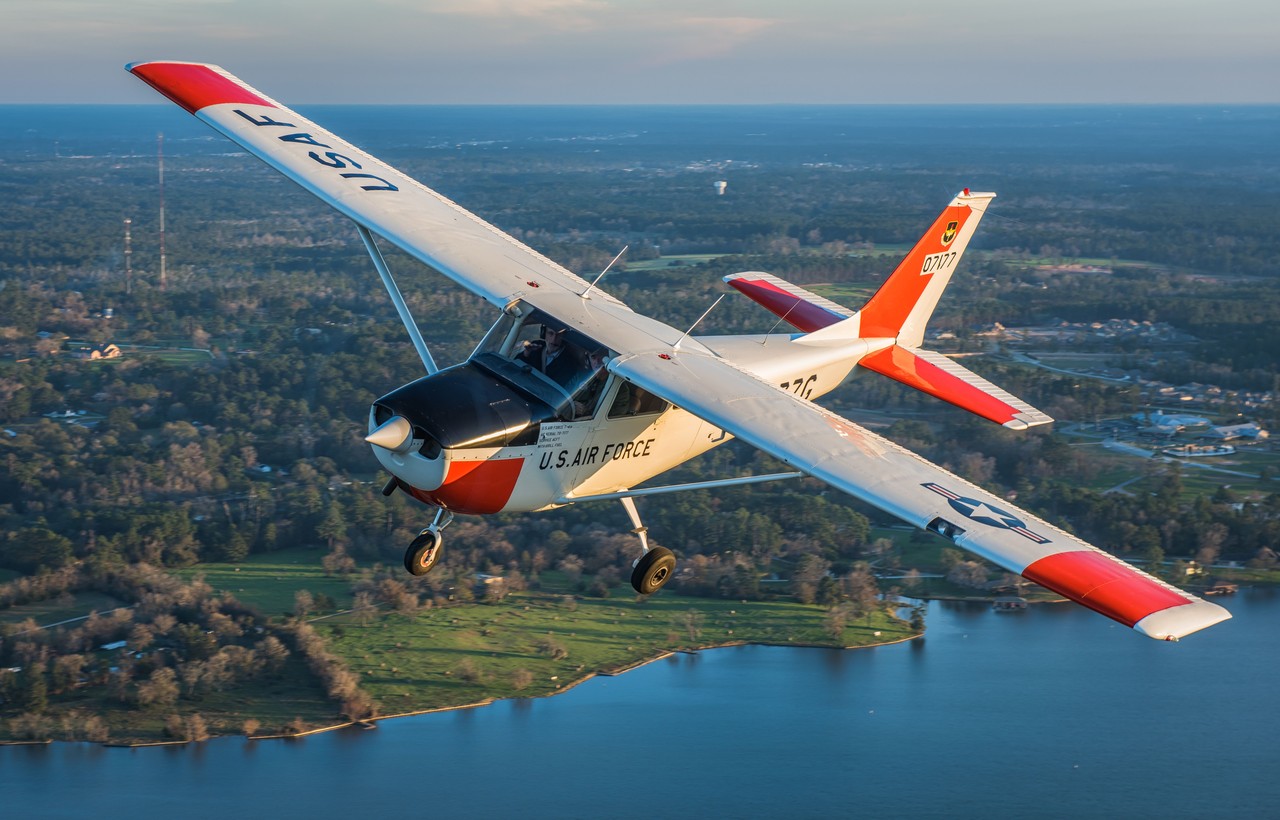
The Cessna 172's impact on aviation training cannot be overstated. Within its first full production year of 1956, Cessna delivered over 1,400 units, establishing the aircraft as an instant commercial success. The tricycle landing gear configuration, derived from the tail-wheel Cessna 170, revolutionized flight training by dramatically reducing ground handling accidents and making the aircraft accessible to novice pilots. Today, well over 20,000 of the original 35,773 aircraft built during the first production run remain active in the United States fleet.
Production Marathon
Cessna's production of the 172 represents an unprecedented manufacturing achievement in aviation. The aircraft maintained continuous production from 1956 to 1986, spanning 31 years before a ten-year hiatus caused by product liability costs. Production resumed in 1996 and continues today, making the design operational for over 70 years. The most prolific variant was the 172K model, produced from 1972 to 1976, with approximately 5,000 units manufactured. The current 172S variant, introduced in 1998, has exceeded 2,000 units and features modern Garmin G1000 glass cockpit technology standard since 2005.
The Manufacturer's Legacy
Cessna Aircraft Company, founded in 1927, became synonymous with general aviation through designs like the 172. The company joined Textron Aviation in 1992, ensuring continued production capabilities. Cessna's decision to base the 172 on the existing 170 design proved strategically brilliant, saving certification time and costs while creating an aircraft that would define training aviation. The French subsidiary Reims Cessna manufactured the 172F model from 1965 to 1971, demonstrating international demand for the design.
Engine Evolution
The 172's engine progression reflects advancing aviation technology. Early models from 1956 to 1959 used the Continental O-300 producing 145 horsepower. Cessna transitioned to Lycoming engines with the 172K in 1972, installing the O-320-E2D developing 150 horsepower. The 172R marked a significant milestone in 1997 as Cessna's first full commitment to fuel-injected engines in the 172 line, using the Lycoming IO-360-L2A. The current 172S employs the same fuel-injected engine but tuned to 180 horsepower, providing improved altitude performance and reliability.
Pilot's Perspective
Pilots consistently praise the 172 for its forgiving flight characteristics and predictable handling. The aircraft cruises at 126 knots with a maximum speed of 139 knots and operates comfortably up to its service ceiling of over 13,000 feet. With a useful load of 1,340 pounds, the four-seat configuration accommodates training missions and personal transportation equally well. The high-wing design provides excellent ground visibility and inherent stability, making it ideal for students learning fundamental flying skills.
Record-Breaking Achievement
The 172 achieved legendary status in 1958 when pilots Robert Timm and John Cook established the Flight Endurance World Record. Their modified Cessna 172 remained airborne for 64 days, 22 hours, 19 minutes, and 5 seconds, a record that stands today. This achievement demonstrated the aircraft's reliability and structural integrity under extreme conditions.
Economic Impact and Accessibility
Pricing strategy contributed significantly to the 172's success. The 1956 model cost $8,295, while the enhanced 1966 Skyhawk version sold for $13,300. This affordability, combined with low operating costs, made aircraft ownership accessible to private individuals and flight schools. Today's used 172s average $66,000, maintaining their position as entry-level aircraft for aspiring pilots.
Modern Legacy
The 172's continued production in an era of composite aircraft and advanced avionics testifies to its enduring design principles. Flight schools worldwide still rely on the type for primary training, while private owners appreciate its simplicity and proven reliability. The fact that Cessna successfully reintroduced production after a decade-long hiatus demonstrates sustained market demand for traditional, dependable aircraft design over flashier alternatives.