
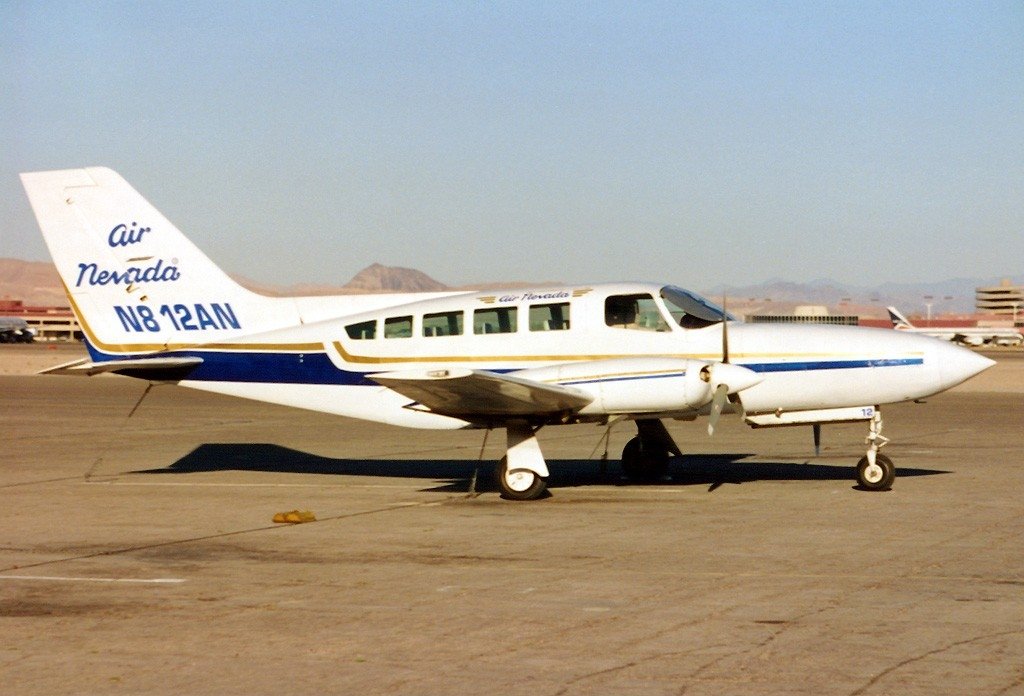
Design Genesis and Early Development
The Cessna 402 emerged as Cessna's solution to the notorious problems plaguing their earlier 411 model, which suffered from severe engine-out handling characteristics and unreliable geared powerplants. Engineers at Cessna Aircraft Company set out to create an aircraft specifically designed for commuter operations and cargo hauling, prioritizing operational economy over speed or aesthetic appeal. The original 402 received FAA certification in January 1969, establishing the foundation for what would become one of general aviation's most produced twin-engine aircraft.
Evolution Through Four Major Variants
Cessna continuously refined the 402 throughout its production life, creating four distinct variants that progressively improved performance and capability. The original 402 gave way to the 402A in 1969, which featured a lengthened nose containing a baggage compartment and an optional crew entry door. The 402B, introduced in 1972, represented a significant redesign with increased cabin volume and five distinctive square windows on each side, distinguishing it from the similar Cessna 401's three large and one small round window configuration.
The most substantial improvement came with the 402C in 1979, featuring Continental TSIO-520-VB engines producing 325 horsepower each—a 25-horsepower increase over previous variants. This final iteration achieved a remarkable 3,100-foot improvement in single-engine service ceiling to 14,800 feet, while maintaining a climb rate of 301 feet per minute with a gradient of 173 feet per nautical mile. Despite weighing 300 pounds more than its predecessor, the 402C's enhanced powerplants delivered significantly improved performance characteristics.
Commercial Success and Market Penetration
The 402's versatility proved instrumental to its commercial success, with Cessna marketing two primary configurations to maximize market appeal. The Utiliner version targeted commuter airlines with a 10-seat interior arrangement, while the Businessliner variant appealed to corporate operators with executive seating for 6-8 passengers. Both configurations featured completely removable seating, allowing operators to convert the aircraft to an all-cargo configuration as operational needs demanded.
This flexibility helped Cessna achieve remarkable sales figures, with more than 1,900 units of the 402 alone finding buyers during the production run. When combined with the related 401 series, total sales approached 2,500 aircraft, demonstrating the market's appetite for economical twin-engine operations. The aircraft's design philosophy of prioritizing utility over performance resonated with operators seeking reliable, cost-effective transportation solutions.
Technical Specifications and Performance
While never renowned for speed relative to its installed horsepower, the 402 delivered the reliability and economy that operators demanded. The aircraft's twin Continental turbocharged engines provided sufficient power for its intended missions, with the later TSIO-520-VB powerplants offering improved time-between-overhaul intervals of 1,600 hours—a 200-hour increase over earlier engines. The 402C could achieve a service ceiling of 14,800 feet and maintained respectable takeoff and landing distances of 2,195 feet and 2,484 feet respectively.
Operational range reached 1,273 nautical miles, providing adequate capability for typical commuter and business aviation missions. The aircraft's unpressurized cabin limited high-altitude operations but simplified maintenance requirements and reduced operating costs—key considerations for the 402's target market segments.
Cessna Aircraft Company Legacy
Cessna Aircraft Company developed the 400 series as part of a comprehensive twin-engine lineup that extended from the 401 through the turboprop-powered 441 Conquest. During the 402's production years, Cessna concentrated heavily on general aviation manufacturing, establishing itself as a dominant force in the twin-engine piston market. However, changing market conditions and economics eventually forced the company to abandon propeller twins entirely, shifting focus to jet-powered aircraft.
Production Decline and Legacy
The 402's production story concluded in 1985, victim to the broader general aviation industry collapse of the 1980s. Product liability costs, economic recession, and an oversupply of slow-selling aircraft combined to make continued production untenable. By this time, Cessna had manufactured 2,953 total aircraft across all variants: 322 original 402s, 125 402As, 1,384 402Bs, and 1,022 402Cs.
The 402's design influence extended beyond its own production numbers, establishing engineering solutions and operational concepts that influenced subsequent Cessna designs. Its emphasis on operational flexibility, maintenance simplicity, and economic operation became hallmarks of successful general aviation aircraft design. Today, many 402s continue serving in commuter, cargo, and private operations worldwide, testament to the fundamental soundness of Cessna's original design concept and the aircraft's enduring utility in diverse operational environments.