
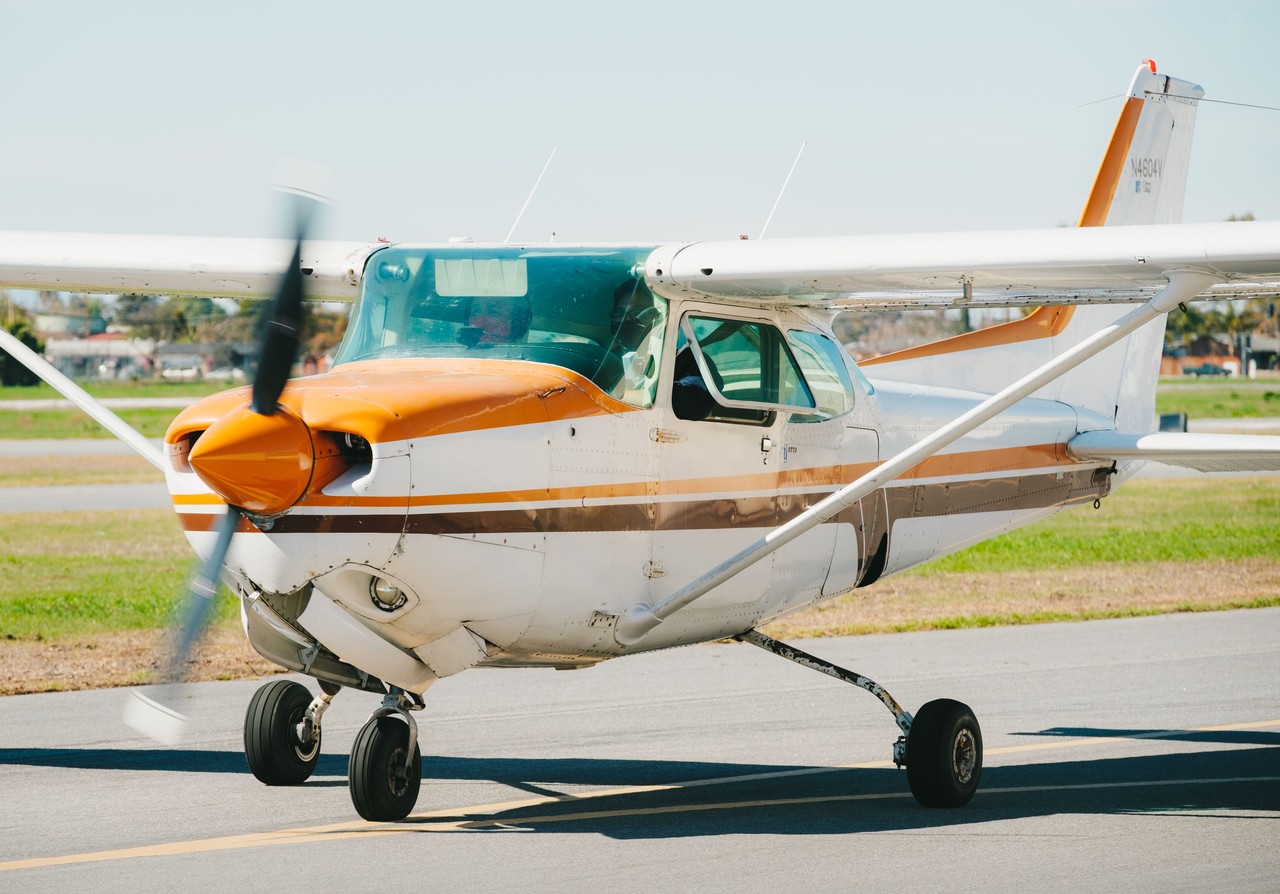
Service History
The 172RG filled a crucial niche in flight training during the early 1980s, providing flight schools with an economical path to complex aircraft endorsements required for commercial pilot certificates. Unlike expensive twin-engine aircraft traditionally used for this training, the 172RG offered retractable landing gear and constant-speed propeller experience at a fraction of the operating cost. Flight schools across the United States adopted the type specifically for students transitioning from basic trainers to more sophisticated aircraft.
The Manufacturer
Cessna Aircraft Company, founded in 1927 by Clyde Cessna in Wichita, Kansas, had already established dominance in the light aircraft market by the time the 172RG entered production. The company's standard Cessna 172 had become the world's best-selling light aircraft, with over 44,000 Skyhawks produced by 2015. Cessna operated continuously through various ownership changes, including acquisition by General Dynamics in 1986 and later by Textron in 1992. The company suspended light aircraft production from 1986 to 1996 due to product liability costs before resuming operations under the General Aviation Revitalization Act. Today, Cessna continues as Textron Aviation.
Engine & Technical Details
The 172RG was powered by a Lycoming O-360-F1A6 engine, a carbureted four-cylinder horizontally-opposed powerplant producing 180 horsepower. This engine, manufactured by Lycoming Engines (a Textron division), provided significantly more power than the 160-horsepower engines found in contemporary fixed-gear 172 models. The retractable landing gear system, combined with the constant-speed propeller, allowed the aircraft to achieve cruise speeds of 140 knots compared to 122 knots for the fixed-gear 172N.
Interestingly, Cessna certified the 172RG under the Cessna 175 type certificate rather than the standard 172 certification, reflecting the substantial modifications required for the retractable gear system. The aircraft maintained the familiar high-wing configuration that made the 172 series popular among flight schools, while adding the complexity needed for advanced training.
Pilot Perspective
Pilots appreciated the 172RG's forgiving handling characteristics inherited from the standard 172, combined with the operational complexity required for commercial pilot training. The retractable gear system provided students with essential experience in pre-landing checklists and gear management without the intimidation factor of twin-engine aircraft. With a fuel capacity of 66 gallons and fuel burn of 9-10 gallons per hour, the aircraft offered reasonable operating economics for flight training operations.
The useful load of approximately 627 pounds after full fuel allowed for practical training scenarios with instructor and student aboard, along with necessary equipment. However, the 18-knot speed improvement over fixed-gear variants proved modest considering the significantly higher acquisition and maintenance costs.
Production & Legacy
Cessna manufactured exactly 1,191 units of the 172RG between 1980 and 1985, with 1,177 built through 1984 and the remainder completed in the final production year. The aircraft carried a premium of approximately $19,000 over standard 172 models, limiting its appeal in the personal aircraft market. The timing proved unfortunate, as the general aviation recession of the early 1980s severely impacted sales of all light aircraft.
Despite its brief production run, the 172RG succeeded in its intended role as a training aircraft. The type provided thousands of pilots with their first experience in complex aircraft operations, serving as a stepping stone to more advanced equipment. Production ended in 1985 as Cessna faced mounting product liability concerns that would eventually force the company to suspend light aircraft manufacturing entirely.
Hundreds of 172RG aircraft remain active today, primarily in flight training roles and personal ownership. The type's reliability and relatively simple systems have contributed to strong survival rates, with many examples accumulating 4,000 to 5,000 total flight hours while remaining airworthy. The aircraft's legacy lies not in revolutionary design or record-breaking performance, but in its practical contribution to pilot training during a challenging period for general aviation.
The 172RG represents a unique chapter in the broader Cessna 172 story, demonstrating how manufacturers adapted proven designs to meet specific market needs. While never achieving the massive production numbers of its fixed-gear siblings, the Cutlass RG fulfilled its mission as an accessible complex trainer, helping maintain the flow of qualified commercial pilots during the 1980s aviation industry transition.