
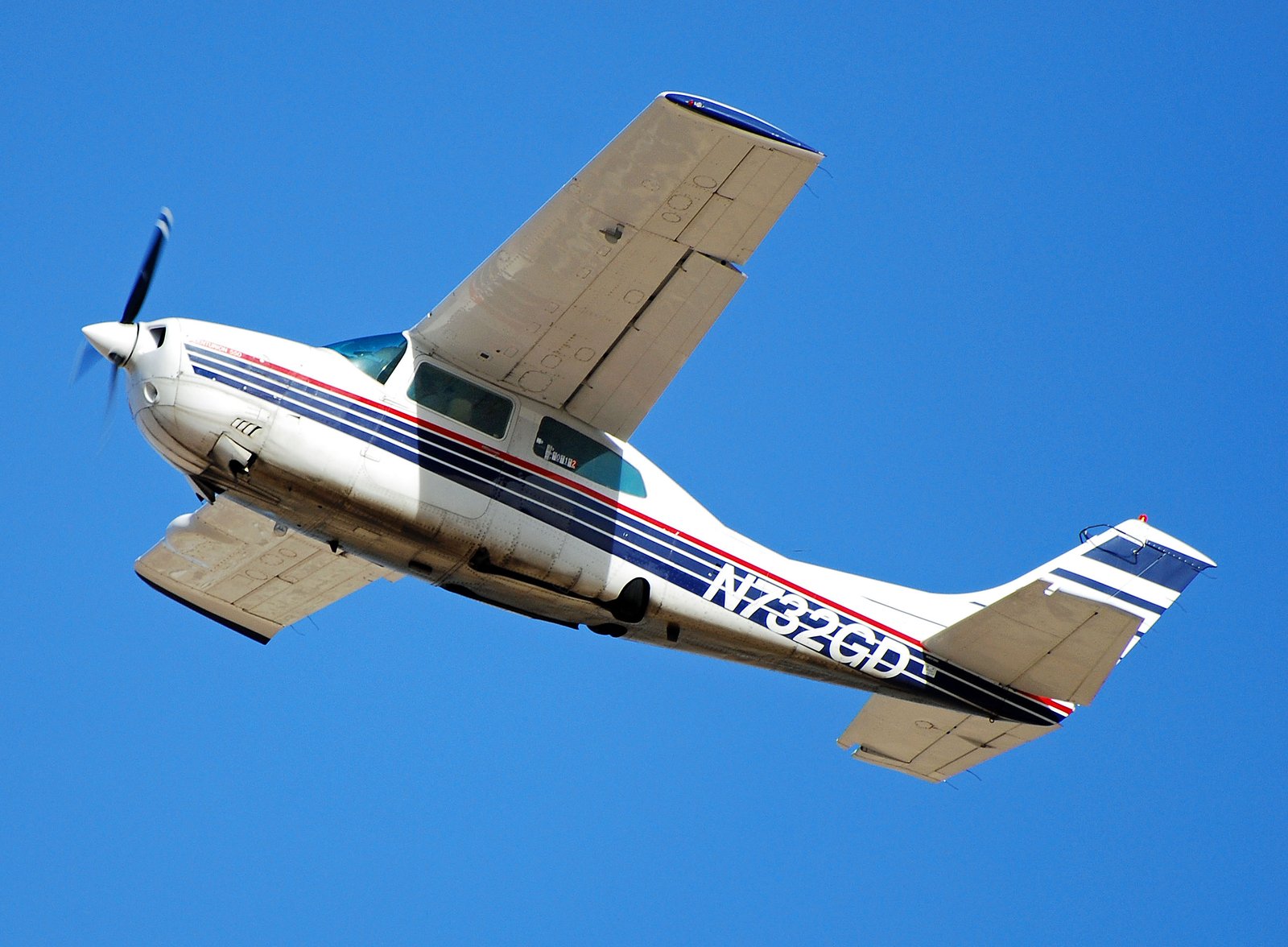
Market Success and Production
The P210 achieved remarkable commercial success from its introduction, with Cessna delivering nearly 400 aircraft in just the first two years of production between 1978 and 1980. The primary P210N variant became one of Cessna's most popular models, accumulating over 800 sales during its seven-year production run from 1978 to 1985. A total of 834 P210N aircraft rolled off the production line before Cessna introduced the refined P210R variant in 1986, though only 40 of these final-year models were completed before the company discontinued all piston aircraft production.
Engineering Heritage and Innovation
While marketed as a technological breakthrough, the P210 was fundamentally an evolution of the proven Cessna 210 Centurion airframe, which had first flown in January 1957. Cessna had originally developed the 210 series over four years to compete directly with the Beechcraft Bonanza while bridging the performance gap between their fixed-gear Model 182 and twin-engine Model 310. The pressurization system adapted from the company's P-Skymaster represented the primary innovation, transforming the vintage 1960s airframe into what Cessna called "a daring technological leap."
The P210 earned distinction as one of the first single-engine aircraft certified for known ice operations, a significant operational advantage that expanded its utility beyond fair-weather flying. This certification, shared with the turbocharged 210N, positioned the aircraft for serious business and personal transportation roles previously dominated by twin-engine aircraft.
Powerplant Evolution and Challenges
Two distinct Continental engines powered the P210 variants throughout production. The P210N utilized the TSIO-520-AF, a six-cylinder turbocharged and fuel-injected engine producing 310 horsepower for takeoff and 285 horsepower continuously. The later P210R received the upgraded TSIO-520-CE engine, generating 325 horsepower and featuring a standard intercooler for improved performance and engine longevity.
Severe engine reliability problems plagued the early P210 fleet, creating significant challenges for both Cessna and operators. In 1980, two P210 crashes resulted from engine failures caused by detonation, prompting the FAA to issue emergency Airworthiness Directives requiring extra-rich fuel mixtures to cool the engines. This emergency measure reduced performance while increasing fuel consumption, undermining the aircraft's efficiency advantages.
Recognizing the severity of the situation, Cessna announced a comprehensive mandatory retrofit program in May 1981, installing new turbochargers at no cost to owners. However, this retrofit reportedly diminished high-altitude performance, creating ongoing operational compromises for affected aircraft.
Manufacturing Legacy
Cessna Aircraft Company, founded in 1927, had established itself as one of the world's largest aircraft manufacturers by the time P210 production commenced. The company operated through various ownership changes, ultimately becoming part of Textron Aviation following Textron's 1992 acquisition. When Cessna discontinued all piston aircraft production in 1986, the P210 line ended permanently, as the company chose not to resume Centurion production when piston manufacturing later restarted.
The P210R incorporated several refinements over its predecessor, including longer-span stabilizers with a three-foot-wider horizontal stabilizer and increased takeoff weight capability. These final production aircraft, along with the contemporaneous T210R turbocharged variant, became among the rarest and most expensive Centurion models due to their limited 1986 production run.
Operational Characteristics
The P210N carried a gross weight of 4,000 pounds, representing a 200-pound increase over the unpressurized 210N variant. The pressurized cabin featured four windows on each side, providing excellent visibility for occupants while maintaining structural integrity for cabin pressurization. The high-wing configuration with retractable landing gear offered familiar Cessna handling characteristics combined with the operational flexibility of pressurized flight.
Historical Significance
Within the broader context of the Cessna 210 family, which accumulated over 9,240 total deliveries across nearly three decades until 1986, the P210 variants represented a significant technological milestone. As one of the first pressurized single-engine aircraft to achieve commercial success, the P210 demonstrated substantial market demand for high-altitude single-engine capability in business and personal aviation.
The aircraft's legacy extends beyond its production numbers, establishing precedent for pressurized single-engine design that influenced subsequent general aviation development. Despite engine-related challenges that affected early operations, the P210 proved that single-engine pressurized aircraft could successfully compete with twin-engine alternatives in specific market segments, paving the way for future innovations in high-performance single-engine aviation.