
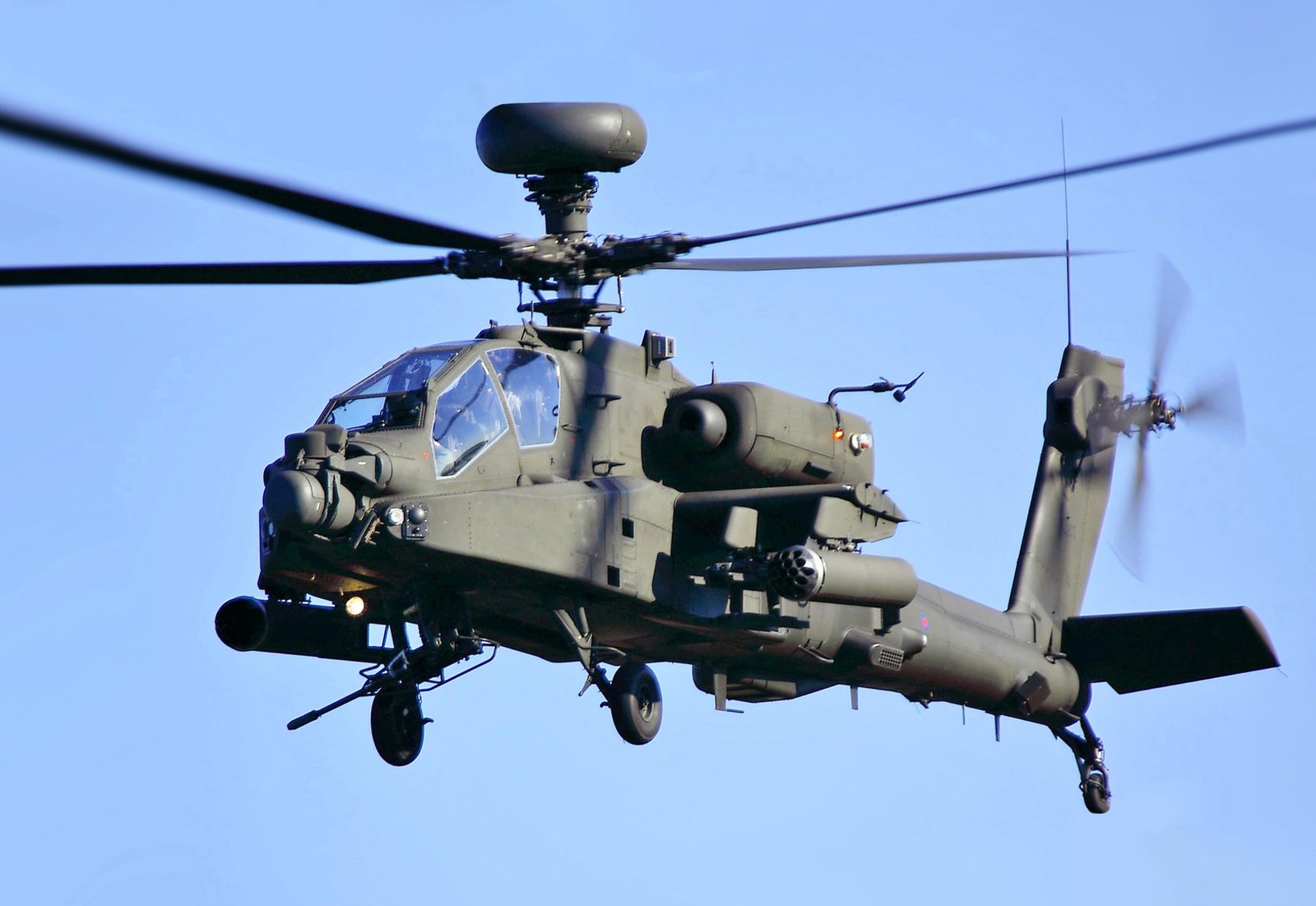
The Apache AH1, originally designated as the WAH-64, is the British license-built version of the AH-64D Apache Longbow. Developed to meet the specific requirements of the British Army Air Corps, the aircraft served as a primary asset for armed reconnaissance and close air support. The program was officially selected in July 1995, leading to a contract for 67 helicopters signed in 1996. Production began with eight aircraft manufactured by Boeing in the United States, while the remaining 59 were assembled by Westland Helicopters at their facility in Yeovil, Somerset, England, using kits supplied by Boeing.
Technically, the AH1 differs from the standard American Apache through several key modifications. It is powered by two Rolls-Royce Turbomeca RTM322 turboshaft engines, each producing 1,566 kW (2,100 hp). The aircraft also features a specialized electronic defensive aids suite and a folding blade mechanism designed specifically for shipboard operations. This maritime capability was a unique aspect of the British fleet, formally demonstrated through certification aboard HMS Ocean in December 2005.
Operational deployment began when the first aircraft entered service in January 2001. The program reached initial operating capability in October 2004, with the final helicopter delivered in July 2004 and the first regiment becoming fully operational by May 2005. In combat, the AH1 was deployed to Afghanistan in 2006 and played a role in the 2011 NATO intervention in Libya, where it operated from Royal Navy ships. The aircraft's armament includes the M230 Chain Gun, Hellfire missiles, and CRV7 rockets, with trials conducted for Starstreak and Stinger systems.
Performance specifications for the AH1 include a maximum takeoff weight of 9,525 kg and a cruise speed of 259 km/h. It is capable of reaching a maximum speed of 293 km/h and a never-exceed speed of 365 km/h, with a total operational range of 475 km. The aircraft is crewed by two personnel and features a rotor diameter of 14.6 meters.