
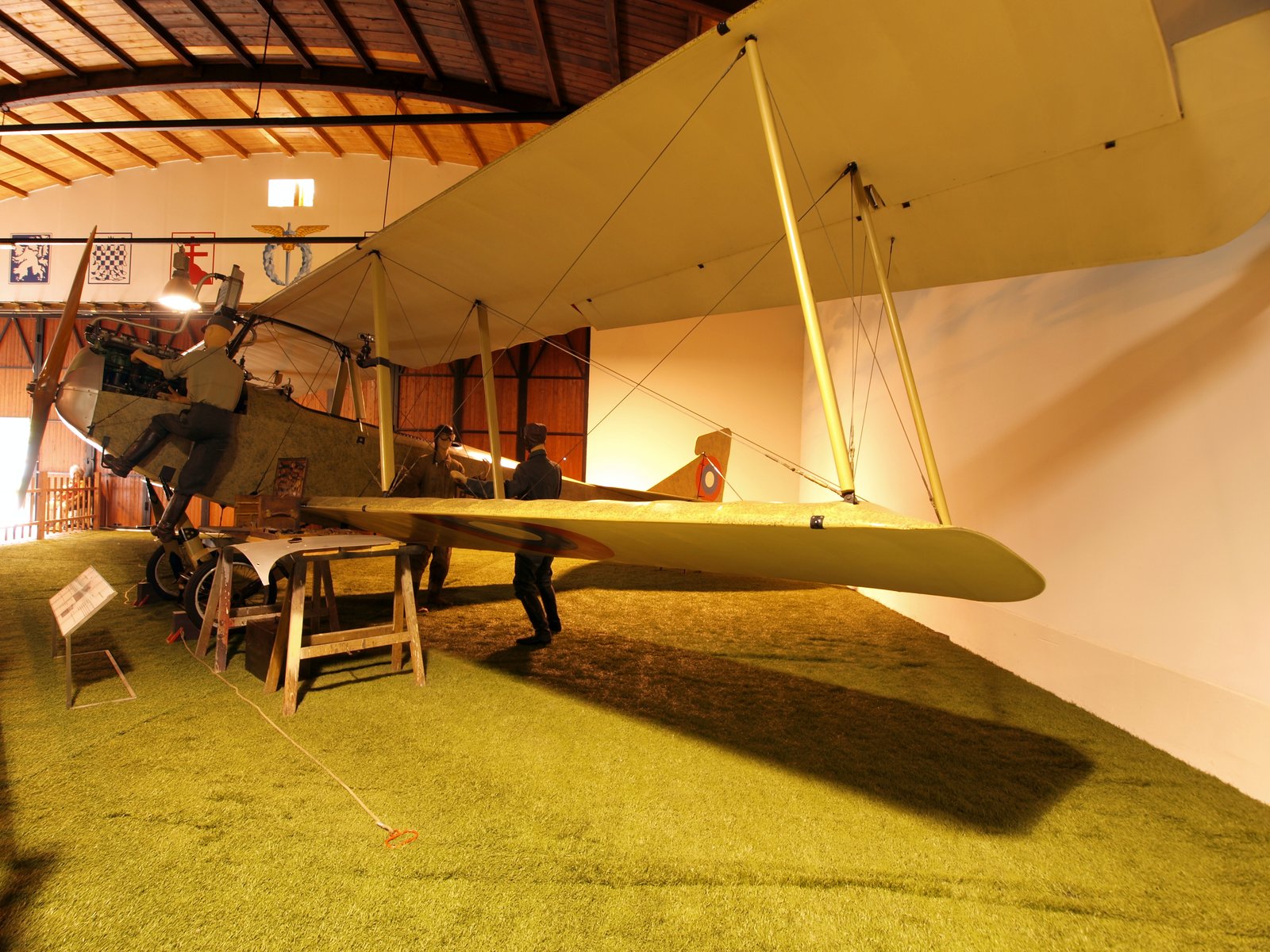
The Aero A.14 Brandenburg was a Czechoslovak two-seat biplane reconnaissance aircraft developed in the early 1920s. The design was essentially a slightly modified version of the Hansa-Brandenburg C.I, a reconnaissance and utility aircraft from the First World War. While the original parent design was created by Ernst Heinkel, the specific lead engineer responsible for the A.14 derivative produced by Aero is not documented. The aircraft entered production in 1922, though it was already considered obsolete by that time due to the rapid evolution of post-war aviation technology.
Manufactured by Aero, a company founded in 1919 that later became AERO Vodochody AEROSPACE a.s., the A.14 was powered by a Hiero N liquid-cooled inline piston engine. A closely related variant, the A.15, was nearly identical but utilized a Hiero L engine instead. The A.15 variant was delivered between March and August 1923. In terms of performance, the A.14 reached a maximum speed of 179 km/h and a cruise speed of 150 km/h, with a service ceiling of 4,900 meters and a range of 425 km. Its climb performance allowed it to reach 1,000 meters in 4 minutes and 45 seconds.
In military service, the A.14 was operated by the Czechoslovak Air Force as a front-line reconnaissance aircraft. However, due to an urgent requirement for pilots, many were used as trainers without their intended armament. The A.15 variant saw broader utility in frontline units for bombing, artillery direction, reconnaissance, and intermediate training.
Beyond its military utility, the A.14 played a critical role in the establishment of Czechoslovak civil aviation. The Czechoslovak Air Force used the aircraft to survey the initial routes for the national airline, ČSA (Československé státní aerolínie). At least 17 A.14 aircraft were employed as mail planes on the Prague–Bratislava route, with the capacity to carry one passenger. During 1924 and 1925, the A.14 was the primary aircraft for ČSA, accounting for over 90% of the airline's total flights. Despite its operational importance, no surviving airframes are documented in current museum collections.