
The Designer's Vision
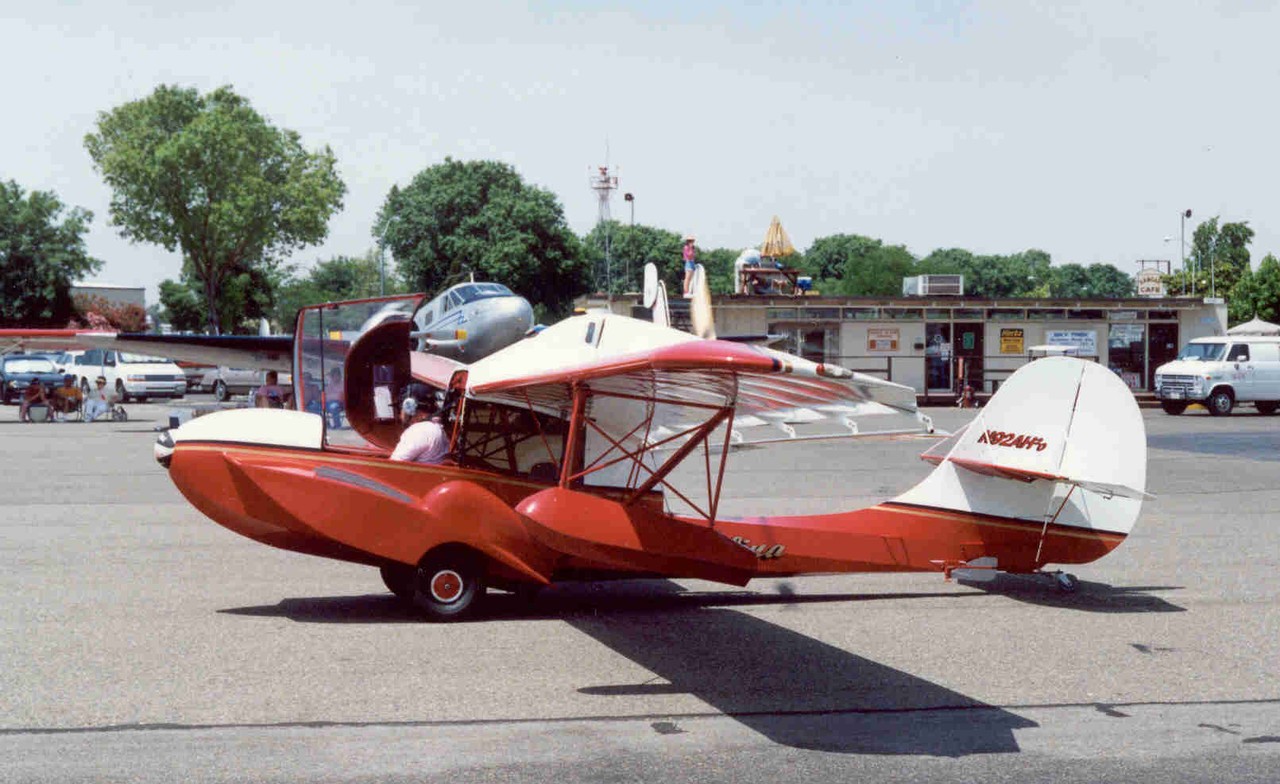
Dean Wilson conceived the Avid Amphibian to serve recreational pilots seeking an affordable entry into amphibious flying. Wilson, who founded Avid Aircraft in 1983, had already gained recognition when his Avid Flyer won Best New Design at the 1983 Oshkosh airshow. The Amphibian represented his next ambitious project, targeting pilots interested in fishing expeditions, backcountry camping, and sightseeing operations where conventional aircraft could not venture.
Manufacturing History
Avid Aircraft began producing Amphibian kits in 1986 from their Caldwell, Idaho facility. The company initially operated as Light Aero Inc. before adopting the Avid Aircraft name. Production continued steadily through the 1990s, with kits priced at $16,695 for the amphibious version and $15,695 for the land-only variant in 1992.
Financial difficulties led to bankruptcy in 1998, when Jim Tomash acquired the company and relocated operations to a 61,000-square-foot facility in Ennis, Montana. The new facility included 21,000 square feet of concrete flooring specifically designed for kit production and customer assembly projects. Despite this investment, Avid Aircraft permanently ceased operations in November 2003 as owners sought relocation to a more populated area.
Design Innovation
The Amphibian featured several innovative design elements that distinguished it from competing kit aircraft. Wilson employed mixed construction techniques, combining welded steel tube fuselage frames with fabric-covered flying surfaces and a fiberglass hull. The aircraft's most distinctive feature was its pusher propeller configuration, which kept the engine and propeller away from water spray during amphibious operations.
The 36-foot wings incorporated V-shaped lift struts and jury struts for structural support while maintaining the ability to fold for transportation and storage. Wilson offered multiple float configurations, including droop wingtip sponsons on the original Amphibian and conventional wing-mounted floats on the later Catalina variant introduced in September 1994. Builders seeking lighter weight could opt for the Landphibian version, which eliminated the float system entirely.
Engine and Performance
The standard powerplant was the Austrian-manufactured Rotax 582, a 65-horsepower twin-cylinder, liquid-cooled, two-stroke engine. This engine choice reflected the growing acceptance of Rotax powerplants in the experimental aircraft community during the 1980s. Some builders experimented with alternative engines including the Rotax 618, Rotax 912, Hirth F30, Hirth 2706, and Verner 133MK, though the 582 remained the recommended standard.
With the Rotax 582 driving a two-bladed wooden propeller, the Amphibian achieved a maximum speed of 90 mph and cruised at 75 mph. The aircraft's low stall speed of 32 mph made it suitable for short-field operations, while its 364-mile range provided adequate capability for recreational cross-country flights. Standard fuel capacity was 17.5 gallons, though earlier Amphibian variants could accommodate up to 28 gallons for extended range operations.
Builder Experience
Avid estimated that builders would require approximately 700 hours to complete their aircraft from the supplied kit. Rod Snider, who completed one of the first land-based variants in January 1987, accumulated 1,960 hours of flight time in his aircraft before it was destroyed in January 2004. Snider praised the aircraft's load-carrying capability, noting it could accommodate three medium-build occupants or two people plus camping gear with full fuel.
The three-seat configuration provided versatility for various mission profiles, with one pilot seat and two passenger positions. Empty weight of 600 pounds and gross weight of 1,200 pounds gave the aircraft a useful load of 600 pounds, adequate for its intended recreational roles.
Production Legacy
By 2001, Avid Aircraft reported that 100 examples of the Amphibian and Catalina variants were actively flying. After Avid's closure, Airdale Sportplane and Supply began producing parts for existing aircraft starting in 1999, also developing derivatives like the Airdale Avid Plus. However, Airdale ceased operations in 2017, leaving owners to source parts through salvage or custom fabrication.
FAA registration records showed 11 Avid Amphibians remained active in the United States as of December 2013. The aircraft's legacy lies in demonstrating that amateur builders could successfully construct and operate amphibious aircraft, opening water-based flying to pilots who might otherwise never experience it. While never achieving the production numbers of land-based kit aircraft, the Amphibian served its intended niche of providing affordable access to amphibious aviation for recreational pilots seeking adventure beyond conventional airports.