
Military Service Dominance
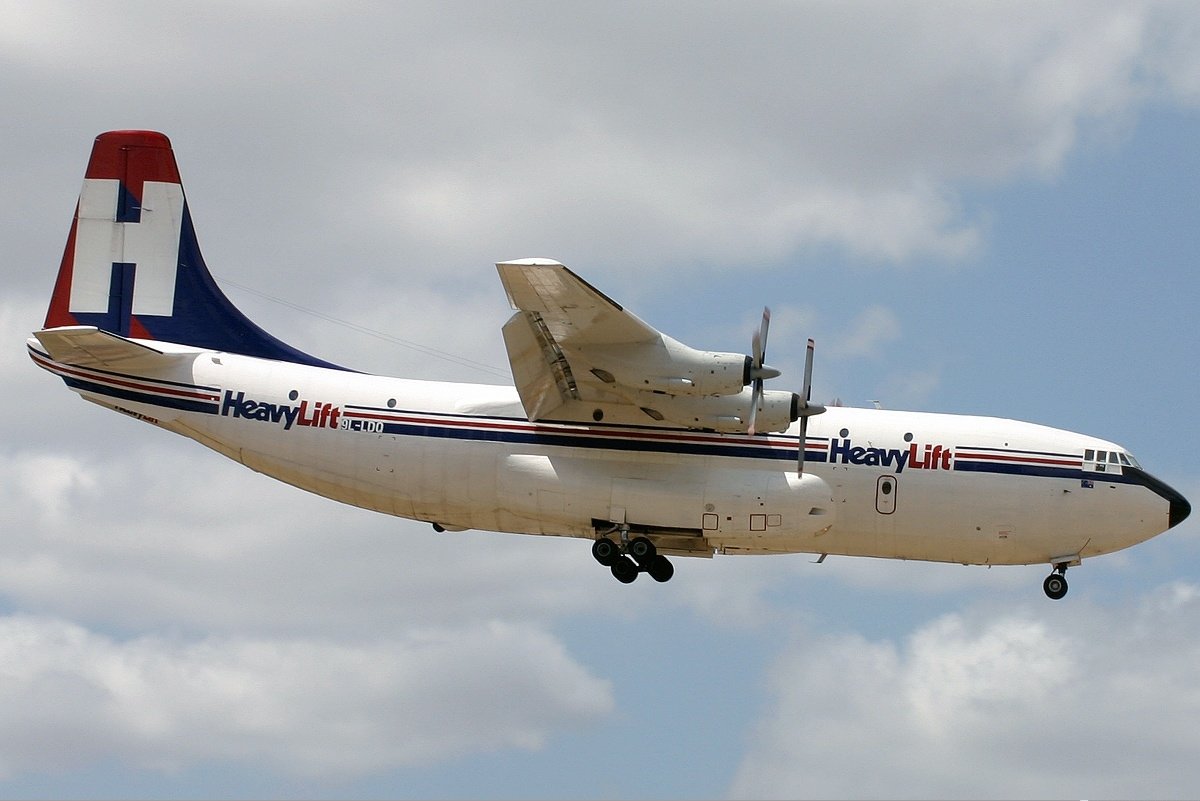
The Belfast represented a quantum leap in military airlift capability when it entered RAF service on January 20, 1966. As the largest aircraft ever operated by British military forces, it filled a critical gap in strategic transport that smaller aircraft simply could not address. All 10 aircraft served exclusively with No. 53 Squadron at RAF Brize Norton, where they handled the heaviest and most awkward military cargo loads throughout the late 1960s and 1970s.
The aircraft's massive cargo compartment could accommodate vehicles and equipment that previously required disassembly or alternative transport methods. This capability proved invaluable during military deployments and logistical operations spanning nearly a decade of RAF service.
Origins and Development
Short Brothers initiated Belfast development in the mid-1950s, envisioning a specialized military freighter that would pair four turboprop engines with an optimized cargo-carrying airframe. The company's leadership, including Chairman Sir Matthew Slattery, harbored reservations about the project's commercial viability, though they proceeded based on anticipated RAF requirements.
Formal development commenced in February 1959 following the RAF's selection of Short Brothers' proposal that January. The design team incorporated revolutionary features from the outset, most notably a complete automatic landing system that enabled operations in zero-visibility conditions—an unprecedented capability for transport aircraft of that era.
Test Flight Success
Chief test pilot Denis Taylor commanded the Belfast's maiden flight on January 5, 1964, departing from Sydenham Airport in Belfast with a crew of six. The 55-minute initial flight exceeded all expectations, prompting Taylor's enthusiastic assessment: "It was the easiest ride I have had for a very long time. The aircraft was an absolute joy to fly. She's a beauty."
The test program progressed remarkably smoothly, with the first successful automatic landing occurring after merely 120 hours of flight testing—significantly ahead of original projections. This rapid development milestone demonstrated the soundness of Short Brothers' design approach.
Short Brothers Heritage
Short Brothers brought decades of aviation expertise to the Belfast project, having established themselves as innovative aircraft manufacturers since the early 1900s. The company weathered significant challenges during World War II, including devastating Luftwaffe bombing raids on their Rochester facility and the worst air attack Belfast experienced outside London during Easter week 1941.
To maintain wartime production, Shorts established satellite facilities at Aldergrove and Maghaberry near Belfast, ultimately producing 232 Stirling bombers. The 1950s marked a period of technological advancement for the company, with pioneering work on vertical takeoff aircraft including the Short SC.1 and experimental designs like the SB.5 and SB.4 Sherpa. Bristol Aeroplane Company acquired a 15.25% stake in Shorts during 1954, providing crucial capital for facility expansion.
Rolls-Royce Tyne Powerplants
Four Rolls-Royce Tyne turboprops provided the Belfast's impressive performance capabilities. These advanced engines delivered sufficient power for the aircraft's substantial cargo loads while maintaining reliability standards required for military operations. The powerplant selection represented a departure from earlier design studies that had considered Bristol Orion engines.
The Tyne engines enabled the Belfast to achieve its maximum range of 4,609 nautical miles with full fuel capacity, providing strategic airlift reach across continental distances. However, initial aircraft encountered significant drag issues that prevented achievement of designed performance levels until modifications were implemented.
Performance Refinements
The first five production aircraft suffered from aerodynamic problems that substantially reduced cruising speeds below specifications. Short Brothers undertook extensive modification work, particularly on aircraft SH1818, developing an improved rear fairing design that increased fleet cruising speed by 40 miles per hour. These modifications were subsequently applied across the Belfast fleet, restoring performance to acceptable levels.
Limited Production Reality
Despite Short Brothers' break-even analysis indicating 30 aircraft sales were necessary for profitability, the RAF's requirement for only 10 examples effectively ended expansion possibilities. Company Chairman C. E. Wrangham had calculated this minimum production threshold, but declining military transport requirements prevented additional orders.
The company had optimistically established full production tooling and jigs, anticipating larger orders that never materialized. Several advanced variants remained on the drawing board, including the SC5/31 transatlantic airliner configuration designed for 138 passengers plus 55,000 pounds of cargo, the SC5/21 tactical STOL variant, and the SC.5/40 developed in partnership with Lockheed Corporation combining Belfast fuselage dimensions with C-141 Starlifter wings.
Civilian Second Life
Following RAF retirement after approximately ten years of military service, five Belfast aircraft transitioned to civilian cargo operations. These converted freighters found new purpose in commercial charter work, transporting diverse cargo loads for civilian operators. Registration records show aircraft operating under civilian markings including G-BEPE, G-OHCA, and N1819S as recently as 2023.
Surviving Legacy
Remarkably, at least one Short Belfast remains airworthy today. The aircraft nicknamed 'Hector' holds distinction as the world's last flyable Belfast, representing a unique preservation success for this rare heavy-lift type. This sole remaining example serves as a flying memorial to Short Brothers' ambitious engineering achievement and the RAF's strategic airlift capabilities during the Cold War era.