
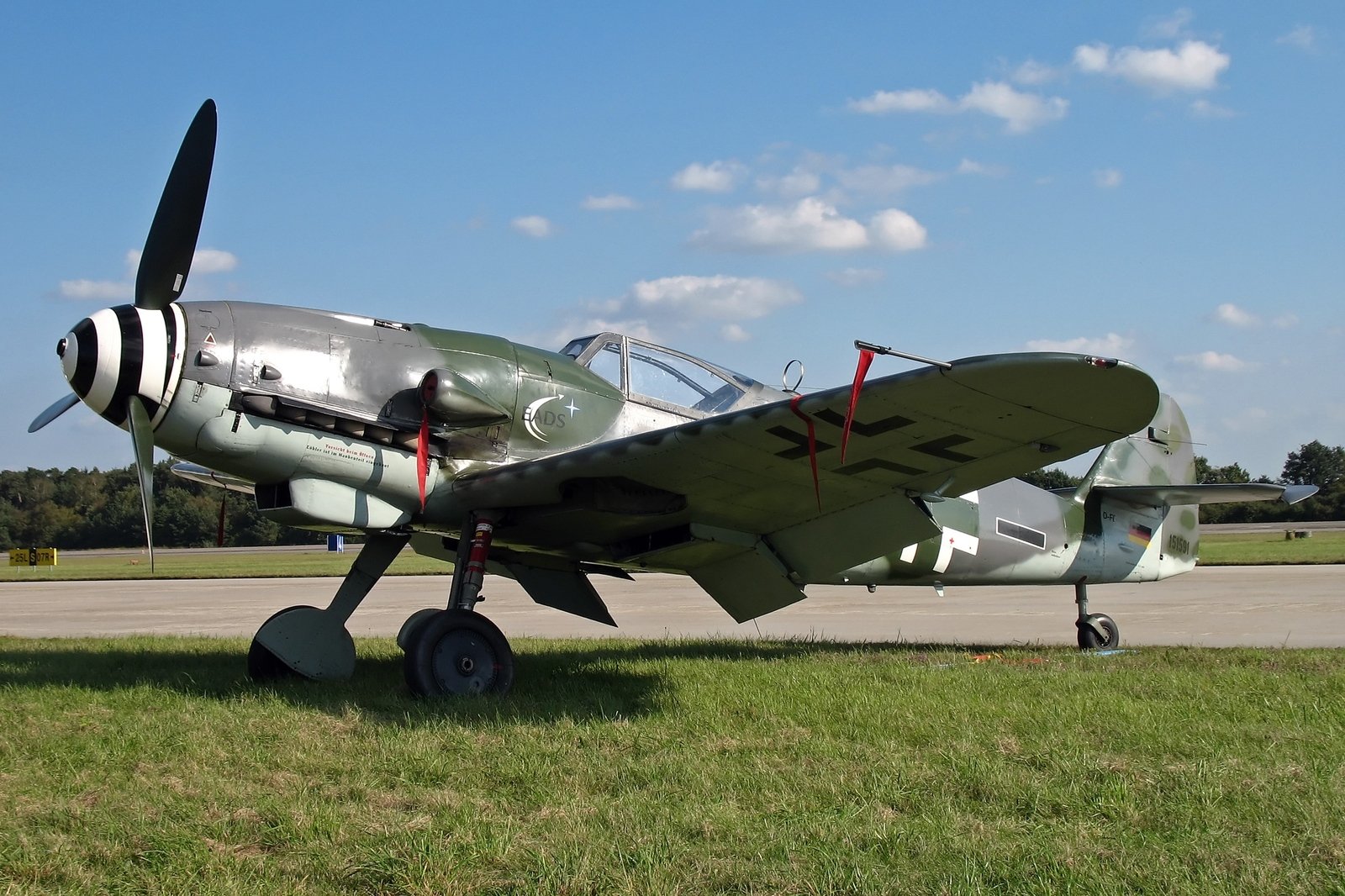
Development and Origins
The PODESVA Bf-109G-2 originated from meticulous technical drawings and documentation preserved by the Podesva family, who undertook the ambitious project of recreating one of aviation's most significant fighters. Unlike the original Messerschmitt production that peaked during World War II, this reconstruction effort began decades later as both a historical preservation project and engineering challenge.
The original Bf 109G-2 had entered German service in June 1942, with 1,586 aircraft produced between May and December of that year by Messerschmitt, Erla, and Wiener Neustadt facilities. The G-2 variant distinguished itself from the earlier G-1 primarily through its conventional unpressurized cockpit, making it more suitable for lower-altitude combat operations.
Technical Specifications and Design
The PODESVA reconstruction maintained the essential characteristics that made the Bf 109G-2 formidable. The aircraft featured a single Daimler-Benz DB 605A inverted V-12 engine, producing 1,475 horsepower and enabling a maximum speed of 428 miles per hour at 22,000 feet. The airframe measured 29 feet in length with a wingspan of 32 feet 6 inches, creating the compact yet powerful profile that defined the 109 series.
The landing gear retracted inward toward the fuselage centerline, a distinctive feature that required careful pilot technique during takeoff and landing operations. The cockpit, positioned high on the fuselage, provided excellent forward visibility while the aircraft's narrow track landing gear demanded respect during ground operations.
Manufacturing Approach
PODESVA's approach to recreating the Bf 109G-2 involved studying surviving examples, technical manuals, and detailed engineering drawings preserved from the original production run. This painstaking process required sourcing materials and components that matched 1940s specifications while incorporating necessary safety modifications for modern flight operations.
The reconstruction utilized traditional aluminum construction techniques, maintaining the semi-monocoque fuselage design that gave the original its structural integrity. Each major component underwent careful analysis to ensure historical accuracy while meeting contemporary airworthiness standards.
Performance Characteristics
Pilots familiar with the PODESVA Bf-109G-2 describe it as demanding but rewarding to fly. The aircraft's cruise speed of 350 miles per hour and service ceiling exceeding 38,000 feet replicated the performance envelope that made the original G-2 effective in combat. The controls required firm inputs, particularly during high-speed maneuvers, reflecting the design philosophy of 1940s fighter aircraft.
The inverted gull wing design, while providing excellent high-speed characteristics, created challenging handling during slow-speed flight regimes. Landing approach speeds typically ranged between 105 and 115 miles per hour, requiring precise energy management and smooth control inputs.
Historical Context and Significance
The original Bf 109G series represented Germany's most numerous fighter aircraft, with over 24,000 examples produced across all G variants. The G-2 specifically bridged the gap between early war designs and the heavily armed later variants, offering an optimal balance of performance, reliability, and manufacturing efficiency.
Famous pilots including Erich Hartmann, the world's highest-scoring fighter ace with 352 victories, flew various Bf 109G models during their careers. The aircraft served on every front where German forces operated, from the Eastern Front's bitter winter campaigns to the scorching desert warfare of North Africa.
Current Status and Legacy
The PODESVA Bf-109G-2 represents one of the few faithful reconstructions of this historic fighter type. While original surviving Bf 109G-2 examples remain rare, with fewer than a dozen airworthy worldwide, reconstruction projects like PODESVA's ensure that future generations can experience these significant aircraft in flight.
Modern Bf 109 enthusiasts gather at airshows and vintage aircraft events where the PODESVA reconstruction demonstrates the flight characteristics that defined air combat during World War II's crucial middle years. The aircraft serves as both flying memorial and educational tool, preserving the technical knowledge required to maintain and operate these complex vintage fighters.
The project also highlighted the importance of preserving detailed technical documentation, as the Podesva family's careful archival work enabled this reconstruction when original manufacturer records had been lost or destroyed during wartime.