
Service History
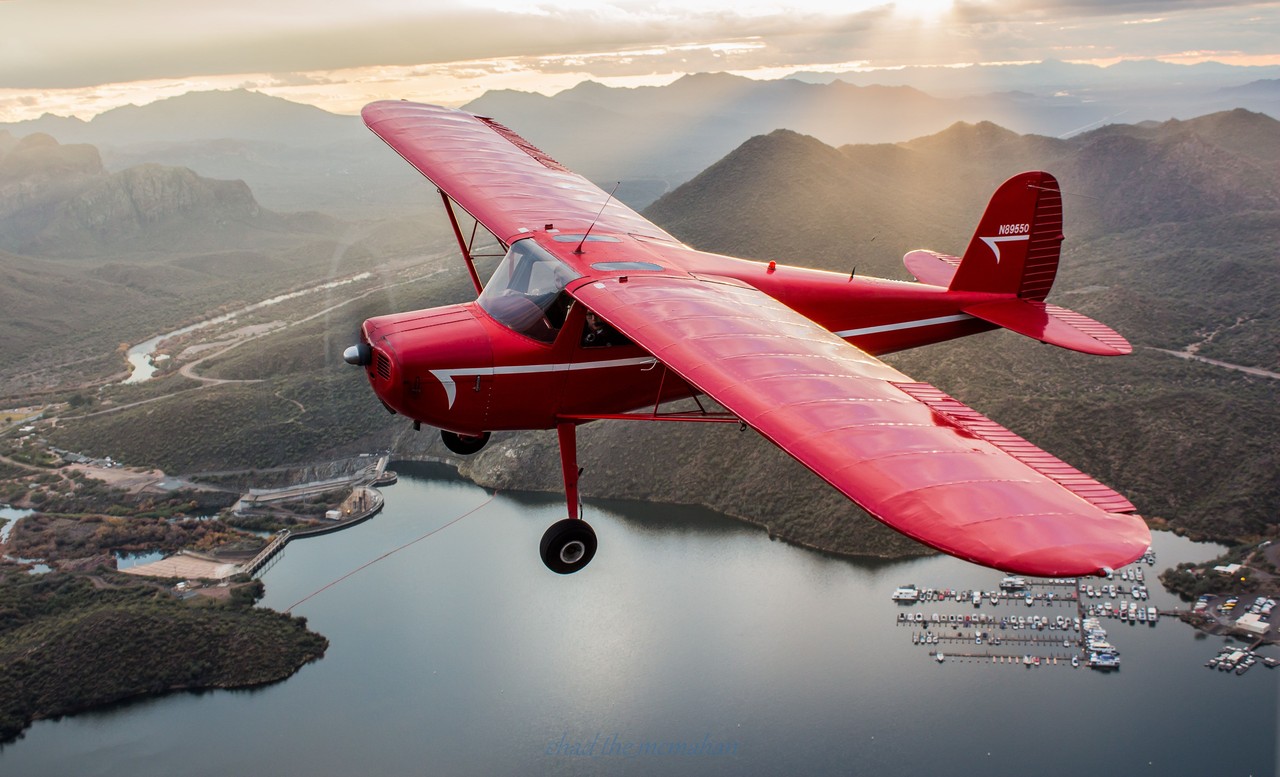
The Cessna 120 captured the post-war aviation boom with remarkable success, targeting returning World War II veterans who received government education grants for pilot training. Priced at $2,695 in 1946—approximately $53,000 in today's currency—the aircraft offered an affordable pathway into aviation ownership. By August 1946, Cessna's Wichita facility was producing 30 aircraft daily, combining both 120 and 140 models to meet unprecedented demand. The aircraft competed directly against established manufacturers including Piper Cubs, Taylorcraft, Aeronca, Globe, ERCO, and Luscombe in the hotly contested two-seat taildragger market.
Despite initial success, sales declined annually after the post-war surge, leading to production cessation in May 1949. However, the combined success of the 120 and 140 models—totaling over 7,500 units—established a profitable foundation that directly enabled development of the Cessna 150, which became one of aviation's best-selling aircraft.
The Manufacturer
Cessna Aircraft Company emerged from World War II positioned to capitalize on anticipated civilian aviation growth. Founded in Wichita, Kansas, the company recognized that returning military pilots represented an enormous untapped market for personal aircraft. The 120 and 140 series became among Cessna's first major post-war successes, establishing the company's reputation for building durable, reliable training aircraft.
Today, Cessna operates as a subsidiary of Textron Corporation, headquartered in Providence, Rhode Island. The lessons learned from 120 production—particularly the importance of offering both basic and deluxe variants—influenced Cessna's approach to subsequent aircraft development and helped establish the company as a dominant force in general aviation manufacturing.
Engine & Technical Details
The Cessna 120 utilized Continental Motors' horizontally opposed, air-cooled four-cylinder engine producing 80 horsepower. This powerplant provided adequate performance for training operations while maintaining the simplicity and reliability essential for owner-operated aircraft. Continental's engine proved so successful that upgraded versions powered the deluxe Model 140, including the C-85-12 engine producing 85 horsepower and the C-90-12 engine delivering 90 horsepower introduced in 1948.
Post-purchase engine upgrades were available through FAA-approved modifications, including the Lycoming O-235-C1 engine capable of producing up to 108 horsepower. This flexibility allowed owners to enhance performance as their experience and requirements evolved, contributing to the aircraft's long-term appeal and utility.
Design Philosophy
The 120 represented Cessna's deliberate strategy to offer a no-frills training aircraft alongside the more refined Model 140. While both aircraft shared identical airframes, the 120 eliminated the 140's starter, generator, battery, and manually operated flaps to achieve its lower price point. This approach allowed Cessna to capture both budget-conscious buyers and those seeking additional convenience features.
The high-wing configuration provided inherent stability beneficial for student pilots, while side-by-side seating facilitated effective instruction—a significant advantage over tandem-seat competitors. The all-metal construction offered durability superior to fabric-covered alternatives, though this advanced manufacturing increased production costs.
Pilot Perspective
Pilots praised the Cessna 120 for establishing what became known as Cessna's reputation for building aircraft that could "take a licking and keep on ticking." The high-wing design provided gentle handling characteristics ideal for primary training, while the Continental engine delivered reliable performance with straightforward maintenance requirements.
The aircraft's forgiving flight characteristics made it particularly suitable for transitioning military pilots to civilian aviation, though the tailwheel configuration demanded proper ground handling technique. Many pilots received their introduction to civilian flying in Cessna 120s, creating lasting affection for the type that persists among vintage aircraft enthusiasts.
Specialized Operations
Beyond standard training roles, several Cessna 120s were modified for specialized operations. A limited number received Edo 1650 floats for water operations, expanding the aircraft's versatility. One notable example, registration NN89149, arrived in Port Moresby, Papua New Guinea in 1963 and served the Catholic Mission on Manus Island as a floatplane, demonstrating the type's adaptability to remote operations.
Legacy and Preservation
The Cessna 120 established the foundation for Cessna's strut-braced single-engine aircraft line, proving that well-engineered general aviation aircraft could achieve commercial success in the civilian market. The knowledge gained from 120 production directly influenced the tricycle-gear Cessna 150, which incorporated lessons learned about manufacturing efficiency and pilot preferences.
Today, surviving Cessna 120s remain active in vintage aircraft communities, with examples registered under recreational aviation authorities in multiple countries including Australia. The aircraft's robust construction has enabled many examples to remain airworthy more than 75 years after initial production, testament to Cessna's engineering approach and build quality that established the company's enduring reputation.