
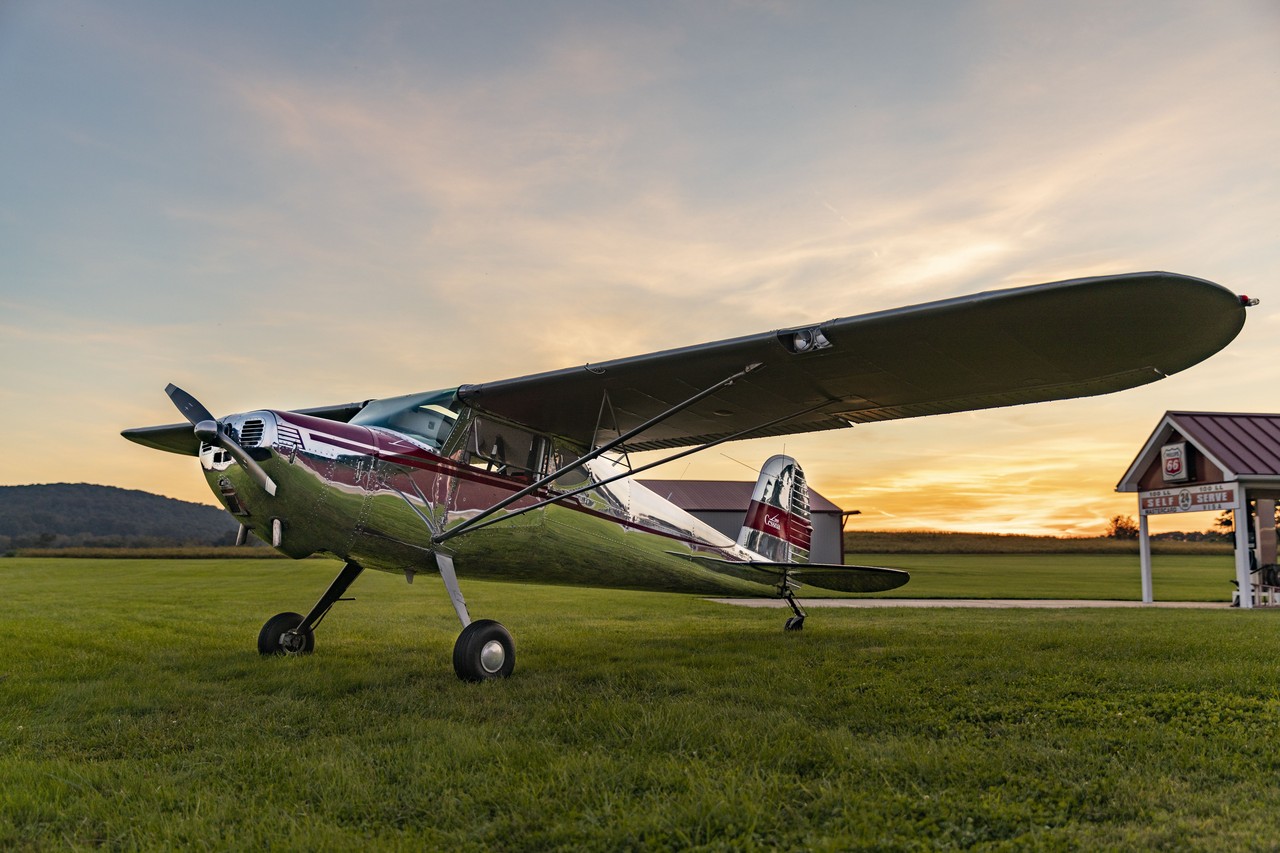
Postwar Aviation Success
The Cessna 140 emerged as one of the most successful light aircraft of the immediate postwar era, providing tremendous economic boost to Cessna Aircraft Company. Combined with its economy sibling the Model 120, total production reached between 7,644 and 7,700 units over six years. The aircraft's remarkable success stemmed from perfect timing—arriving just as thousands of military-trained pilots sought affordable civilian aircraft for personal flying.
Manufacturing Excellence
Cessna Aircraft Company leveraged its wartime manufacturing experience to mass-produce the 140 series. Having built approximately 5,400 T-50 Bobcats and 750 Waco CG-4A gliders during World War II, the Wichita facility possessed both all-metal monocoque production expertise and large-scale manufacturing capability. This combination enabled the company to produce affordable light aircraft using proven construction techniques. The first year alone saw 4,000 deliveries, with the factory hitting peak production of 30 aircraft per day in 1946.
Design Innovation
The 140 represented Cessna's first venture into small, two-place airplane production, establishing the strut-braced high-wing configuration that became synonymous with Cessna singles. The side-by-side seating arrangement and conventional tailwheel landing gear provided familiar handling characteristics for pilots transitioning from military training aircraft. Early models featured fabric covering throughout, but by 1949 the design evolved to aluminum fuselage and control surfaces while retaining fabric wings.
Continental Powerplant
The Continental C85-12 flat-four engine producing 85 horsepower provided reliable, fuel-efficient power for the 140's intended role as an economical personal aircraft. This air-cooled engine proved well-matched to the airframe, delivering decent performance for its power rating while maintaining simplicity and affordability. The later 140A variant offered an optional 90-horsepower Continental engine for pilots seeking additional performance.
Model Variants
The Model 120 served as the economy variant, eliminating flaps and rear cabin windows to reduce manufacturing costs. Certificated on March 21, 1946, under Type Certificate Number 768 shared with the 140, the 120 remained in production from June 1946 through May 1949. A total of 2,172 Model 120s were built during this three-year span.
The 140A, introduced in 1949, incorporated significant improvements including all-metal tapered wings borrowed from the four-place Model 170 program and single wing struts replacing the earlier V-strut configuration. Despite these enhancements and an optional controllable-pitch propeller, only 525 Model 140A aircraft sold in three production years, representing just seven percent of total 120/140 production. The improved variant's higher price point likely contributed to slower sales as the initial postwar aircraft buying surge subsided.
Pilot Experience
Pilots praised the 140 for its forgiving flight characteristics and practical design. The high-wing configuration provided excellent visibility and stable flight characteristics, while the side-by-side seating facilitated instruction and passenger comfort. The aircraft's reputation for durability earned it the description of being able to "take a licking and keep on ticking," establishing Cessna's reputation for building robust, reliable aircraft that could withstand the rigors of flight training and personal use.
Market Impact
By production's end in 1951, used 140s commanded prices higher than their original selling price, demonstrating the aircraft's strong market acceptance and retained value. The type's success provided crucial revenue that sustained Cessna through the postwar transition from military to civilian manufacturing, establishing the foundation for the company's future growth in general aviation.
Legacy and Succession
Production concluded in 1951 as the postwar aircraft boom subsided and market demand shifted. Cessna would not produce another two-place aircraft until introducing the Model 150 in 1959, which adopted tricycle landing gear and became the definitive training aircraft for the next generation of pilots. The 140's design influence extended far beyond its production years, establishing the basic configuration template that Cessna would refine and expand for decades.
Today, many examples remain active in the vintage aircraft community, supported by the International Cessna 120-140 Association. These surviving aircraft serve as testament to the original design's durability and continue providing affordable flying opportunities for pilots who appreciate classic tailwheel aircraft characteristics.