
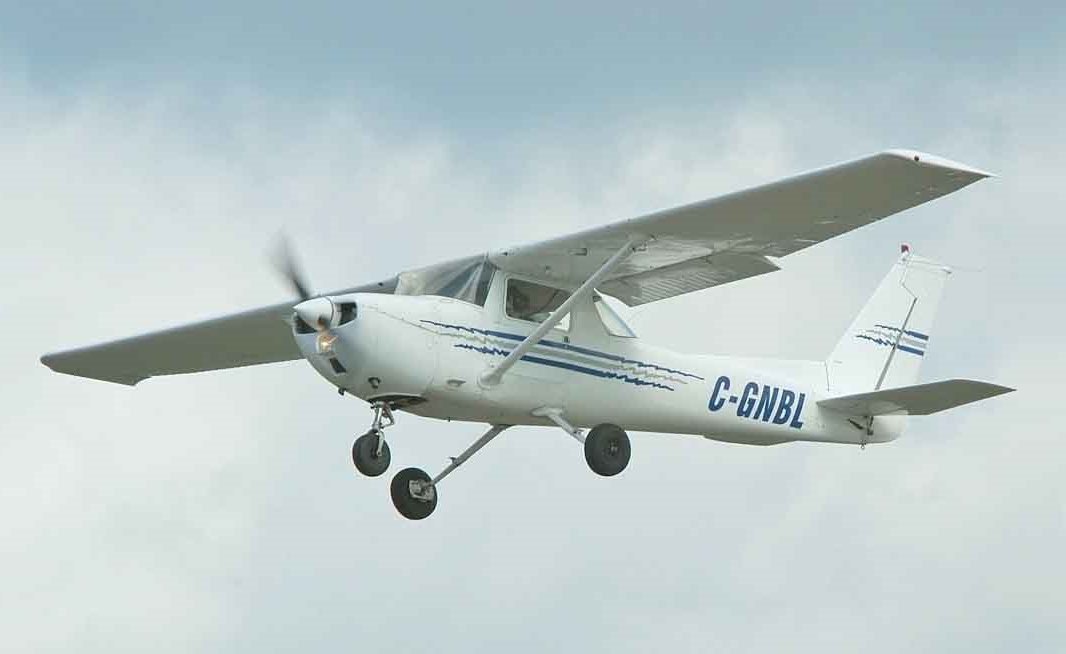
Production and Variants
Cessna manufactured 734 A150 Aerobats in Wichita, Kansas between 1969 and 1977, with peak production occurring in the mid-1970s when 93 units rolled off the assembly line in 1974 alone. Licensed production expanded internationally through Reims Aviation in France, which built 336 FA150 Aerobats including 81 FA150K and 39 FA150L variants. Argentina's DINFIA facility assembled a limited run of 9 A-A150L Aerobats between 1972 and 1973, bringing total worldwide production to over 1,000 aircraft.
The Aerobat distinguished itself from the standard Cessna 150 through several critical modifications. Engineers installed symmetric airfoil wings instead of the cambered design, reinforced the airframe structure with thicker aluminum skin, and limited flap extension to 30 degrees compared to the standard model's 40-degree capability. An inverted oil system enabled sustained inverted flight, while the strengthened fuselage and wing attachments allowed for aerobatic stress loads of positive 6G and negative 3G.
Design Legacy and Innovation
Dwight Wallace led the Cessna engineering team that developed the original 150 design, initially designated as the Cessna 142 before being renamed Model 150 in October 1957. The tricycle landing gear configuration represented a significant departure from traditional taildragger trainers, offering improved ground handling and reduced landing accidents for student pilots. When Cessna introduced the Aerobat variant in 1969, it became one of the few entry-level aircraft certified for aerobatic training, filling a crucial gap in the civilian flight training market.
The high-wing monoplane configuration provided inherent stability and excellent visibility for both normal flight training and aerobatic instruction. This design philosophy proved revolutionary for flight schools, as instructors could now introduce aerobatic maneuvers without requiring expensive, high-performance aircraft traditionally associated with advanced aerobatic training.
Engine and Performance
Continental Motors' O-200-A engine powered the A150 Aerobat, delivering 100 horsepower at 2,750 RPM through a fixed-pitch propeller. This four-cylinder, horizontally opposed, air-cooled engine became legendary for reliability in training environments, achieving time-between-overhaul intervals of 1,800 to 2,000 hours. The lightweight powerplant, weighing between 170 and 200 pounds, contributed to the aircraft's favorable power-to-weight ratio and predictable handling characteristics.
Performance specifications included a maximum speed of 127 knots at sea level, with typical cruise speeds of 122 knots. The aircraft achieved a service ceiling of 14,100 feet and maintained a climb rate of 670 feet per minute. With standard fuel tanks, the A150 Aerobat provided a range of 420 nautical miles, sufficient for extended training flights and cross-country instruction.
The Cessna Legacy
Cessna Aircraft Company, founded by Clyde Cessna in 1927, had evolved into America's premier light aircraft manufacturer by the time A150 Aerobat production began. The company's post-World War II expansion into general aviation training aircraft proved prescient, as the Cessna 150/152 family ultimately trained more pilots than any other aircraft type in history. Over 31,000 examples of the combined 150/152 series left Cessna's production facilities.
General Dynamics acquired Cessna in 1985, the same year production of light aircraft ceased due to escalating product liability lawsuits. Textron Inc. purchased the company in 1992, and while Cessna resumed production of some models in the 1990s, the 150/152 family never returned to the assembly line. Today, Textron's Cessna division continues operations from Wichita and Independence, Kansas, focusing on business jets and turboprops.
Service Record and Training Impact
Flight schools worldwide embraced the A150 Aerobat for primary aerobatic instruction, appreciating its forgiving handling characteristics and robust construction. Unlike military trainers or high-performance aerobatic aircraft, the Aerobat provided an accessible introduction to aerobatic flying for civilian pilots. The aircraft's utility category certification enabled instruction in loops, rolls, spins, and other fundamental aerobatic maneuvers within a controlled training environment.
The A150 Aerobat never served in military roles, remaining exclusively in civilian hands throughout its production run. Its two-seat configuration and 400-to-500-pound useful load made it unsuitable for commercial airline operations, but ideal for one-on-one flight instruction and personal aerobatic flying.
Current Status and Museums
More than 1,000 A150 Aerobats remain airworthy worldwide, representing a significant portion of the estimated 7,000 Cessna 150/152 aircraft still flying. These survivors continue serving flight schools, aerobatic clubs, and private owners who appreciate the type's combination of affordability and aerobatic capability. The Cessna Heritage Museum in Wichita, Kansas displays examples of the 150 family, while other aviation museums worldwide feature these aircraft as representatives of the general aviation boom of the 1960s and 1970s.
The A150 Aerobat's cultural significance extends beyond its training role, symbolizing the democratization of aviation that occurred during its production years. By making aerobatic instruction accessible to civilian flight schools and private owners, the aircraft contributed to a generation of better-trained pilots and helped establish aerobatics as a popular recreational flying discipline.