
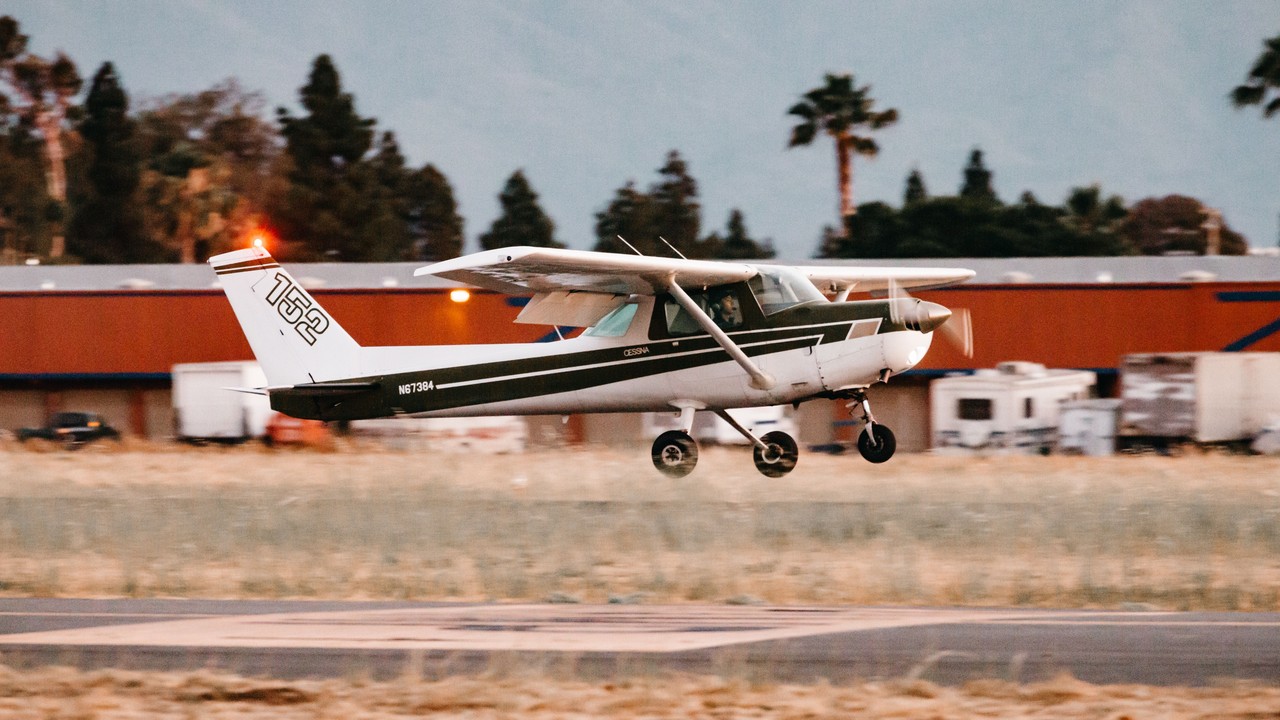
Training Revolution
The A152 Aerobat filled a critical gap in civilian aviation training by providing an affordable platform for aerobatic instruction. While aerobatic training had previously required expensive, specialized aircraft, the Aerobat democratized access to spin recovery and basic aerobatic techniques for flight schools. Its certification for +6/-3 G maneuvers made it suitable for loops, rolls, and spins while maintaining the docile handling characteristics that made the standard 152 series ideal for primary instruction.
Design Excellence Under Dwight Wallace
Cessna's engineering team, led by chief engineer Dwight Wallace, developed the Aerobat as an enhanced version of the successful Cessna 152. Wallace, who had overseen the transition from the Continental-powered Cessna 150 to the Lycoming-equipped 152, recognized the need for a dedicated aerobatic variant. The design team strengthened the airframe structure, modified aileron hinges at serial number A1521028 and beyond, and incorporated specialized systems to handle the stresses of inverted flight and high-G maneuvers.
Key innovations included vernier mixture controls for precise fuel management during aerobatic sequences, flap position indicators for enhanced situational awareness, and reinforced wing spars and control surfaces. The aircraft retained the 152's tricycle landing gear and high-wing configuration, providing inherent stability that made it forgiving for student pilots transitioning to aerobatic flight.
Lycoming Power Plant
The heart of the A152 Aerobat was its Lycoming O-235-L2C engine, a four-cylinder, air-cooled powerplant producing 110 horsepower. Manufactured by Lycoming Engines, a division of Textron, this engine represented a significant improvement over the 100-horsepower Continental O-200 used in the Cessna 150. The additional power provided a climb rate of 930 feet per minute and enabled sustained aerobatic operations that would have been marginal with less powerful engines.
The O-235 series, first introduced in 1942, had established a reputation for reliability and smooth operation across more than 80 years of production. In the Aerobat application, the engine's proven durability proved essential for the repeated high-G loads and varied attitudes encountered during aerobatic training sequences.
Cessna's Manufacturing Legacy
Cessna Aircraft Company, founded by Clyde Cessna in 1927, had become synonymous with general aviation training aircraft by the time the A152 entered production. The company had pioneered single-engine monoplane design in the 1930s and mass-produced military trainers like the T-41 during World War II. However, the mid-1980s brought unprecedented challenges to American light aircraft manufacturing.
General Dynamics acquired Cessna in 1985, the same year the company ceased all light aircraft production due to escalating product liability costs. This decision ended not only A152 Aerobat production but all U.S. light aircraft manufacturing at Cessna. When Textron Inc. purchased Cessna in 1992 and resumed light aircraft production in 1997, the 152 series was not revived, making the A152 Aerobat a finite production run of just eight years.
Operational Characteristics
Pilots praised the A152 Aerobat for its predictable handling and forgiving nature during aerobatic sequences. The aircraft's maximum speed of 109 knots and service ceiling of 14,000 feet provided adequate performance margins for training operations, while its 374-nautical-mile range allowed for extended cross-country aerobatic instruction flights. The 32-gallon usable fuel capacity provided approximately 3.5 hours of flight time at normal cruise settings.
The cockpit accommodated one instructor and one student, with both positions offering adequate visibility for aerobatic instruction. Control forces remained manageable throughout the approved aerobatic envelope, allowing student pilots to develop proper technique without being overwhelmed by excessive physical demands.
Limited Production Legacy
Of the 307 A152 Aerobats manufactured worldwide, the majority rolled off Cessna's Wichita, Kansas production line, with additional units built by Reims Aviation in France under the FA152 designation. Serial numbers A0735 through A1049 encompassed the entire production run, making each surviving example increasingly valuable to aerobatic training operations and vintage aircraft enthusiasts.
The A152 Aerobat's legacy extends beyond its modest production numbers. As part of the broader 152 series that trained more pilots than any other aircraft model, the Aerobat contributed to developing aerobatic skills in thousands of pilots worldwide. Today, examples are preserved at facilities including the Cessna Heritage Museum in Wichita, Kansas, serving as reminders of an era when American manufacturers dominated the light aircraft training market.