
Development and Design
The Skycatcher emerged from Cessna's ambition to capture the newly created Light Sport Aircraft market, officially announced at EAA AirVenture in July 2007 to immediate enthusiasm with over 1,000 initial orders. Cessna's engineering team designed the aircraft specifically to meet FAA LSA regulations under CFR Part 1.1 and 21.190, targeting flight schools and recreational pilots seeking lower operating costs than traditional training aircraft.
Test pilot Dale Bleakney conducted the first production model's maiden flight on May 1, 2008, from Cessna Aircraft Field Airport near McConnell Air Force Base, Kansas. However, the development program faced serious setbacks when prototype aircraft crashed in Kansas during September 2008 and March 2009. These incidents forced Cessna engineers to redesign critical components, adding a thicker wing profile, enlarging the rudder, and reducing elevator and aileron control travel to improve spin resistance and overall flight safety.
Manufacturing and Production Challenges
Cessna implemented an unusual international manufacturing process, shipping raw materials, engines, and avionics from the United States to Shenyang Aircraft Corporation in China for assembly. The first production-standard aircraft completed its initial flight at the Shenyang facility on September 17, 2009. Completed aircraft were then shipped back to three authorized Cessna service stations in the United States for final reassembly and test flights before delivery.
This complex supply chain contributed to delays and cost overruns that plagued the program. Originally targeted at a $100,000 price point to compete effectively in the training market, the final aircraft carried a $149,000 price tag that eliminated much of its competitive advantage. The aircraft received ASTM LSA approval in July 2009, and the aviation industry recognized its innovation with the AIAA Piper General Aviation Award in June 2010.
Technical Specifications and Performance
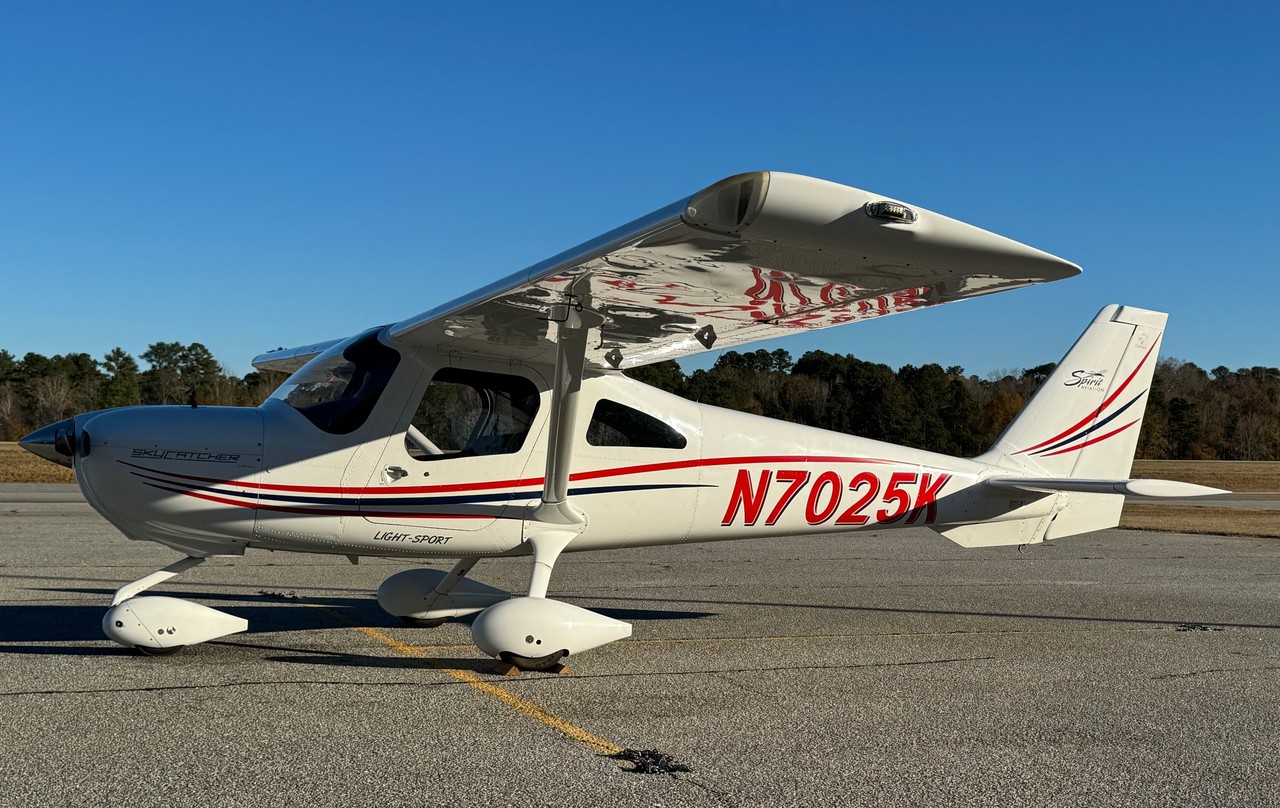
The Skycatcher featured a conventional high-wing configuration measuring 7.46 meters in length with a 2.95-meter height, providing excellent stability and visibility characteristics desired in training aircraft. The tricycle landing gear incorporated tapered steel tube shock absorption, toe-actuated disc brakes, and differential nose wheel steering for ground handling.
Power came from the Continental O-200-D, a four-cylinder, air-cooled engine producing 74.57 kilowatts (100 horsepower) at 2,800 rpm. This powerplant, manufactured by Teledyne Continental Motors, drove a composite two-blade fixed-pitch propeller and consumed between 5-6 gallons per hour. The O-200 series had entered production in 1960 and accumulated over 35,000 units across all variants, establishing a reputation for reliability and simplicity in training applications.
Performance figures included a maximum cruise speed of 118 knots indicated airspeed (219 kilometers per hour), a service ceiling of 15,500 feet, and a range varying from 336 to 870 kilometers depending on configuration. Stall speeds measured 37 knots in landing configuration and 41 knots clean, while maximum gross weight reached 1,320 pounds under LSA limitations.
Service Record and Market Reception
Rose Pelton, wife of Cessna CEO Jack Pelton, received the first production aircraft in December 2009. Sporty's Pilot Shop took delivery of the first publicly-sold unit in May 2010, while Aeromil Pacific in Queensland, Australia, received the first international delivery in March 2011.
The aircraft targeted flight schools, individual owners building flight time, and recreational pilots rather than commercial operators. No airlines incorporated the type into their fleets, as the two-seat configuration limited its utility to primary training and personal transportation roles. The 50-pound baggage allowance and side-by-side seating arrangement suited its intended training mission.
The Cessna Aircraft Company
Founded in 1927, Cessna Aircraft Company had established itself as a dominant force in general aviation, producing over 300,000 aircraft and pioneering mass production techniques for civilian aircraft in the 1930s. The company captured significant market share in post-World War II aviation with successful models like the 172. Textron Corporation acquired Cessna in 1992, maintaining the brand name while integrating operations. Today, the company continues as Textron Aviation's Cessna division, manufacturing piston, turboprop, and jet aircraft.
Production End and Legacy
Production ceased in December 2013 after exactly 275 aircraft were manufactured over four years. The program's cancellation resulted from multiple factors including the 2008 recession's impact on flight training demand, the complex China-US manufacturing process, prototype crash-related delays, and significant cost increases that priced the aircraft out of its intended market segment.
Approximately 171 Skycatchers remained on the US FAA registry as of recent data, indicating reasonable retention rates among owners. The aircraft found a niche among pilots seeking affordable time-building opportunities and flight schools requiring modern avionics in LSA-compliant aircraft. While the Skycatcher failed to achieve Cessna's ambitious market penetration goals, it demonstrated the challenges facing general aviation manufacturers attempting to revitalize the training aircraft market in the early 21st century.