
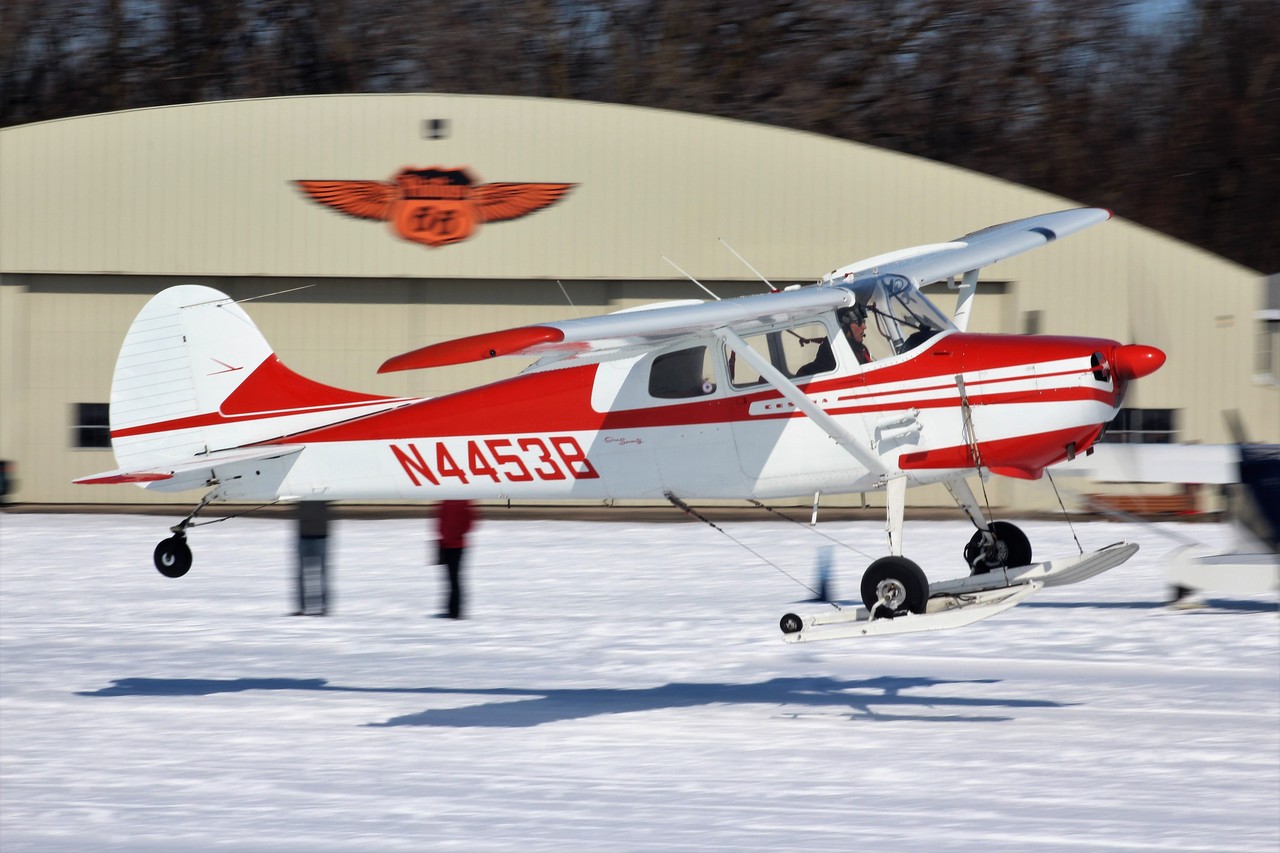
Dominance in General Aviation
The Cessna 170 achieved remarkable success during its eight-year production run from 1948 to 1956, with over 5,000 aircraft rolling off the assembly line in Wichita, Kansas. By the time production ceased, it had earned recognition as the most widely produced light aircraft in aviation history, a testament to its practical design and economic operation. The original 1948 model carried a price tag of $5,475, making four-seat aviation accessible to a broader market than ever before.
Today, approximately 2,000 Cessna 170s remain airworthy, representing roughly 40 percent of the original production total. This exceptional survival rate speaks to the aircraft's robust construction and enduring appeal among pilots who value its honest handling characteristics and versatility in backcountry operations.
The Manufacturer's Legacy
Cessna Aircraft Company was founded by Clyde Cessna, an aviation pioneer who built and flew his first powered aircraft in June 1911. The company's trajectory took significant turns in later decades: General Dynamics Corporation acquired Cessna in 1985 and subsequently halted piston-engine production after 1986 due to mounting product liability concerns. Textron, Inc. purchased Cessna in 1992 and resumed light aircraft manufacturing, though rising costs and liability issues prevented the reintroduction of popular two-seat models like those that had established the company's reputation.
Evolution Through Three Variants
Cessna refined the 170 design through three distinct models during its production run. The original 170 entered production in 1948 with 714 aircraft completed that first year. Serial number 18003, the first production model available for public sale, made its maiden flight on February 27, 1948, just three weeks after rolling out of the factory.
The 170A, introduced later in 1948 and produced through 1951, incorporated significant improvements over the original design. Engineers replaced the fabric wing covering with all-metal construction and added a tapered design with squared-off wingtips. The wing strut configuration was simplified to a single strut on each side, while enlarged flaps now extended to 50 degrees compared to the original's 30-degree maximum. Fuel capacity increased from 37.5 to 42 gallons, and a dorsal fin enhanced directional stability. A total of 1,522 170A aircraft were manufactured, priced at $5,995.
The 170B, introduced in 1952 as the final variant, continued production through 1956 and became the most popular version among the three models.
Engine and Technical Specifications
The Continental C-145 engine provided 145 horsepower at 2,700 RPM, driving a McCauley propeller through a direct-drive configuration. This inline piston engine proved reliable and economical in operation, contributing significantly to the aircraft's commercial success.
The 170 received certification in June 1948 as a Normal category airplane with a gross weight of 2,200 pounds. One month later, it earned additional Utility category certification at a reduced gross weight of 1,900 pounds, expanding its operational versatility for aerobatic and other demanding flight profiles.
Pilot's Aircraft
Pilots consistently praise the Cessna 170 as a "good, honest taildragger" that demands proper technique while rewarding skilled handling. The tailwheel configuration requires more precise ground control compared to nosewheel aircraft, making it particularly attractive to pilots seeking to develop or maintain conventional gear proficiency.
The high-wing design provides excellent ground clearance and favorable stall characteristics, while the four-seat capacity makes it practical for family flying. The aircraft's robust construction and forgiving flight characteristics have made it a favorite among backcountry pilots who appreciate its ability to operate from short, unpaved airstrips.
Cultural Impact and Legacy
The Cessna 170 gained additional recognition through its association with popular culture, particularly aviation-themed television programming that showcased similar Cessna models. This exposure helped cement the aircraft's reputation among the general public as the archetypal private airplane.
Various aircraft organizations now recognize the 170 as a "Neo-Classic," acknowledging its historical significance and enduring appeal. The aircraft community continues to support these vintage machines with active type clubs and specialized maintenance expertise.
End of an Era
Production of the Cessna 170 concluded in 1956 with the introduction of the Cessna 172, which featured a nosewheel landing gear configuration that proved more appealing to the training market. The 172 would eventually become the most-produced aircraft in aviation history with over 50,000 units manufactured.
Despite being superseded by its tricycle-gear successor, the 170 has maintained its distinct identity among aviation enthusiasts. Its rounded vertical tail and clean, modern lines continue to attract pilots decades after the last aircraft left the factory, ensuring the type's survival well into the 21st century.