
Service History
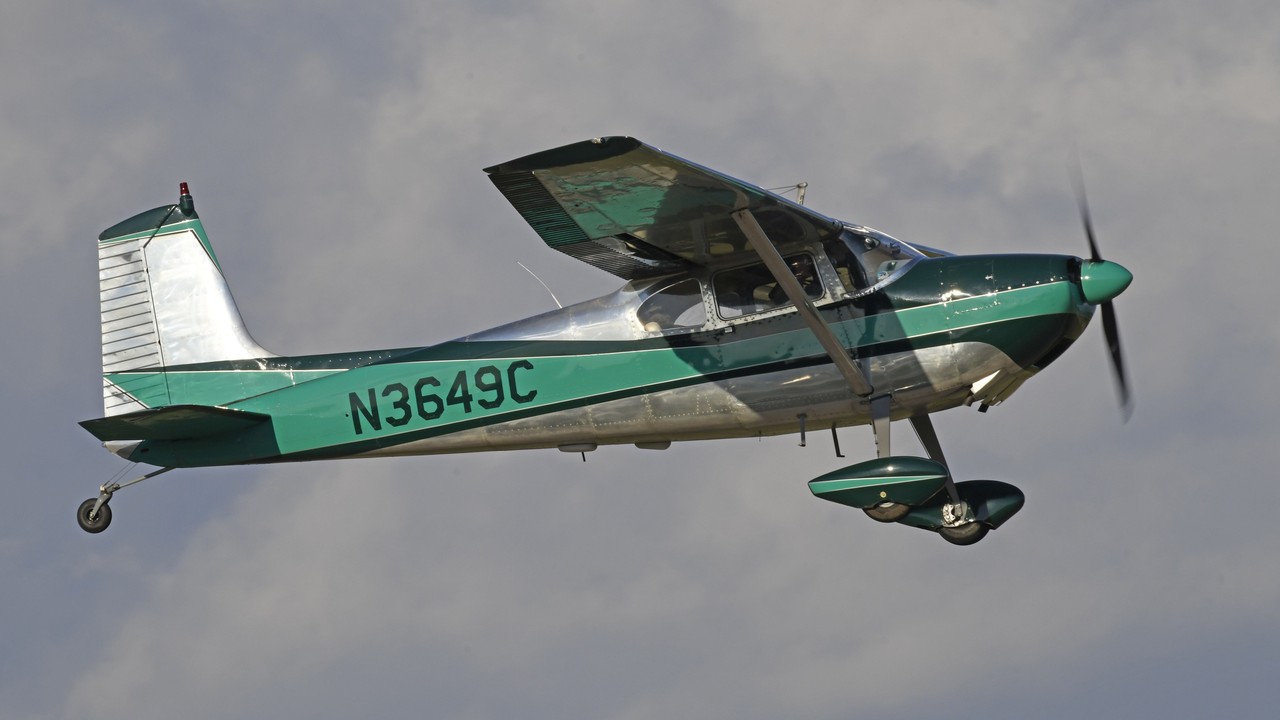
The Cessna 180 dominated the utility aircraft market from its introduction, with Cessna producing 6,193 examples between 1953 and 1981. During peak production years in the mid-1950s, the company manufactured between 600 and 800 Skywagons annually, meeting unprecedented demand for a rugged four-seat taildragger. The aircraft found particular favor among bush pilots, freight operators, and private owners who required reliable access to remote airstrips where tricycle-gear aircraft could not venture.
By the 1960s, the 180 had established itself as the preferred mount for operations in Alaska, northern Canada, and other frontier regions. Its ability to operate from grass strips, gravel bars, and improvised landing areas made it indispensable for mail delivery, medical evacuation, and cargo transport in areas lacking traditional airports.
Military Service
While primarily a civilian aircraft, the Cessna 180 saw limited military adoption during the Cold War era. The U.S. military acquired seventeen examples, designated as U-17C, comprising eight 180E and nine 180H variants. These aircraft served in utility and transport roles, primarily for export programs supporting allied nations. Unlike its contemporaries that saw extensive combat service, the 180's military career remained modest, with the aircraft's true calling lying in civilian operations.
The Manufacturer
Cessna Aircraft Company, founded in 1927 by aviation pioneer Clyde Cessna, developed the 180 as a successor to the popular but underpowered Cessna 170. The company's engineering team, led by figures including Dwight Wallace who specialized in high-wing utility designs, sought to create a more capable aircraft that could handle the demanding requirements of post-war general aviation. Following Cessna's 1992 bankruptcy and subsequent 1997 acquisition by Textron, the company continues today as Textron Aviation after merging with Beechcraft in 2014.
Engine & Technical Innovation
The heart of the Skywagon was Continental Motors' O-470 series engine, a six-cylinder air-cooled powerplant that evolved throughout the aircraft's production run. Early models employed the 225-horsepower O-470-A and O-470-J engines, while later variants received the more powerful 230-horsepower O-470-K, O-470-L, and O-470-R engines operating at 2,600 rpm. The final production aircraft featured the O-470-S variant, maintaining the reliable characteristics that made the engine family a mainstay of general aviation.
Cessna's designers incorporated several innovative features that distinguished the 180 from competitors. The aircraft featured large single-slotted Fowler flaps, marketed as "Para-Lift" flaps, capable of 40-degree deflection for exceptional lift and controllable sink rates during approach. Spring steel landing gear provided durability for rough-field operations, while the all-metal construction offered longevity that kept many examples flying decades after manufacture.
Evolution and Variants
The 180 underwent continuous refinement throughout its 28-year production run. The initial 1953 model gave way to the 180A in 1957, featuring an improved instrument panel and increased gross weight to 2,650 pounds. Subsequent variants through the 180F incorporated the more powerful O-470 engines and expanded fuel capacity to 84 gallons. The 180G and 180H models, produced from 1964 to 1972, adopted the larger fuselage and wings from the Cessna 185, expanding seating capacity to six occupants and gross weight to 2,800 pounds. The "Skywagon" name became official with the 180G variant in 1969.
Performance and Pilot Appeal
Pilots praised the 180 for its forgiving handling characteristics and impressive short-field performance. With a maximum speed of 165 to 175 knots and a service ceiling exceeding 14,000 feet, the aircraft offered respectable cross-country capability while maintaining its utility mission focus. The 84-gallon fuel system provided a range approaching 1,000 nautical miles, enabling extended operations in remote areas. Climb rates of 1,000 to 1,200 feet per minute and a useful load of approximately 1,160 pounds made the 180 particularly attractive for cargo and passenger operations from confined areas.
Production End and Legacy
Cessna ended 180 production in 1981 after completing the final aircraft, serial number 18053203, on September 10th. The decision reflected declining light aircraft sales and market preference for tricycle-gear aircraft like the Cessna 182. However, the 180's legacy endures with approximately 2,785 examples remaining in active service. Market values reflect continued demand, with early models commanding $60,000 or more and late-production 180K variants exceeding $110,000.
The National Air and Space Museum preserves the "Spirit of Columbus," a 1953 model representing the 238th Skywagon built, honoring the type's contribution to general aviation history. As the best-selling taildragger of its era, the Cessna 180 established the template for modern backcountry aircraft and paved the way for the more powerful Cessna 185, ensuring its place as an icon of bush flying.