
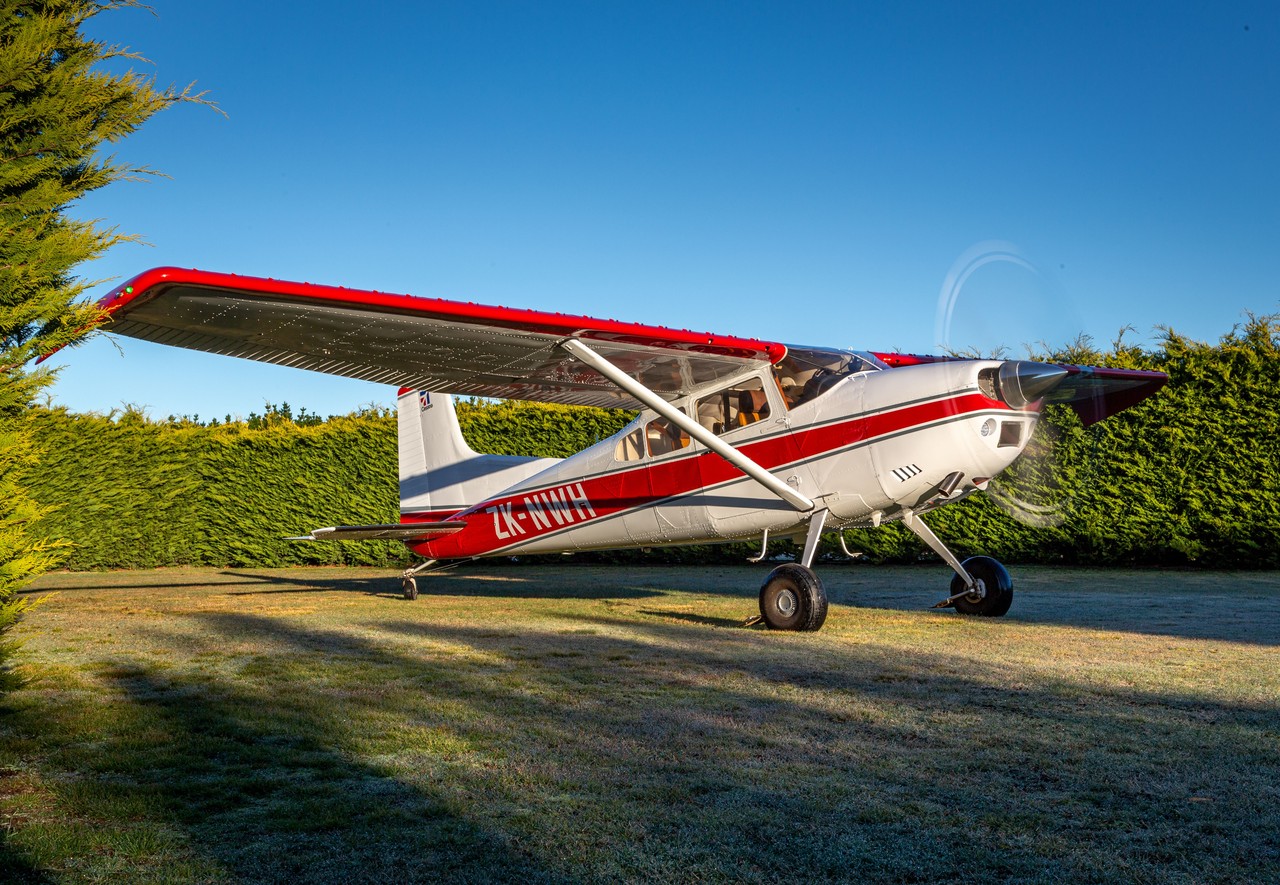
The Workhorse of Remote Aviation
The Cessna 185 Skywagon earned its reputation as one of aviation's most versatile utility aircraft through nearly a quarter-century of production. From 1961 to 1985, Cessna manufactured 4,427 Skywagons, creating what many consider the ultimate bush plane. The aircraft's ability to operate with floats, skis, or conventional landing gear made it indispensable for operations in Alaska, northern Canada, and remote locations worldwide.
Peak production occurred in 1976 when Cessna delivered 297 Skywagons, reflecting the aircraft's popularity during the general aviation boom. However, production declined sharply in the early 1980s, with only nine aircraft built in 1984, the penultimate year of manufacture. The final Skywagon rolled off the production line in 1985, ending a successful 24-year run.
Evolution from the 180
Cessna developed the 185 as a more powerful variant of the successful Model 180, which had been in production since 1953. The 185 retained the proven high-wing configuration but incorporated significant improvements including a stronger firewall, reinforced landing gear and axles, an extended cabin with a third side window, and a distinctive long dorsal fin extending from the vertical stabilizer.
The original 1961 Model 185 carried six occupants and featured 65 gallons of fuel capacity, expandable to 84 gallons. By 1965, Cessna introduced a new "wet" wing design holding 88 gallons, significantly extending the aircraft's range. The large single-slotted Fowler-type "Para-Lift" flaps became a signature feature, providing exceptional lift characteristics and enabling the steep approach angles essential for bush operations.
Continental Power
Cessna initially equipped the 185 with the Continental IO-470-F, a fuel-injected engine producing 260 horsepower. In 1966, the company introduced the more powerful Continental IO-520-D generating 300 horsepower. The IO-470-F proved so popular among operators that Cessna made it standard across the entire 185 line in 1967, valuing reliability and proven performance over raw power.
These Continental engines earned reputations for durability in harsh operating conditions, crucial for aircraft frequently operating in remote areas far from maintenance facilities. The combination of proven powerplants and rugged airframe construction made the 185 a favorite among bush pilots who demanded reliability above all else.
Military Service
Approximately 200 Cessna 185s served in military roles as U-17A and U-17B variants. While not primarily designed as military aircraft, the Skywagon's utility and reliability made it valuable for liaison, observation, and light transport duties. The military variants demonstrated the basic design's adaptability to specialized missions beyond civilian utility flying.
Design Refinements
Cessna continuously improved the 185 throughout its production run. The 1962 Model 185A introduced new wingtips and position lights along with dual fuel pumps. The 1963 Model 185B added an overhead light console and magnesium rudder pedals. The 1964 Model 185C featured a 52-amp alternator and enhanced braking system.
The most significant upgrade came in 1973 with the introduction of the Camber Lift wing, originally developed by Robertson Aircraft for their STOL modification kit. This wing design reduced stall speeds and improved low-speed handling characteristics, making an already capable short-field performer even more impressive.
The A185F variant, introduced following the 1973 wing change, became the most popular version, accounting for more than half of all 185s built. The A185 series as a whole represented 74 percent of total production, demonstrating the effectiveness of Cessna's continuous improvement philosophy.
Cessna Aircraft Company Legacy
Cessna Aircraft Company, founded in 1927 by Clyde Cessna, established itself as a premier manufacturer of general aviation aircraft. The company survived the Great Depression, flourished during World War II producing military trainers, and dominated the postwar civilian market with aircraft like the 170, 180, and 185.
Today, Cessna operates as part of Textron Aviation, formed through various corporate acquisitions and mergers. The company continues manufacturing aircraft, though the utility aircraft market that made the 185 successful has largely shifted to turbine-powered designs.
Pilot's Aircraft
Pilots praised the 185 for its forgiving handling characteristics and exceptional short-field performance. The aircraft's high-wing configuration provided excellent ground visibility and inherent stability, while the robust landing gear handled rough airstrips with confidence. Bush pilots particularly valued the 185's ability to carry substantial loads into and out of confined areas.
The Skywagon's versatility extended beyond bush flying to agricultural operations, where its load-carrying capability and slow-speed handling made it effective for crop dusting and aerial application work. This adaptability across multiple roles contributed significantly to the aircraft's commercial success.
Enduring Legacy
Decades after production ended, hundreds of Cessna 185s remain active in aviation service worldwide. The aircraft's reputation for reliability and utility has ensured strong support from specialized maintenance facilities and parts suppliers. Many examples continue operating in their original bush flying role, while others serve recreational pilots who appreciate the aircraft's unique combination of utility and character.
The 185's influence extends beyond its own production numbers, establishing design principles and operational capabilities that influenced subsequent utility aircraft development. For many aviation enthusiasts, the Skywagon represents the golden age of general aviation when rugged, simple aircraft opened remote corners of the world to aviation access.