
Service History
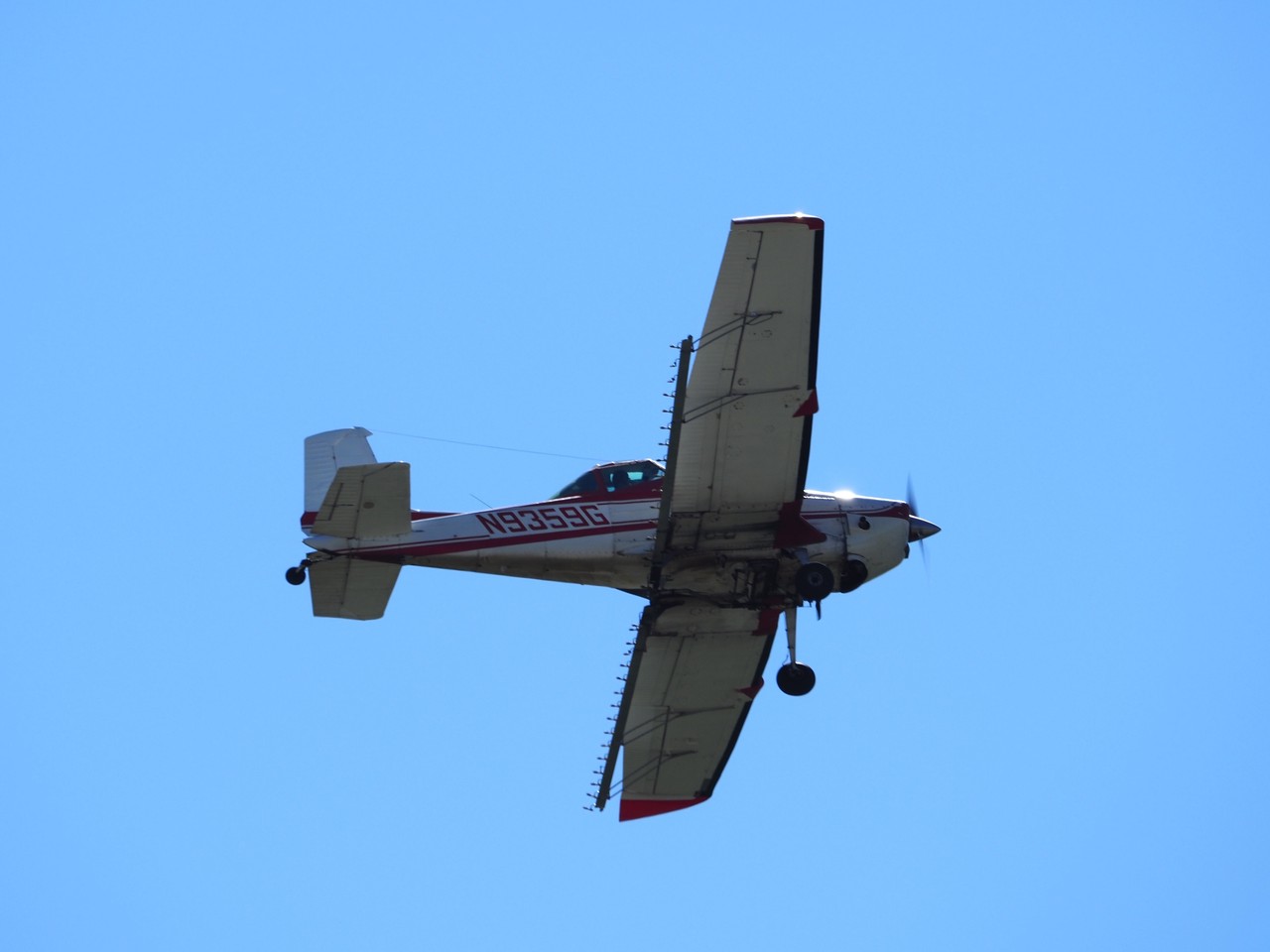
The Cessna 188 series dominated agricultural aviation from its 1966 certification through 1985, delivering 241 aircraft in its first year alone. Of the 3,976 total aircraft produced, the AGtruck variant proved most popular with 1,949 units, followed by 1,589 AGwagons, 386 AGhuskys, and 53 AGpickups. These aircraft revolutionized crop dusting by replacing improvised conversions of training and utility aircraft with purpose-engineered equipment featuring protected cockpits and optimized chemical dispensing systems.
The 188 series found widespread use beyond traditional agricultural spraying, serving effectively as glider tugs and specialized utility aircraft. Operators worldwide embraced the type's rugged construction and reliable performance, with examples operating across diverse environments from North American farmlands to international agricultural operations in Australia and South America.
The Manufacturer
Cessna Aircraft Company, founded in 1927 by aviation pioneer Clyde Cessna, developed the 188 series at their Wichita, Kansas facility following extensive market research conducted throughout the 1960s. The company surveyed agricultural operators worldwide to identify requirements for an ideal purpose-built agricultural aircraft, leading to the 188's distinctive design priorities: maximum hopper capacity, pilot protection, and rough-field capability.
By the 1970s, Cessna employed over 13,000 workers and had established itself as the world's largest producer of general aviation aircraft. General Dynamics acquired the company in 1985, coinciding with the end of 188 production. Textron purchased Cessna in 1992, and the manufacturer continues operations today as Textron Aviation's Cessna division, maintaining its Wichita headquarters.
Engine & Technical Details
Cessna equipped the 188 series with Teledyne Continental six-cylinder horizontally-opposed air-cooled engines across four distinct variants. The original 188 AGwagon and AGpickup models received the Continental O-470-R or O-470-S engines producing 230 horsepower through fixed-pitch propellers, with AGwagon certification achieved on February 14, 1966.
The A188B AGwagon, AGtruck, and AGwagon C variants featured the fuel-injected Continental IO-520-D engine generating 300 horsepower, certified December 20, 1971. This configuration became standard for later production, offering improved performance with constant-speed propellers and 280-gallon chemical hoppers.
The top-performing T188C AGhusky incorporated the turbocharged Continental TSIO-520-T engine producing 310 horsepower, certified September 8, 1978. This variant provided enhanced hot-weather and high-altitude performance, with maximum restricted gross weight increased to 4,400 pounds compared to the standard variants' 4,000-pound limit.
Each aircraft featured a single-seat configuration with an enclosed, protected cockpit surrounded by steel rollover structure. The all-metal construction utilized a braced low-wing design with non-retractable tailwheel landing gear optimized for operations from rough agricultural strips.
Design Innovation
The 188's design team prioritized pilot safety through innovative structural protection, implementing a steel overturn structure that shielded the cockpit during potential rollover accidents. This feature addressed the inherent dangers of low-level agricultural flying, where terrain obstacles and mechanical failures posed constant threats.
Hopper capacity ranged from 757 to 1,060 liters (200 to 280 US gallons) depending on variant, with efficient chemical dispensing systems for both liquid spraying and dry material dusting applications. The unchanged basic airframe design throughout 17 years of production demonstrated the engineering team's success in creating an optimal configuration, with improvements limited to engines and dispensing equipment.
Production & Legacy
Production ceased in phases: AGpickup ended in 1976, AGwagon in 1981, and both AGtruck and AGhusky in mid-1985. Initial pricing reflected the aircraft's specialized nature, with 1966 models listed at $15,995 for the 230-horsepower variant and $18,995 for the 300-horsepower A188.
Hundreds of 188 series aircraft remain active in 2024, primarily serving agricultural operations and glider-towing duties. The type earned the affectionate nickname "Poor Man's P-51" among operators, referencing its rugged reliability and purposeful design.
The Hangar Flight Museum in Calgary, Canada, preserves a Cessna 188 AGwagon as an example of agricultural aviation evolution. The 188 series established Cessna's reputation in the specialized agricultural market and demonstrated the viability of purpose-built designs over converted aircraft, influencing subsequent agricultural aircraft development throughout the industry.