
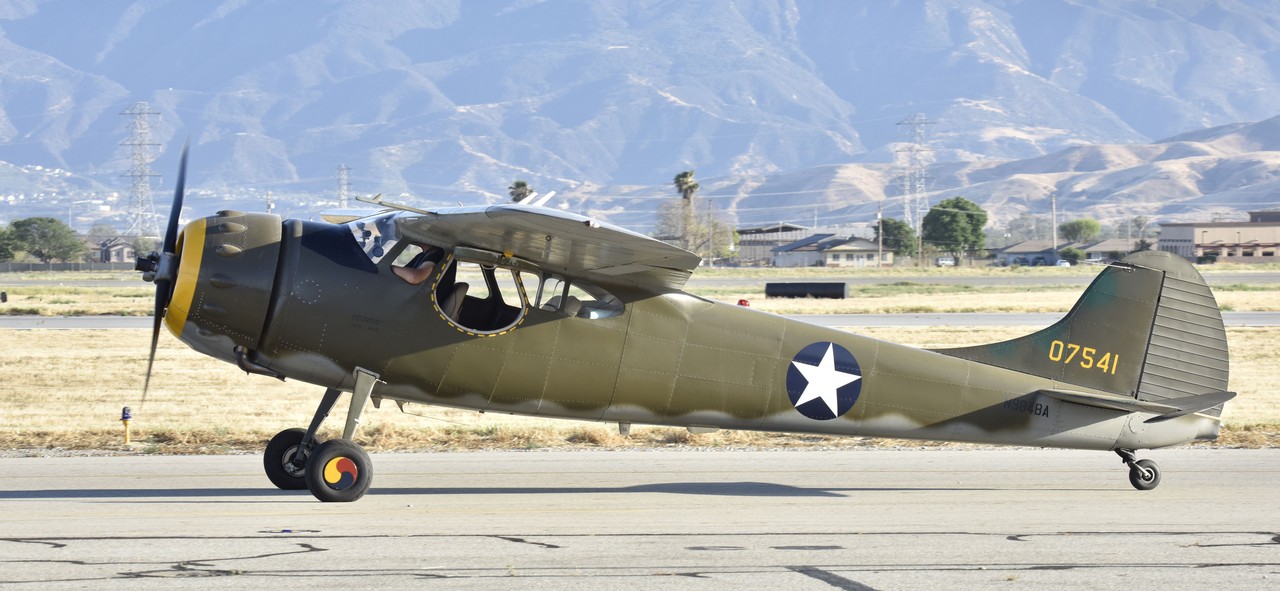
The Business Aviation Pioneer
The Cessna 190 emerged during a pivotal moment in American aviation history when thousands of World War II pilots returned home seeking civilian flying opportunities. Unlike its more powerful sibling, the 195, the 190 prioritized economy and reliability over raw performance, making it an attractive option for small businesses and private operators who needed dependable transportation without excessive operating costs.
Development and Design Heritage
Cessna's engineering team, led by figures including Dwight Wallace, developed the 190 from the pre-war Airmaster design, incorporating lessons learned during the company's wartime production of military trainers and gliders. The aircraft featured a cantilever high-wing configuration with an all-metal semi-monocoque fuselage, representing a significant advancement over fabric-covered designs of the era. Notable innovations included a retracting door step for easier passenger access and later models incorporated close-cowled engines with enlarged flaps that increased lift area by 50 percent.
Continental Power vs. Jacobs Performance
The defining characteristic of the 190 was its Continental W670-23 radial engine, producing 240 horsepower compared to the 275-300 horsepower Jacobs R-755 found in the 195. While Continental Motors designed their nine-cylinder radial for reliability and smoother operation, consuming 0.5 gallons per hour less fuel, the engine delivered notably different performance characteristics. Pilots reported cruise speeds approximately 10 mph slower than Jacobs-equipped aircraft and climb rates reduced by 200 feet per minute, though many appreciated the Continental's drier operation and reduced vibration.
Limited Military Service
Although designed primarily for civilian use, the 190/195 series attracted limited U.S. military attention in the early Cold War period. The U.S. Air Force acquired 15 UC-126A aircraft in 1949, followed by 5 LC-126B models for National Guard service in 1950, and 3 LC-126C variants for U.S. Army operations in 1951. These military versions, totaling approximately 83 aircraft across all LC-126 variants, served in transport, rescue, and utility roles, with particular effectiveness in Arctic operations where their ability to operate on skis proved valuable.
Cessna Aircraft Company Legacy
Founded in 1927 by Clyde Cessna and his partners, Cessna Aircraft Company had established itself as a significant general aviation manufacturer by the time 190 production began at their Wichita, Kansas facilities in October 1947. The company's wartime production of "Bamboo Bombers" - wooden training gliders - and other military equipment had interrupted civilian aircraft development, making the 190 part of Cessna's return to peacetime manufacturing. Following acquisition by Textron in 1992, the company continues operations today as Textron Aviation, maintaining the Cessna brand recognition.
Commercial Operations and Market Position
Marketed as a "Businessliner" or "Business Class" aircraft, the 190 found its niche among private owners, small businesses, and specialized operators who valued its five-seat capacity and operational versatility. Salesmen and contractors particularly appreciated the aircraft's ability to access shorter airfields that larger business aircraft could not reach. The 190's approval for float and ski operations under Type Certificate A-790 expanded its utility for operators in remote regions, though it never achieved the market penetration of Cessna's later designs.
Engine Conversions and Modifications
Despite the Continental engine's reliability, many 190 owners eventually converted their aircraft to the more powerful Jacobs R-755 radial due to better parts availability and increased performance. These conversions became increasingly common as Continental W670 components became scarce, fundamentally changing the aircraft's performance characteristics but extending operational life for many examples.
Production Numbers and Rarity
Cessna manufactured exactly 233 Model 190 aircraft during the seven-year production run, making it considerably rarer than the more popular 195 variant. Total series production, including all 190s, 195 variants, and military LC-126s, ranged from 1,099 to 1,183 aircraft depending on how various sources counted prototypes and military conversions.
Current Status and Preservation
Approximately 700 aircraft from the 190-series remain registered in FAA databases, though the airworthiness status varies significantly. Original 190 models are particularly rare due to engine conversions and attrition over seven decades. Notable preserved examples include a 1948 Cessna 190 displayed at the Western North Carolina Air Museum, representing the type's contribution to post-war aviation development. The aircraft maintains cultural significance as a classic taildragger design and regularly appears at aviation events including EAA AirVenture, where enthusiasts celebrate its role in bridging pre-war designs with modern utility aircraft concepts.