
Service History
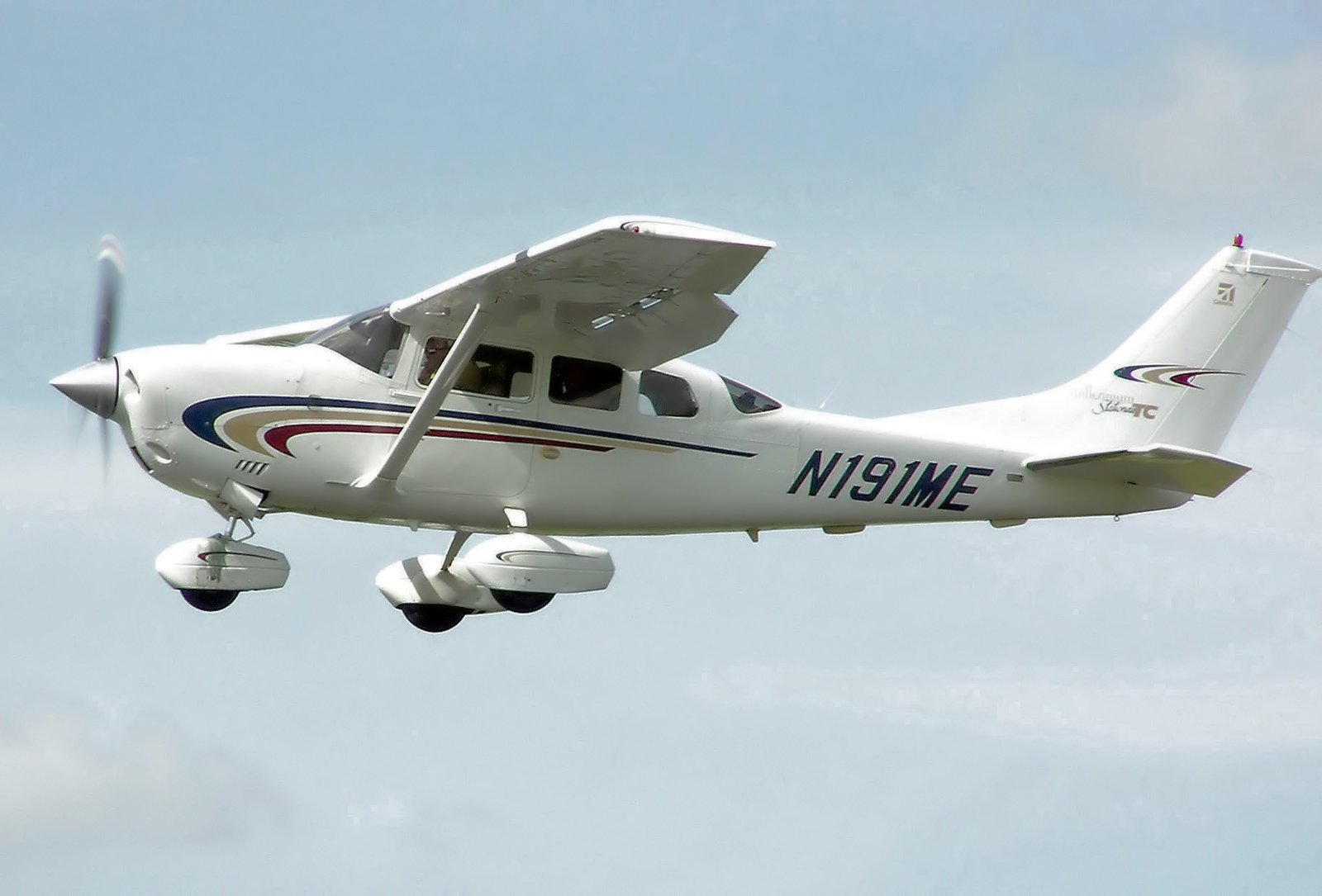
The Cessna 207 found its primary role serving air taxi operators who needed more passenger capacity than the popular six-seat Cessna 206 could provide. These operators utilized the aircraft's full seven-seat capacity for short-haul passenger and cargo runs, taking advantage of its ability to operate from shorter airfields thanks to its high-wing design. Unlike many general aviation aircraft that found homes with private owners, the 207 remained predominantly in commercial service throughout its operational life, proving its worth as a reliable workhorse in the utility aviation sector.
The Manufacturer
Cessna Aircraft Company, founded in 1927 by Clyde Cessna, had established itself as the dominant force in American general aviation by the 1960s. The company pioneered mass-produced light aircraft following World War II and controlled much of the U.S. general aviation market with successful models like the 172 and the 206 series. Cessna operated continuously from its Wichita, Kansas facilities, producing piston singles until 1986 when production was halted industry-wide due to product liability concerns. The company resumed select model production in 1998. Through a series of acquisitions, Cessna was purchased by General Dynamics in 1986 and subsequently by Textron Inc. in 1992, continuing today as Textron Aviation under the Cessna brand.
Engine & Technical Details
The standard Cessna 207 utilized the Continental IO-520-F engine, a six-cylinder, fuel-injected powerplant producing 300 horsepower. This normally aspirated inline piston engine provided reliable performance for utility operations and featured a constant-speed propeller. Continental, now known as Continental Aerospace Technologies, manufactured these engines as part of their IO-520 series that spanned production from the 1960s through the 1990s.
Turbocharged variants expanded the 207's capabilities significantly. The T207 received certification on July 12, 1976, initially equipped with the TSIO-520-G engine producing 300 horsepower. An upgraded version appeared in 1977 featuring the more powerful TSIO-520-M engine rated at 310 horsepower. The T207A, certified on September 11, 1979, incorporated the eight-seat configuration that had been introduced to the standard model.
Production & Evolution
The Cessna engineering team developed the 207 as a stretched-fuselage variant of the successful 206, extending the cabin length to accommodate an additional row of seating. The aircraft first took flight on May 11, 1968, and received certification on December 31, 1968. Initial production models carried the "Skywagon" designation when manufacturing began in 1969 with serial number 1.
Significant model changes occurred throughout the production run. In 1977 or 1978, Cessna renamed the aircraft "Stationair 7" to better reflect its passenger-carrying mission. The company added an eighth seat in 1980 or 1981, creating the "Stationair 8" variant. Production records show detailed annual output for the 207A model: 52 aircraft in 1977, 68 in 1978, 80 in 1979, 92 in 1980, 75 in 1981, 33 in 1982, 5 in 1983, and 21 in 1984, totaling 426 of this variant.
The aircraft maintained its maximum gross weight of 3,800 pounds for landplane operations and featured four side windows in the stretched fuselage section. Later models incorporated improvements such as Vernier mixture controls and energy-absorbing panels, which were added to the 1977 model year. The design retained the cantilever high-wing configuration, fixed tricycle landing gear, and conventional tail arrangement that had proven successful on the 206 series.
Legacy and Current Status
Production of the Cessna 207 concluded in 1984 with serial number 788, marking the end of a 15-year manufacturing run that produced exactly 626 aircraft. The timing coincided with Cessna's broader decision to halt piston single production amid industry-wide concerns over product liability litigation. While production numbers remained relatively modest compared to other Cessna models, the 207 succeeded in its intended role as a utility aircraft capable of hauling seven to eight occupants.
The aircraft's durability became evident through decades of rugged commercial service, with many examples continuing to operate in air taxi and charter roles well beyond their initial service years. Some operators chose to extend their aircraft's utility through turbine conversions, installing engines such as the Allison 250-C20S to improve performance and reliability. This modification transformed the piston-powered transport into a more capable turboprop, though such conversions remained relatively uncommon due to their substantial cost.
The Cessna 207 occupies a unique position in aviation history as a purpose-built commercial utility aircraft that successfully extended the 206 lineage into higher-capacity operations. While it never achieved the widespread recognition of smaller Cessna models, the 207 proved that a market existed for aircraft bridging the gap between six-seat family planes and larger commercial transports.