
Service History
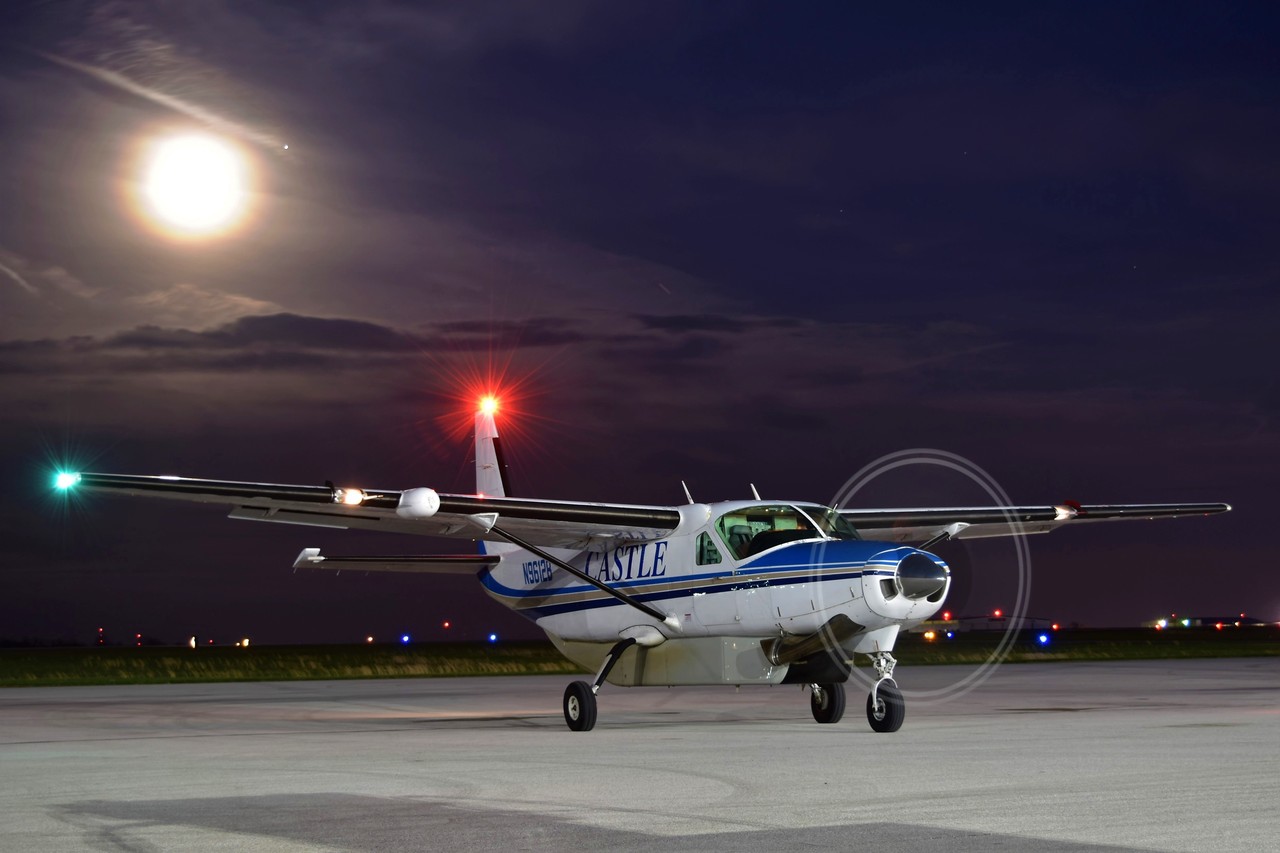
The Cessna 208 Caravan transformed regional and utility aviation after entering service in 1985, with over 3,000 aircraft delivered across nearly 70 countries accumulating more than 8.5 million flight hours. Federal Express became the launch customer, ordering 40 specialized 208A Cargomaster variants in 1986 for short-haul feeder operations, validating the concept of single-engine commercial cargo transport. The aircraft's versatility enabled operators to access remote airstrips previously served only by smaller, less capable aircraft, opening new routes across Alaska's wilderness, Kenya's Masai Mara region, and countless other challenging destinations worldwide.
Regional airlines quickly adopted the Caravan for passenger service, capitalizing on its ability to operate from unpaved strips while maintaining airline-level reliability. The aircraft's quick-change cabin configuration allowed operators to switch between passenger and cargo missions within hours, maximizing utilization rates that often exceeded those of twin-engine competitors.
The Manufacturer
Cessna Aircraft Company, founded by aviation pioneer Clyde Vernon Cessna in 1911, had established itself as the world's leading general aviation manufacturer before developing the Caravan. The company temporarily ceased production in 1991 due to product liability issues but resumed Caravan manufacturing in the mid-1990s under new ownership. General Dynamics acquired Cessna in 1986, followed by Textron's purchase in 1992, creating Textron Aviation while retaining the iconic Cessna brand.
The Caravan represented Cessna's bold entry into commercial aviation, departing from their traditional focus on light general aviation aircraft. This single program demonstrated that the company could successfully compete in the turboprop utility market dominated by twin-engine aircraft from competitors like Beechcraft and Piper.
Engine & Technical Innovation
The Caravan's success centered on its powerplant: the Pratt & Whitney Canada PT6A series turboprop, beginning with the PT6A-114 producing 600 shaft horsepower. Later variants adopted the PT6A-114A generating 675 horsepower, earning the designation "Caravan 675." The 2012 Grand Caravan EX featured the more powerful PT6A-140 producing 867 horsepower, significantly improving hot-and-high performance.
Pratt & Whitney Canada's PT6A engine family, first run in 1963, provided the reliability foundation essential for single-engine commercial operations. The free-turbine design offered flat-rated power output and excellent fuel efficiency, while reverse-thrust propellers from Hartzell or McCauley enhanced short-field performance. The engine's reputation for dependability, accumulated over millions of flight hours across thousands of aircraft, convinced operators and regulators that single-engine commercial transport could match twin-engine safety standards.
Cessna's engineering team designed the Caravan with fixed tricycle landing gear and a high-wing configuration specifically for rough-field operations. The aircraft required minimal ground support equipment and could be maintained at remote locations, crucial advantages for operators serving undeveloped regions.
Pilot Perspective
Pilots praised the Caravan's straightforward systems and forgiving handling characteristics, particularly during single-engine approaches that challenged pilots transitioning from twin-engine aircraft. The aircraft cruises at approximately 185 knots with a service ceiling of 25,000 feet and a range exceeding 1,000 nautical miles with full payload. Single-pilot certification reduced operating costs, though many commercial operators employed two-pilot crews for passenger service.
The spacious cockpit accommodated modern avionics upgrades, allowing older Caravans to remain competitive with glass cockpit retrofits. Pilots appreciated the aircraft's ability to carry substantial loads from short, unpaved strips while maintaining stable flight characteristics in turbulent conditions common to low-altitude operations.
Production & Legacy
Cessna delivered the first production Caravan in August 1984, following FAA certification in October 1984. The 208B Grand Caravan, featuring a 4-foot fuselage stretch accommodating up to 14 passengers, first flew in 1990 and received certification on December 13, 1989. Production continued through various corporate ownership changes, with manufacturing remaining in Wichita, Kansas.
The Caravan's influence extended beyond its direct commercial success, proving that single-engine turboprops could compete effectively against twin-engine aircraft in commercial service. This validation encouraged competitors like Quest Aircraft to develop the Kodiak, expanding the single-engine turboprop utility market.
Today, the majority of the 3,000-plus Caravans built remain in active service worldwide, testament to their durability and continued relevance. Amphibious variants equipped with Wipline 8000 floats, certified on March 26, 1986, opened seaplane operations to turboprop reliability and capacity. The aircraft's legacy lies not merely in production numbers, but in fundamentally changing regulatory and operator attitudes toward single-engine commercial aviation, establishing a market segment that continues growing four decades after the prototype's first flight.