
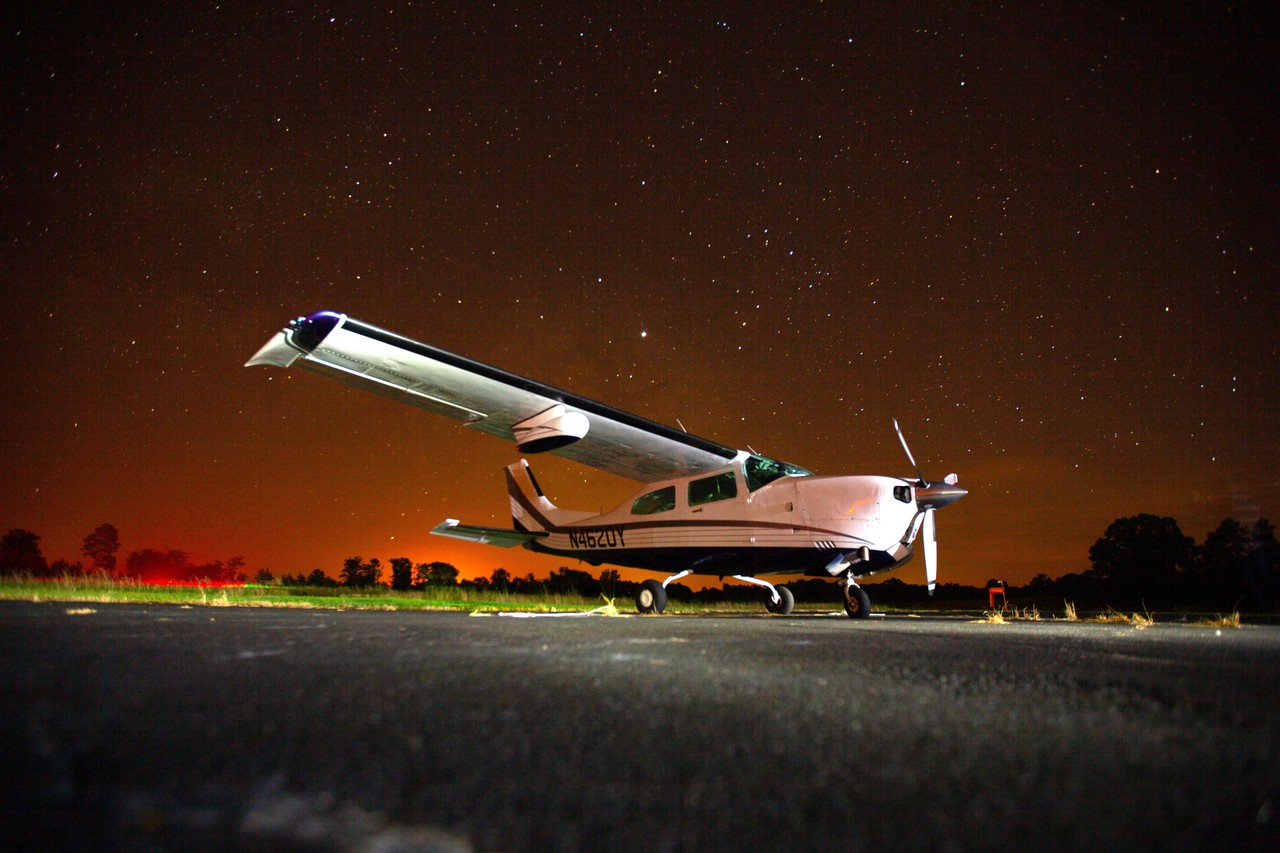
Bridging the Performance Gap
The Cessna 210 emerged from a four-year development program designed to compete directly with the Beechcraft Bonanza while offering superior stability and safety margins. Cessna's engineering team created an aircraft that delivered twin-engine performance from a single powerplant, attracting pilots who wanted speed without the complexity of multi-engine operations. The 210's success stemmed from its ability to cruise at 165-200 knots while carrying substantial payloads over transcontinental distances.
Market Dominance
From its 1960 introduction through 1986, the Centurion became the benchmark for high-performance singles. The initial 210 model, with 575 aircraft built, established the type's reputation for speed and utility. Production peaked with the 210L series, which saw 2,070 aircraft manufactured between 1972 and 1976. The later 210N variants, including 1,943 naturally aspirated and turbocharged examples built from 1981-1984, represent the largest single group in today's active fleet.
Engineering Innovation
Cessna's design team incorporated several advanced features that distinguished the 210 from competitors. The aircraft featured a cantilever wing design that eliminated external struts, reducing drag and improving performance. Hydraulically operated retractable landing gear provided the clean aerodynamics necessary for high cruise speeds, while Continental fuel-injected engines delivered reliable power across the altitude spectrum.
The pressurized P210N variant, with 834 examples built between 1978 and 1983, offered airline-like cabin comfort at altitudes up to 25,000 feet. This model featured a Continental TSIO-520-AF engine producing 310 horsepower, enabling cruise speeds of 200 knots true airspeed while maintaining sea-level cabin pressure up to 13,000 feet.
Continental Powerplants
Early 210 models employed Continental IO-470 engines producing 260-285 horsepower, providing adequate performance for the aircraft's initial weight and mission profile. As Cessna increased payload capacity and performance expectations, later variants adopted the Continental IO-520-L engine, delivering 285 horsepower with a five-minute rating of 300 horsepower for takeoff.
Turbocharged variants utilized Continental TSIO-520 engines that maintained sea-level power output to higher altitudes. These powerplants featured intercoolers and wastegate controllers that automatically managed boost pressure, allowing pilots to cruise efficiently above weather and terrain obstacles. The engines' 1,500-hour time between overhaul intervals and requirement for 100-octane fuel became industry standards for high-performance singles.
Pilot Appeal
The 210's reputation among pilots centered on its forgiving handling characteristics and impressive cross-country capability. Unlike some high-performance singles that demanded constant attention, the Centurion provided stable instrument flight characteristics and predictable stall behavior. The aircraft's useful load capacity of 1,630-1,675 pounds in later models allowed full fuel and passenger loads for most missions.
Climb rates of 860-1,300 feet per minute gave pilots confidence in obstacle clearance and weather avoidance. The 210's range of 805 nautical miles with standard fuel capacity, extendable to over 1,000 nautical miles with long-range tanks, made it competitive with light twins for business transportation.
Manufacturing Excellence
Cessna Aircraft Company, founded by Clyde Cessna in 1927, established itself as one of general aviation's "big three" manufacturers alongside Beechcraft and Piper. The company's Wichita, Kansas facilities produced the 210 series using assembly line techniques that ensured consistent quality while maintaining competitive pricing.
Production variants evolved systematically, with each model year incorporating pilot feedback and regulatory requirements. The 210D introduced the Continental IO-520-A engine, while the 210E of 1965 marked the first official use of the "Centurion" name. Manufacturing ceased in 1986 due to market conditions and product liability concerns that affected the entire general aviation industry.
Enduring Legacy
Today, hundreds of Cessna 210s remain active in private hands, flight schools, and commercial operations worldwide. The later N-suffix models, particularly those built after 1982 with improved fuel systems, command premium prices in the used aircraft market. Their combination of speed, payload, and single-engine simplicity continues attracting pilots who require serious cross-country capability.
Textron Aviation, which acquired Cessna in 2014, no longer produces the 210, focusing instead on turboprop and jet aircraft. However, the 210's influence persists in modern single-engine designs that prioritize speed and efficiency. The type's success demonstrated that properly executed high-performance singles could compete effectively with light twins, establishing a market segment that remains viable today.