
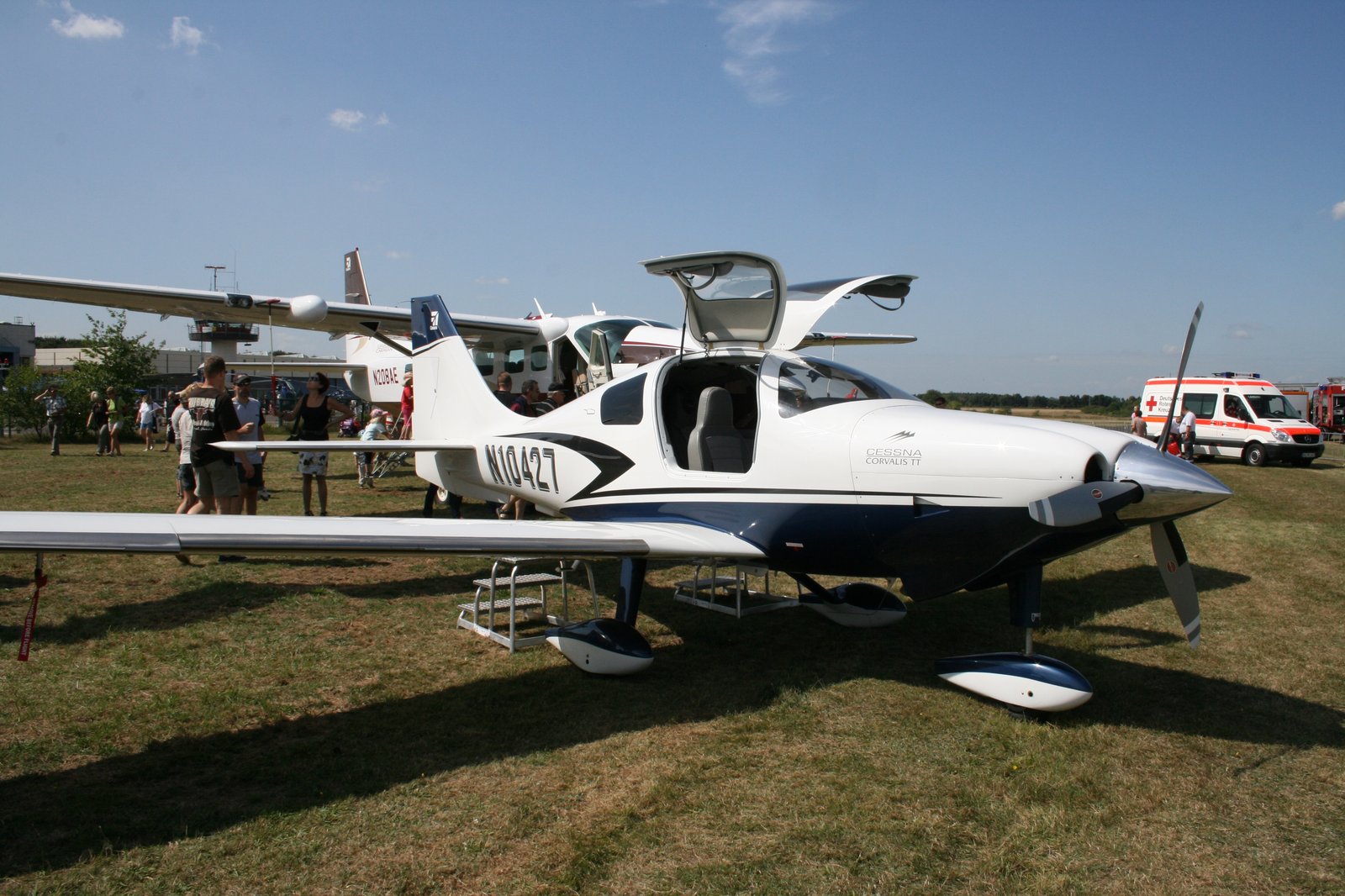
Design Origins and Development
The TTx emerged from Cessna's December 2007 acquisition of Columbia Aircraft Manufacturing Corporation, inheriting a sophisticated composite design that had evolved from the Columbia 400. The aircraft underwent several name changes during its development, initially marketed as the Cessna 400, then rebranded as the Corvalis TT on January 14, 2009, before finally becoming the TTx in 2011 with the official model designation T240. The design team at Columbia had created the aircraft to fill a specific niche: delivering jet-like performance in a fixed-gear configuration that would appeal to pilots seeking maximum speed without the complexity of retractable landing gear.
Manufacturing Challenges and Production
Cessna's production of the TTx faced significant challenges from the outset. Initially manufactured at the former Columbia facility in Bend, Oregon, production was relocated to Independence, Kansas in 2009 following the plant closure. Composite components were produced at Cessna's facility in Chihuahua, Mexico, but this arrangement proved problematic. Temperature and humidity control issues at the Mexican facility resulted in scrapped aircraft and regulatory fines, contributing to delays that pushed the TTx's certification to July 2013, years behind schedule.
The late-2000s recession devastated sales across the high-performance piston market. Cessna delivered 110 units of the 400 series in 2008, but this plummeted to just 41 in 2009 and a mere 7 aircraft in 2010. Despite market recovery in later years, with 23 units delivered in 2017, the damage to the program's viability was irreversible. Cessna announced the end of TTx production in February 2018.
Technical Excellence and Innovation
The TTx represented the pinnacle of fixed-gear piston aircraft performance. Its Continental TSIO-550-C engine, a six-cylinder twin-turbocharged powerplant producing 310 horsepower at 2,600 rpm, drove a three-blade McCauley constant-speed propeller. This configuration enabled the aircraft to achieve 235 knots true airspeed at 25,000 feet while burning 24 gallons per hour at 85 percent power, making it genuinely competitive with light turboprops in terms of speed.
The aircraft's composite construction allowed for optimal aerodynamic shaping impossible with traditional aluminum. Carbon fiber comprised the primary structure, contributing to both performance and structural integrity. Cessna subjected the airframe to 171,000 fatigue test cycles, equivalent to 120 years of service life, achieving utility category certification unique among high-performance singles.
Avionics and Certification Milestones
The TTx featured Garmin's advanced G2000 glass cockpit system, incorporating dual 14.1-inch displays and an intuitive touch-screen controller that set new standards for general aviation avionics integration. In June 2014, Cessna achieved certification for Flight Into Known Icing (FIKI) capability, providing 2.5 hours of ice protection through pneumatic boots and heated surfaces. This certification, announced initially in March 2012, significantly expanded the aircraft's utility for instrument flight rules operations.
Market Competition and Commercial Reality
The TTx competed directly with Cirrus Aircraft's SR22, but faced significant disadvantages in market positioning. While Cirrus delivered 309 SR22s in 2017, Cessna managed only 23 TTx deliveries the same year. The Cirrus aircraft's ballistic parachute system provided a compelling safety advantage that resonated with buyers, while its established dealer network and earlier market entry created momentum that Cessna struggled to overcome.
Operational economics also favored competitors. The TTx's maximum takeoff weight of 3,600 pounds limited full-fuel payload to just 388 pounds with 102 gallons of usable fuel aboard. While the aircraft offered impressive range of 1,229 nautical miles, its premium pricing and limited payload flexibility restricted market appeal.
Production Legacy and Current Status
Cessna ultimately produced 261 examples of the 400, Corvalis TT, and TTx variants between 2007 and 2018. Combined with the 604 certified Columbia aircraft built by the original manufacturer from 2000 to 2007, total production of this design family reached 704 aircraft. This represented a commercial disappointment for Cessna, which had invested heavily in acquiring and developing the program.
Today, dozens of TTx aircraft remain in active service, evidenced by recent accident reports involving various tail numbers. The aircraft continues to represent the absolute performance pinnacle for fixed-gear piston singles, with no manufacturer currently producing anything comparable. While no TTx examples are known to reside in major aviation museums, the aircraft's technological achievements ensure its place in aviation history as Cessna's most ambitious attempt to challenge Cirrus's dominance of the high-performance piston market.