
Development and Design Evolution
The T303 Crusader emerged from Cessna's earlier 303 Clipper project, which first flew on February 14, 1978, as a four-seat aircraft powered by two 160-horsepower Lycoming O-320 engines. Originally conceived to compete directly with the Piper Seminole, Gulfstream American GA-7 Cougar, and Beechcraft Duchess, the initial design proved inadequate as market demand for four-seat light twins declined rapidly.
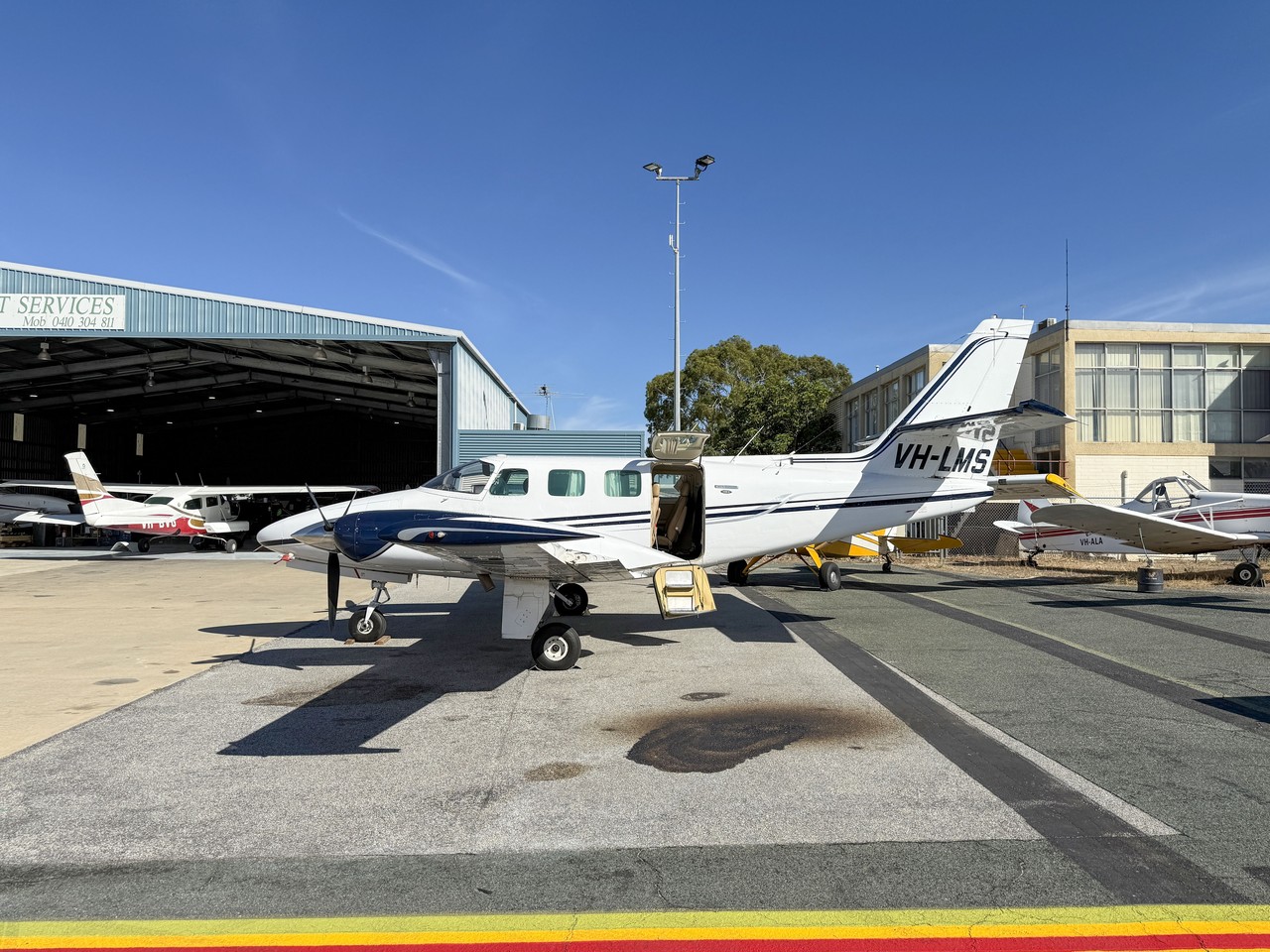
Cessna's engineers completely redesigned the aircraft as a six-seat twin, undertaking extensive wind tunnel testing for approximately 18 months. The redesign process involved significant modifications to control surfaces, fairings, and most notably, the horizontal stabilizer, which was repositioned halfway up the vertical tail to create the distinctive "Crescent Tail" configuration that became the aircraft's identifying feature. This unusual tail design addressed propeller wash effects that had plagued the original configuration.
The aircraft's name change from "Clipper" to "Crusader" occurred due to trademark concerns, as Pan American Airlines held exclusive rights to the "Clipper" designation for their fleet aircraft. The redesigned T303 Crusader made its maiden flight on October 17, 1979, marking Cessna's first all-new production twin-engine aircraft in over a decade.
Production and Market Performance
Cessna began T303 Crusader deliveries in October 1981 as a 1982 model year aircraft with a base price of $229,500. Production peaked dramatically in 1982 with 175 aircraft delivered, representing approximately $52 million in sales revenue. However, this initial success proved short-lived as sales declined precipitously in subsequent years: 71 aircraft in 1983, 57 in 1984, and only one to two aircraft annually in 1985-1986.
Total production reached 297 aircraft before Cessna terminated the program in 1986, making the T303 one of the company's shortest production runs for a twin-engine aircraft. The Crusader faced intense competition from Piper's PA-34 Seneca, which consistently outsold Cessna's offering. In 1982, Piper delivered 179 Seneca IIIs compared to Cessna's 175 Crusaders. By 1984, the gap had widened with Piper selling 87 Senecas to Cessna's 57 Crusaders, while Piper's total Seneca production exceeded 5,000 aircraft during its extended production run.
Technical Specifications and Innovation
The T303 Crusader featured two Continental TSIO-520-AE turbocharged engines, each producing 250 horsepower and driving three-bladed McCauley constant-speed propellers with 6-foot 10-inch diameters. The engines incorporated counterrotating propellers, eliminating the critical engine limitations that affected single-engine operation in conventional twin-engine aircraft. This configuration provided enhanced safety margins during engine-out scenarios, a significant selling point for the target market.
The aircraft's all-metal construction featured a low-wing monoplane design with retractable tricycle landing gear. Fuel capacity totaled 153 U.S. gallons of usable fuel, providing adequate range for the business and personal transportation missions Cessna envisioned. The cabin accommodated six occupants in a comfortable configuration designed to compete with larger, more established aircraft in the light twin category.
The Manufacturer Legacy
Cessna Aircraft Company, founded in 1927, had established itself as a dominant force in general aviation by the time of the T303's development. The company's reputation for reliable, well-engineered aircraft made the Crusader's commercial failure particularly notable within the aviation industry. Cessna's decision to enter the competitive six-seat twin market represented a significant investment in tooling, development, and marketing resources.
The T303 program coincided with a broader decline in general aviation aircraft sales during the 1980s, as product liability concerns, high interest rates, and economic uncertainty reduced demand for new aircraft. Cessna temporarily ceased all piston aircraft production in 1986, the same year T303 production ended, highlighting the challenging market conditions facing general aviation manufacturers.
Service History and Current Status
The T303 Crusader found markets primarily in the United States, Australia, and Europe, serving personal, business, and flight training roles. Despite its commercial failure, the aircraft demonstrated solid performance characteristics and build quality typical of Cessna products. Many examples remain in active service today, though specific numbers of airworthy aircraft are not readily documented.
The Crusader's legacy represents both Cessna's engineering capabilities and the challenges of introducing new aircraft designs during unfavorable market conditions. While never achieving the commercial success of competing aircraft like the Piper Seneca, the T303 demonstrated innovative solutions to twin-engine aircraft design challenges, particularly in its counterrotating propeller configuration and distinctive tail design.
The aircraft has maintained a presence in popular culture, appearing in various films and media productions as documented in aviation databases. For collectors and aviation enthusiasts, the T303 Crusader represents an interesting chapter in Cessna's history and the broader story of 1980s general aviation development.