
Design Philosophy and Development
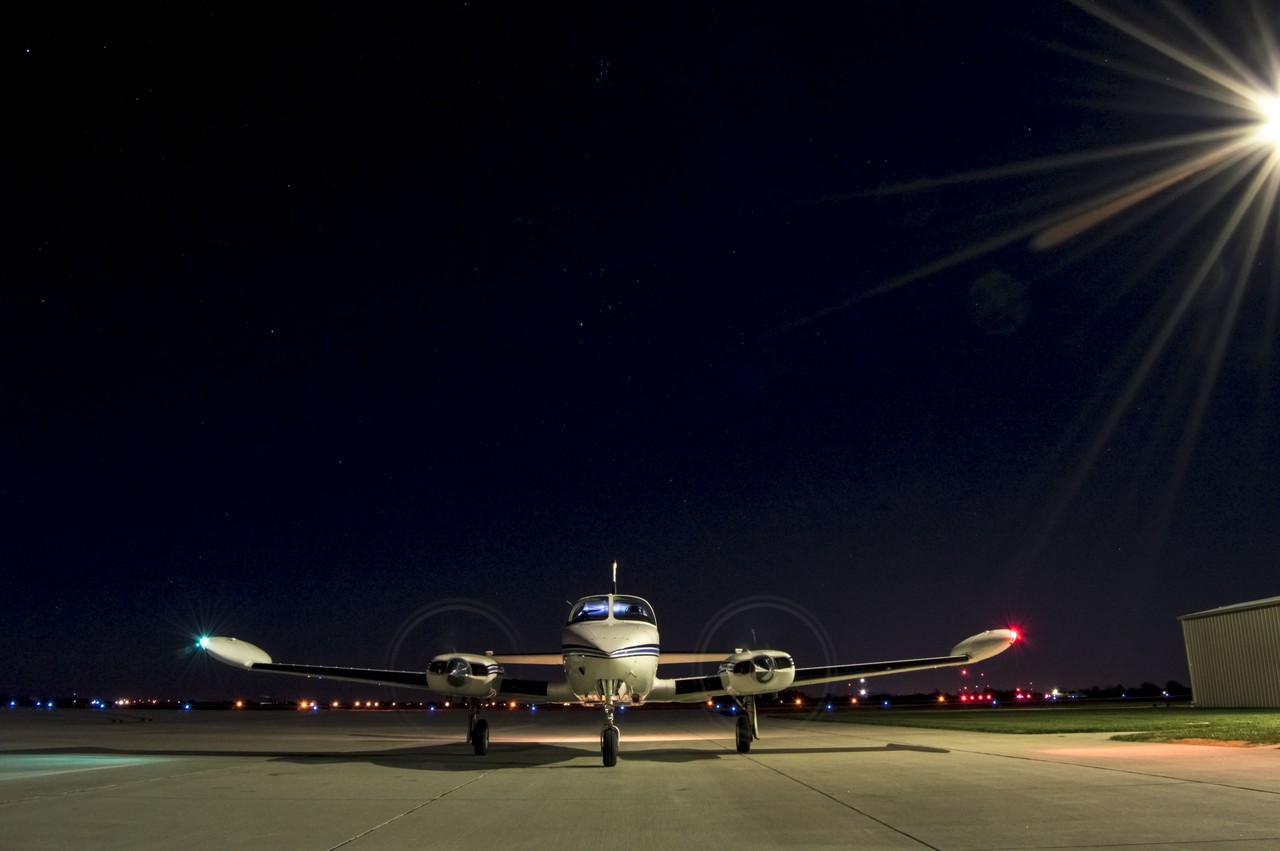
The Cessna 335 emerged from a calculated engineering strategy to maximize component sharing while minimizing costs. Cessna's design team borrowed the wing structure and tricycle landing gear from the proven Cessna 414, combined with a modified fuselage based on the Cessna 340. The critical difference lay in eliminating the pressurization system, which reduced both manufacturing complexity and purchase price. This approach allowed Cessna to offer the only unpressurized turbocharged six-seat twin in the market at a significantly lower price point than its pressurized siblings.
The prototype's maiden flight occurred on December 5, 1978, followed by the first production aircraft in 1979. The development timeline was notably compressed, benefiting from the extensive certification work already completed for the 340 and 414 models. This component-sharing strategy enabled rapid market entry while keeping development costs minimal.
Engine and Performance Characteristics
Two Continental TSIO-520-EB turbocharged engines, each producing 300 horsepower, powered the Cessna 335. These fuel-injected, horizontally-opposed six-cylinder engines were specifically selected for their high-altitude performance capabilities, addressing the needs of business operators who required consistent power at elevation without cabin pressurization. Continental Motors designed the TSIO-520 series to deliver reliable turbocharging across multiple Cessna models throughout the 1980s.
The turbocharging system proved particularly valuable for operators flying in mountainous terrain or those seeking improved cruise performance at higher altitudes. Factory-rebuilt engines, designated with an 'R' suffix, became available for fleet operators seeking zero-time powerplants, with documented installations occurring as late as 1997 on aircraft such as N8354N.
Manufacturing and Market Reality
Cessna Aircraft Company produced the 335 at its Wichita, Kansas facility for just two years, from 1979 to 1980. The total production count reached either 64 or 65 aircraft, depending on the source, making it one of Cessna's shortest production runs for any twin-engine model. This brief manufacturing period reflected the aircraft's failure to capture significant market share despite its competitive pricing strategy.
The timing proved unfortunate, as the general aviation market began experiencing a severe downturn in the early 1980s. Cessna, founded in 1927 by Clyde Cessna, had dominated the post-World War II general aviation market and produced over 5,241 variants of the Model 310 series by 1981. However, the company ceased piston twin production entirely during the early 1980s market collapse.
Corporate Evolution
Cessna's ownership structure underwent significant changes following the 335's production end. General Dynamics acquired the company in 1985, followed by Textron Inc. in 1992. Despite a brief period operating under the name "Cesstron," the company retained its historic Cessna brand identity. Today, Cessna continues operations as a division of Textron Aviation, though focused primarily on turboprop and jet aircraft rather than piston twins.
Operational History and Legacy
The Cessna 335 served exclusively in civilian roles, operating primarily with private owners and small charter companies. Its six-seat configuration and business twin capabilities positioned it for corporate transportation, but the lack of pressurization limited its appeal for high-altitude operations where passenger comfort was paramount.
Few examples remain in active service today. A 1979-built aircraft, formerly registered as HB-LHA, was imported to Guernsey in February 2019 with the registration 2-NJOY. Another 1980 model, N8354N with serial number 335-0063, accumulated 2,299.4 total flight hours before being involved in an accident in 2000, demonstrating the type's operational longevity despite low production numbers.
Market Impact and Assessment
The Cessna 335's commercial failure stemmed from its positioning between market segments rather than dominating a specific niche. While it offered turbocharged performance at a lower price than the pressurized Cessna 340, buyers willing to invest in a twin-engine business aircraft typically preferred the comfort and capability advantages of pressurization. The significantly more successful Cessna 340, produced from 1971 to 1984 with 1,287 aircraft manufactured, demonstrated the market's preference for pressurized cabin environments.
The 335's legacy remains that of a well-engineered aircraft that failed to find its market. Its brief production run and minimal cultural impact contrast sharply with Cessna's more successful models, serving as a reminder that even experienced manufacturers can misjudge market demand despite sound engineering principles.