
Service History
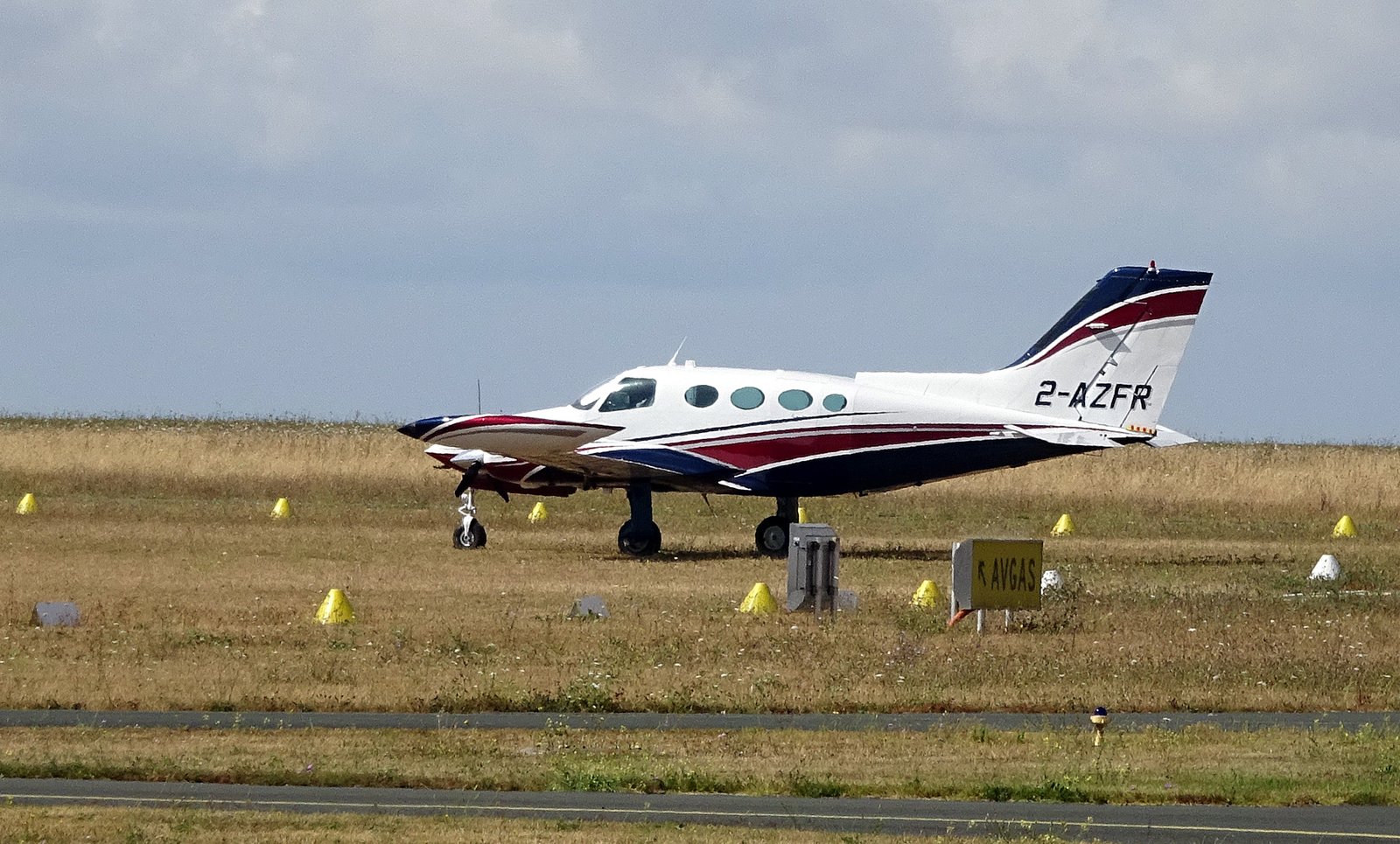
The Cessna 401B carved out a specialized niche in corporate aviation and regional airline service during its brief production run. The aircraft found particular favor with Australian operators, where more than 70 examples appeared on the civil register. Companies like Murray Valley Airlines in Victoria and Aero Pelican in Belmont, New South Wales utilized the type for regional passenger and cargo operations. At least six examples also entered service in New Zealand, demonstrating the aircraft's appeal in markets requiring reliable twin-engine performance over challenging terrain.
The 401B's versatility proved attractive to operators needing both passenger and cargo capability. Its removable seat configuration allowed quick conversion between roles, making it valuable for charter operators and small airlines serving diverse missions. However, the aircraft remained firmly in civilian hands, with no military or wartime service recorded for the type.
The Manufacturer
Cessna Aircraft Company, founded by Clyde Cessna in 1927, developed the 401B as part of its strategy to compete in the corporate twin-engine market. The company had survived the Great Depression by focusing on custom aircraft builds and experienced tremendous growth in the post-World War II general aviation boom. By the time the 401B entered production, Cessna had already established itself as a leader in light aircraft with successful models like the 172, which first flew in 1955.
The company's ownership changed significantly during the 1980s. General Dynamics acquired Cessna in 1985, followed by Textron Inc. in 1992. Production of piston twins like the 401 series ended in 1986 amid a downturn in general aviation sales. Today, Textron's Cessna division continues operations, focusing primarily on business jets including the Citation series.
Engine & Technical Details
Two Continental TSIO-520-E turbocharged engines powered the 401B, each producing 300 horsepower. These flat-six piston engines featured a time between overhaul of 1,400 hours or 12 years, providing operators with reasonable maintenance intervals. Continental Motors, now known as Continental Aerospace Technologies, designed these engines specifically for reliability in unpressurized twin applications rather than maximum performance.
The 401B's design traced back to Cessna's Model 411, which first flew on July 18, 1962. Engineers stretched the fuselage from the proven Model 310 design and increased wingspan and wing area to accommodate the larger cabin and higher gross weight. The aircraft featured retractable landing gear and three-bladed, constant-speed, fully feathering propellers that enhanced short-field performance crucial for business aviation.
Development Timeline
The 401 prototype first took to the air on August 26, 1965, beginning a certification process that would span several years. The original 401 received FAA certification on September 20, 1966, followed by the 401A on October 29, 1968. The 401B variant earned its type certificate on November 12, 1969, entering production the following year.
Cessna's engineering team designed the 401B as a minor update to the 401A, focusing on cost reduction rather than performance enhancement. The design philosophy emphasized affordable multi-role capability over speed or pressurization, targeting operators who needed twin-engine reliability without the complexity and cost of pressurized systems.
Performance Characteristics
The 401B delivered respectable performance for its class, achieving a best cruise speed of 209 knots indicated airspeed. Maximum range reached 1,102 nautical miles, though fuel consumption ran high at 32 gallons per hour. Optional 184-gallon fuel tanks became available starting in 1970, extending range for operators requiring longer legs between fuel stops.
The aircraft accommodated up to eight passengers in standard corporate configurations, with seating for six to eight being most common. Single-pilot operation was permitted, though many operators preferred two-crew configurations for enhanced safety margins in instrument conditions.
Production & Legacy
Production of the 401B lasted only three years, from 1970 to 1972, as part of the broader 401 series that ran from 1966 to 1972. The entire 401 line was phased out in mid-1972 after sales declined dramatically to just 21 units in 1971. Cessna shifted focus to the related 402 series, which proved more successful with 1,540 units built through 1986.
The 401B's legacy lies in its role as a stepping stone between Cessna's earlier Model 411 and the more successful 402 Utiliner and Businessliner variants. While exact production numbers for the 401B remain unspecified, the type represented Cessna's ongoing efforts to provide affordable twin-engine options for the growing corporate aviation market of the early 1970s. Several examples continue flying today, though precise numbers of airworthy aircraft are not documented.