
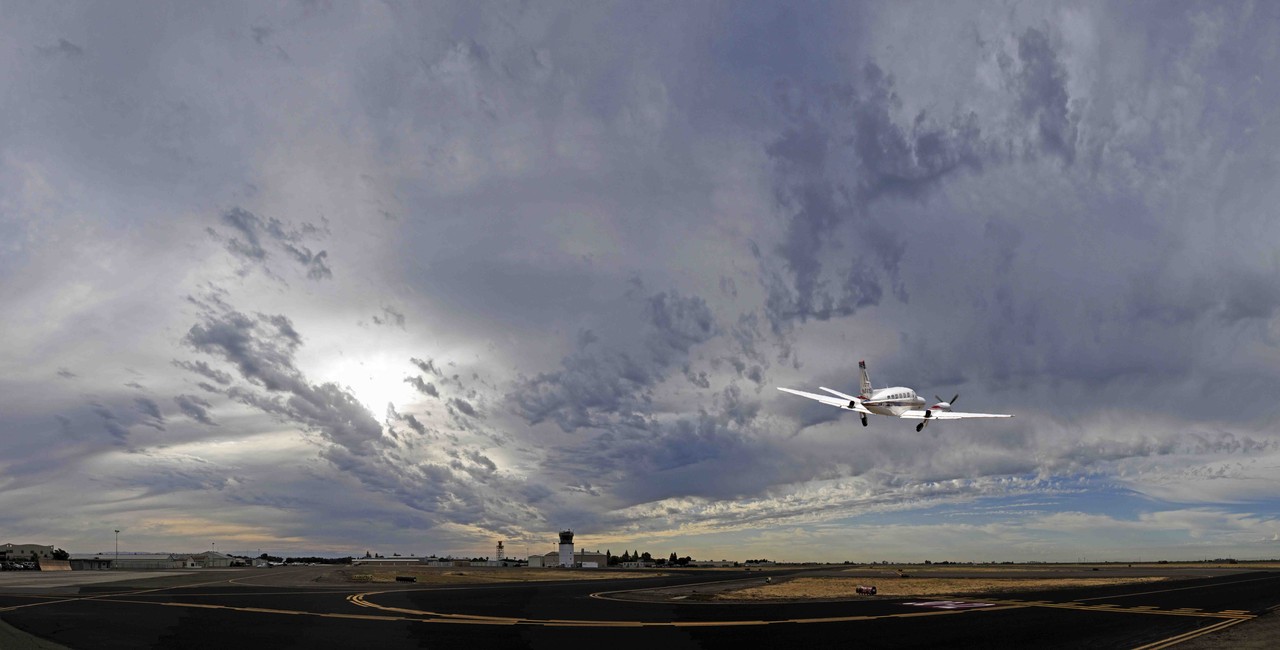
Development and Design Innovation
The Conquest II emerged from Cessna's ambitious plan to bridge the performance gap between their piston-powered aircraft and pure jets. Development began with the Model 435 prototype in 1972, initially equipped with Continental GTSIO-520 piston engines. By 1975, Cessna had completely transformed the design, incorporating elements from the Cessna 404 Titan and installing turboprop powerplants to create what would become their first turboprop aircraft.
Cessna announced the Model 441 program in November 1974, with the prototype completing its maiden flight in August 1975. The aircraft earned FAA Part 23 certification in September 1977, when first deliveries began. The designation "Conquest II" was adopted in 1983, reflecting Cessna's growing turboprop family that would eventually include the smaller Conquest I.
Production History and Market Performance
From 1977 to 1986, Cessna manufactured 362 Conquest IIs at their Wichita facility, with serial numbers ranging from 441-0001 to 441-0363. The aircraft initially enjoyed strong sales as operators sought efficient alternatives to expensive jets and unreliable piston aircraft during the energy-conscious 1970s.
However, intensifying competition from established turboprops like the Beechcraft King Air and Piper Cheyenne, combined with economic pressures in the mid-1980s general aviation market, gradually eroded demand. Despite its technical merits, the Conquest II's nine-year production run ended in 1986 as Cessna focused resources on other aircraft lines.
Engine Technology and Performance
The Conquest II's defining feature was its twin Garrett TPE331-8-406S turboprop engines, each developing 636 shaft horsepower. These powerplants, manufactured by Garrett (later acquired by Honeywell), featured impressive 6,000-hour overhaul intervals and delivered exceptional fuel efficiency for their output class.
The TPE331 engine family represented proven technology, having powered numerous aircraft types since the 1960s. Many Conquest II operators later upgraded to more powerful TPE331-10 variants, significantly improving climb rates and enabling cruise speeds exceeding 300 knots at maximum altitude.
Operational Capabilities
With a maximum cruise speed of 283 knots indicated airspeed and service ceiling of 35,000 feet, the Conquest II offered genuine high-altitude performance. Its pressurized cabin accommodated up to 10 passengers, though typical business configurations seated eight. The aircraft's 2,193-nautical-mile range enabled nonstop flights between city pairs like New York and Miami.
The Conquest II demonstrated impressive climb performance at 2,435 feet per minute and maintained gentle handling characteristics with a stall speed of just 76 knots indicated. Its fuel consumption of 75.8 gallons per hour provided operating economics competitive with other turboprops in its class.
The Manufacturer's Evolution
Cessna Aircraft Company, founded in Wichita, Kansas, had established itself as a dominant force in general aviation before venturing into turboprops. The company's expertise in small aircraft manufacturing made the transition to turboprop technology a natural progression.
Significant ownership changes occurred during the Conquest II's production era. General Dynamics acquired Cessna in 1985, followed by Textron's purchase in 1992. In March 2014, Cessna ceased independent operations, becoming one of three brands under Textron Aviation alongside Beechcraft and Hawker.
Pilot Perspective and Handling
Pilots appreciated the Conquest II's confidence-inspiring handling characteristics and robust construction. The aircraft incorporated the Cessna 1000A Integrated Flight Control System, enhancing safety margins and pilot workload management. Its G-load limitations of +3.8/-1.52 Gs provided adequate structural margins for normal operations, reducing to 2.0 G with flaps extended.
The cockpit accommodated a crew of two, with systems designed for single-pilot operation when regulations permitted. Many pilots praised the aircraft's stability and predictable behavior throughout its flight envelope.
Legacy and Current Status
Despite ending production nearly four decades ago, substantial numbers of Conquest IIs remain active today. The aircraft's durability and adaptability have enabled many to receive modernization upgrades, keeping them competitive against more recent turboprop designs.
However, operators must observe a mandatory 22,500-flight-hour life limit imposed by Cessna through a Supplemental Inspection Document. This structural limitation, based on fatigue testing and operational data, has grounded several high-time aircraft as they approach the threshold.
The Conquest II's reputation as a reliable, well-rounded performer has maintained strong residual values and continued demand in the pre-owned market. Its unique combination of speed, payload, and operational flexibility ensures its continued relevance in specialized aviation roles, cementing its position as one of the most respected aircraft in its class.