
Market Dominance and Innovation
The Citation Mustang established Cessna's dominance in the emerging very light jet market by beating all competitors to certification and delivery. While the Eclipse 500 received FAA certification in July 2006, Cessna delivered the first Mustang on November 23, 2006, securing first-mover advantage in a hotly contested new market segment. By mid-2012, the program had surpassed 400 deliveries, demonstrating strong early market acceptance for this new category of business aircraft.
The aircraft's significance extended beyond mere market timing. As the first VLJ to achieve full certification for flight into known icing conditions on November 9, 2006, just two months after initial type certification, the Mustang offered operational capabilities that many competitors couldn't match. This certification allowed operators to fly in weather conditions that would ground other light jets, providing genuine airline-like dispatch reliability.
Manufacturing Excellence
Cessna Aircraft Company built all 479 Citation Mustangs at their specialized facility in Independence, Kansas, rather than at the company's traditional Wichita headquarters. Initial production rates exceeded 40 aircraft annually during the program's peak years, reflecting strong market demand for an entry-level jet that delivered turbine performance at operating costs dramatically lower than traditional business jets.
The company's expertise in jet manufacturing dated to 1968 when Cessna launched its Citation program. The original Citation Fan Jet 500 first flew on September 15, 1969, with initial deliveries beginning in 1971. This four-decade heritage of jet production provided the engineering foundation that made the Mustang's rapid development possible from announcement at the 2002 NBAA convention to first flight in just three years.
Powerplant and Performance
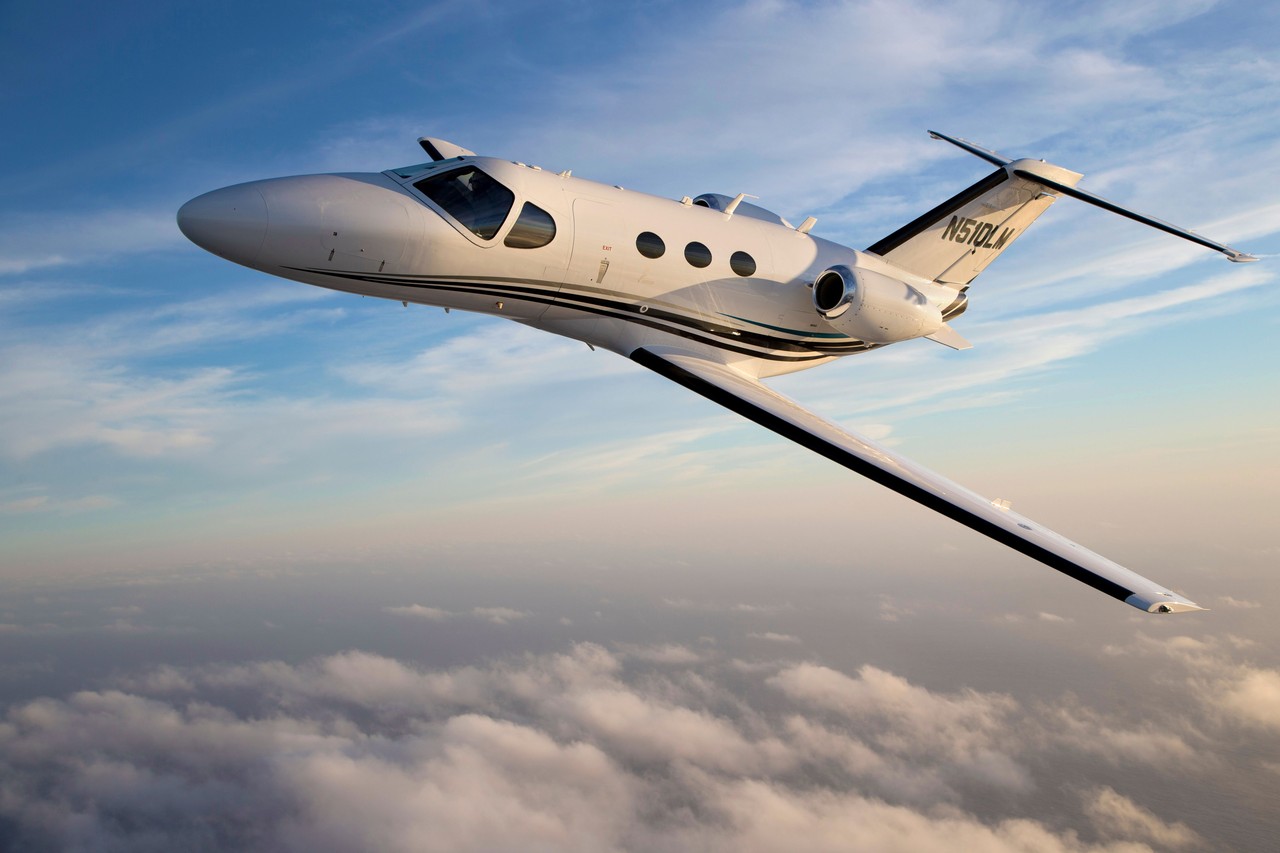
Two rear-mounted Pratt & Whitney Canada PW615F turbofan engines, each producing 1,465 pounds of thrust, powered the Citation Mustang to impressive performance figures for its size class. The aircraft achieved a typical cruise speed of 390 knots, with maximum speeds reaching 420 knots at its 41,000-foot service ceiling. This performance envelope allowed the Mustang to operate efficiently in the same airspace as much larger business jets while accessing shorter runways that traditional jets could not use.
The aircraft's retractable tricycle landing gear and 43-foot tapered low wing design optimized it for single-pilot operation, though the FAA required operators to obtain a type rating specific to the Mustang. This represented both an advantage and eventual disadvantage – while the aircraft could be flown by a single qualified pilot, the unique type rating requirement created training and crew scheduling complications compared to aircraft using more common type ratings.
Operational Characteristics
In standard configuration, the Mustang accommodated four passengers in its aft cabin plus toilet facilities, with the pressurized cabin measuring 9.8 feet long by 4.6 feet wide. The cockpit provided seating for two crew members, though single-pilot operations were permitted for qualified pilots. This configuration struck an optimal balance between cabin comfort and operating economics that appealed to owner-pilots and small charter operations.
Cessna enhanced the aircraft's market appeal with the High Sierra variant, unveiled on July 26, 2010, at EAA AirVenture in Oshkosh, Wisconsin. This limited-edition version featured luxurious interior appointments and enhanced avionics that positioned the Mustang against more expensive competitors while maintaining its fundamental operating cost advantages.
Production Decline and Legacy
Paradoxically, the Mustang's eventual demise came from its own manufacturer. When Cessna introduced the Citation M2 in 2013, the larger, faster aircraft offered similar runway performance while requiring the more common C/E-525 type rating shared with other Citation models. Annual Mustang production plummeted from over 40 units to just eight per year as customers migrated to the M2's superior performance and reduced training costs.
Production ended in May 2017 after 479 aircraft had been completed, with the final deliveries marking the end of the very light jet category that the Mustang had created. Despite this discontinuation, the aircraft remains popular in business and charter operations, with its combination of jet performance, relatively modest operating costs, and ability to access smaller airports ensuring continued utility in the general aviation market.
The Citation Mustang's legacy extends beyond its production numbers to its role in democratizing business jet travel. By proving that a certified, capable business jet could be manufactured and operated at dramatically reduced costs compared to traditional jets, the Mustang opened jet travel to operators who previously relied on turboprops or piston aircraft, fundamentally expanding the business aviation market.