
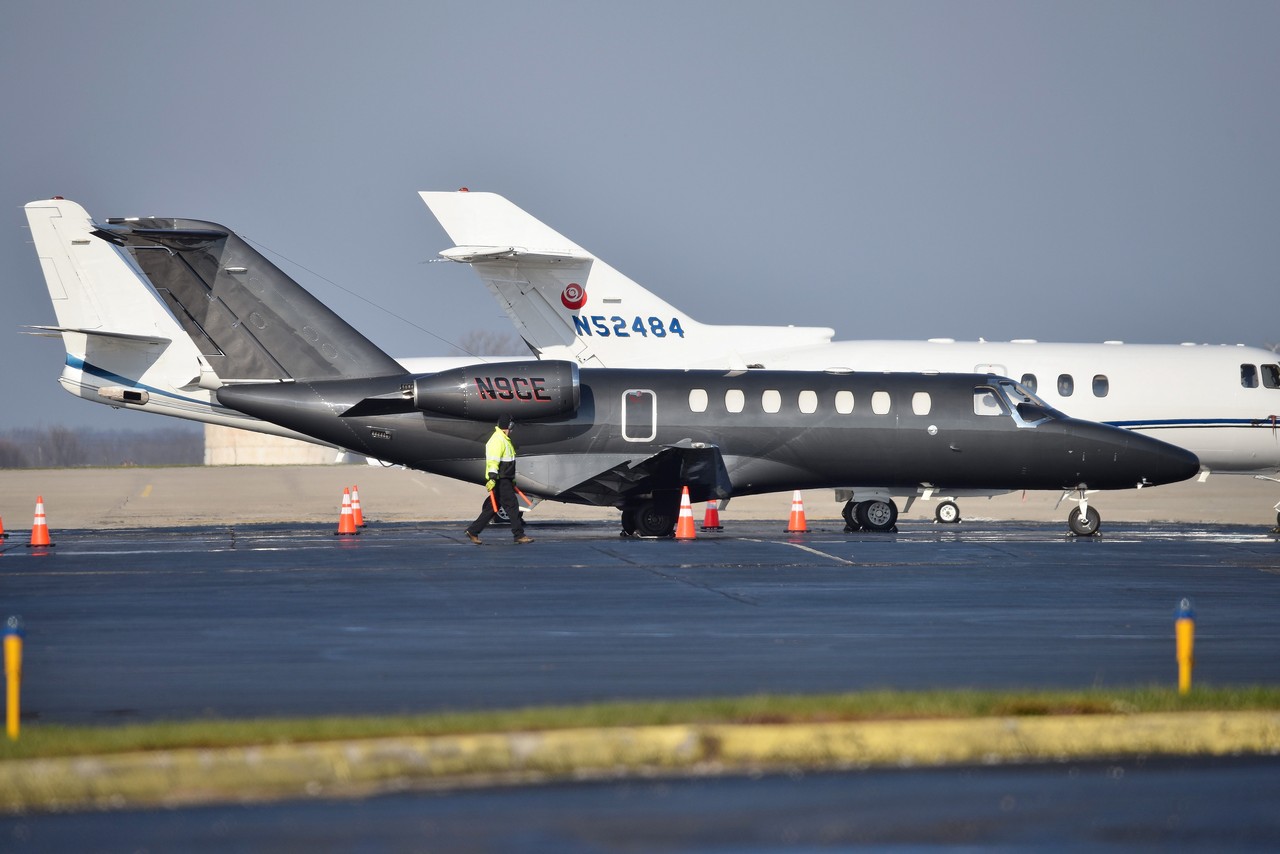
Service History
The Citation CJ1 entered service in March 2000 following FAA certification on February 16, 2000, positioning itself as a dominant force in the light business jet market. During its five-year production run, the aircraft captured significant market share among corporate operators seeking single-pilot capable jets with improved performance over earlier Citation models. By March 2014, the CJ1 had established a robust pre-owned market, with approximately 79 percent of the 198 aircraft produced available as pre-owned units, demonstrating the type's enduring value and operational utility.
The aircraft's operational reliability proved exceptional, with all but one of the 198 manufactured CJ1s remaining in active service as of 2014. This remarkable in-service rate of over 99 percent highlighted the type's mechanical dependability and continued relevance in corporate aviation operations worldwide.
The Manufacturer
Cessna Aircraft Company, founded in 1927, established itself as a pioneer in business aviation with the introduction of the Citation 500 in 1972, marking the company's entry into the corporate jet market. The CJ1 represented decades of accumulated expertise in light jet design and manufacturing, building upon the success of earlier Citation variants that had proven the viability of the light business jet concept.
Following corporate restructuring, Cessna became part of Textron Aviation, which continues the Citation legacy with updated variants including the Citation Gen2 introduced in 2021 and the anticipated Citation Gen3 expected to enter service in 2026. This continuity ensures ongoing support for CJ1 operators while advancing the design concepts pioneered in the original CitationJet series.
Engine & Technical Details
The CJ1's powerplant consisted of two Williams FJ44-1A turbofan engines, manufactured by Williams International. These engines provided the optimal balance of fuel efficiency and performance required for the light business jet role, enabling the aircraft to achieve jet speeds while maintaining excellent field performance capabilities at shorter runways typical of corporate aviation operations.
The aircraft featured single-pilot operation capability, a significant advancement over earlier Citation models that required two-pilot crews. This operational flexibility reduced operating costs for corporate operators while maintaining the safety standards expected in business aviation. The CJ1's design incorporated the proven Citation II forward fuselage with an entirely new carry-through wing section and distinctive T-tail configuration.
Pilot Perspective
Pilots appreciated the CJ1's forgiving handling characteristics and operational versatility, particularly its ability to access shorter runways that limited larger business jets. The aircraft's cruise speed of approximately 441 mph provided competitive travel times for typical corporate missions, while its 887-nautical-mile range enabled non-stop flights on routes such as London to Milan or New York to Miami.
The single-pilot certification attracted owner-operators seeking to reduce crew costs without compromising safety or capability. The aircraft's supercritical wing design contributed to improved fuel efficiency compared to earlier Citation variants, while the T-tail configuration provided clean airflow over the elevator surfaces for enhanced control authority.
Production & Legacy
Cessna manufactured exactly 198 Citation CJ1s between 2000 and 2005, with each aircraft representing refinements and improvements over the original CitationJet design. The CJ1's success established the foundation for subsequent CJ-series aircraft, including the CJ2, CJ2+, CJ3, CJ3+, and CJ4, all of which built upon the design principles proven in the CJ1.
By June 2017, combined deliveries of all CitationJet variants, including CJ1 through CJ4 models, reached 2,000 aircraft, demonstrating the enduring appeal of the light business jet concept pioneered by the original CitationJet and refined in the CJ1. The type's influence extended beyond its production numbers, establishing design and operational standards that continue to influence modern light business jet development.
The CJ1's average time on market of 496 days for pre-owned aircraft in 2014 reflected strong residual values and continued operator demand, validating the aircraft's design success and operational utility. Today, CJ1s continue serving corporate operators worldwide, testament to the type's durability and continued relevance in business aviation nearly two decades after production ceased.