
Service History
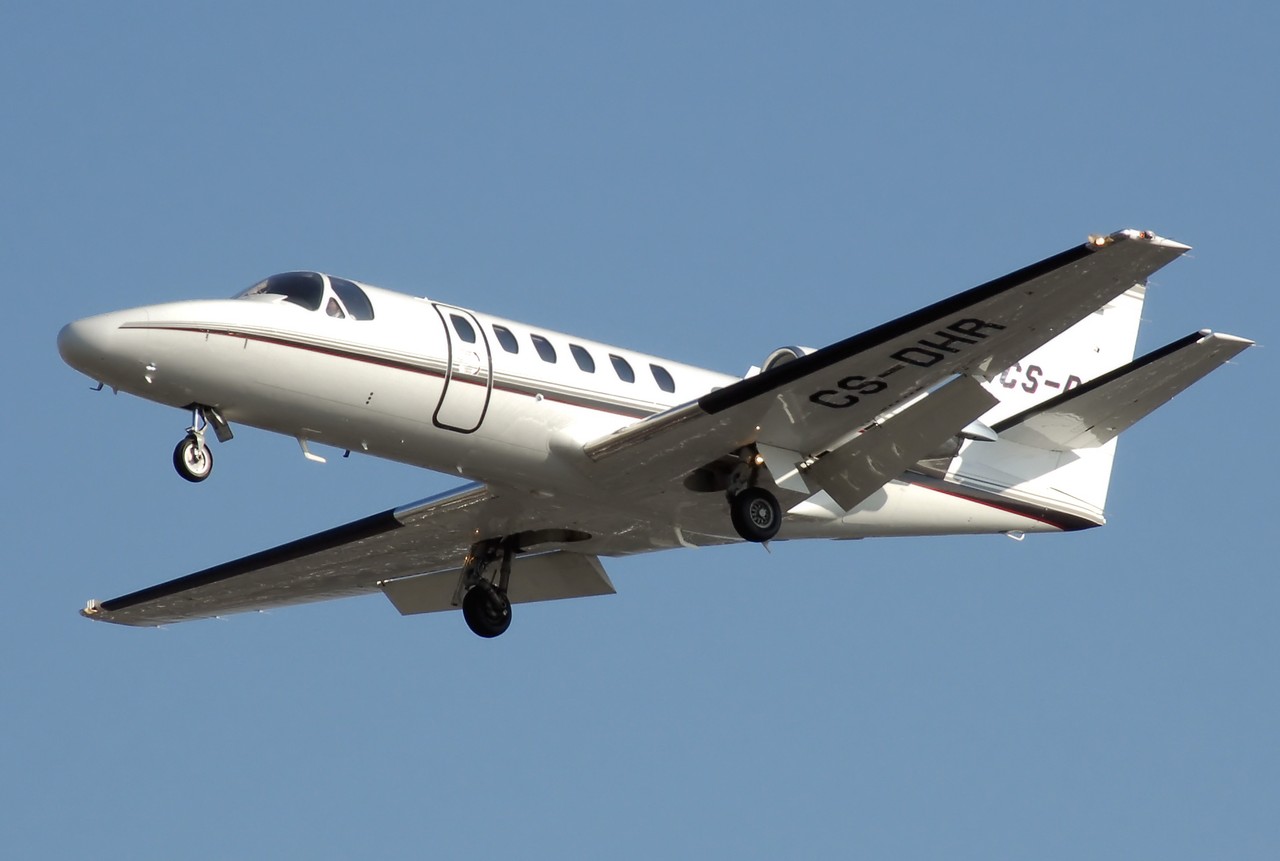
The Citation II became one of Cessna's most successful aircraft designs, with 688 units of the original Model 550 delivered during its production run. Most Citation II aircraft remain operational today, testament to the aircraft's enduring design and reliability. The type serves primarily in corporate aviation, providing business transportation across North America and internationally. The Citation II's success helped establish the Citation family as the largest business jet fleet worldwide, with over 8,000 units delivered across all variants over five decades.
Military Service
The United States Navy recognized the Citation II's capabilities, purchasing 15 aircraft designated as T-47A (Model 552) for use as radar system trainers. These military variants provided essential training for naval radar operators, though they represented a small fraction of total production compared to the aircraft's overwhelmingly civilian role.
The Manufacturer
Cessna Aircraft Company, founded in 1927, developed the Citation II as part of their strategy to dominate the business jet market. The company remains operational today as part of Textron Aviation following various acquisitions and corporate restructuring. Cessna's Citation family represents their most successful business jet line, establishing the manufacturer as a leading force in corporate aviation. The company's commitment to the Citation II program, spanning nearly three decades of production, demonstrated their confidence in the design's market appeal.
Engine & Technical Innovation
The Citation II addressed the primary criticism of the Citation I through strategic engineering improvements while retaining proven design elements. Powered by two Pratt & Whitney Canada JT15D-4 turbofans, each producing 2,500 pounds of thrust, the aircraft achieved significantly higher performance than its predecessor. The engines provided inspection intervals of 3,500 hours, reducing maintenance costs for operators.
Key design modifications included extending the fuselage by 3 feet 9 inches to accommodate additional passengers and increasing wingspan for improved aerodynamics. Engineers expanded fuel capacity by 192 gallons, enabling the aircraft's 1,520-nautical-mile range. The aircraft maintained a gross weight of 13,300 pounds while achieving cruise speeds of 45 to 400 knots.
Evolution and Variants
Cessna announced the Citation S/II (Model S550) in October 1983, which first flew on February 14, 1984. This variant retained the JT15D4B turbofans but incorporated aerodynamic improvements including a supercritical airfoil design. The S/II achieved cruise speeds of 35 to 420 knots, representing a modest performance increase over the original model. Cessna delivered 160 units of the S/II variant.
The most significant evolution came with the Citation Bravo (Model 550 Bravo), which first flew on April 25, 1995. This variant featured upgraded Pratt & Whitney Canada PW530A turbofans that generated 15 percent more thrust at takeoff and 23 percent more thrust at altitude compared to the original JT15D engines. The Bravo achieved 25 percent better fuel efficiency than the JT15D-powered Citation II at equivalent speeds, burning 775 pounds of fuel per hour at 390 knots. Cessna delivered 337 Bravo variants before production concluded.
Pilot Perspective
The Citation II inherited the Citation I's reputation for docile low-speed handling and excellent short-field performance while delivering the improved cruise performance that operators demanded. Pilots appreciated the aircraft's forgiving flight characteristics and straightforward systems management. The two-pilot crew requirement aligned with standard business jet operations, though the aircraft's systems complexity remained manageable for experienced pilots transitioning from smaller aircraft.
Production Legacy
Total production across all Citation II variants reached approximately 1,184 aircraft by the program's conclusion in 2006. The original Citation II accounted for 688 deliveries, while the S/II and Bravo variants contributed 160 and 337 units respectively. This production volume established the Citation II as a cornerstone of Cessna's business jet success.
The Citation II's nearly three-decade production run, interrupted only briefly, demonstrated remarkable market longevity in the rapidly evolving business jet sector. The aircraft's continued operational presence today reflects its fundamental design soundness and ongoing utility for corporate transportation missions. The Citation II's success paved the way for subsequent Citation developments and cemented Cessna's position as a dominant force in business aviation.