
Market Dominance
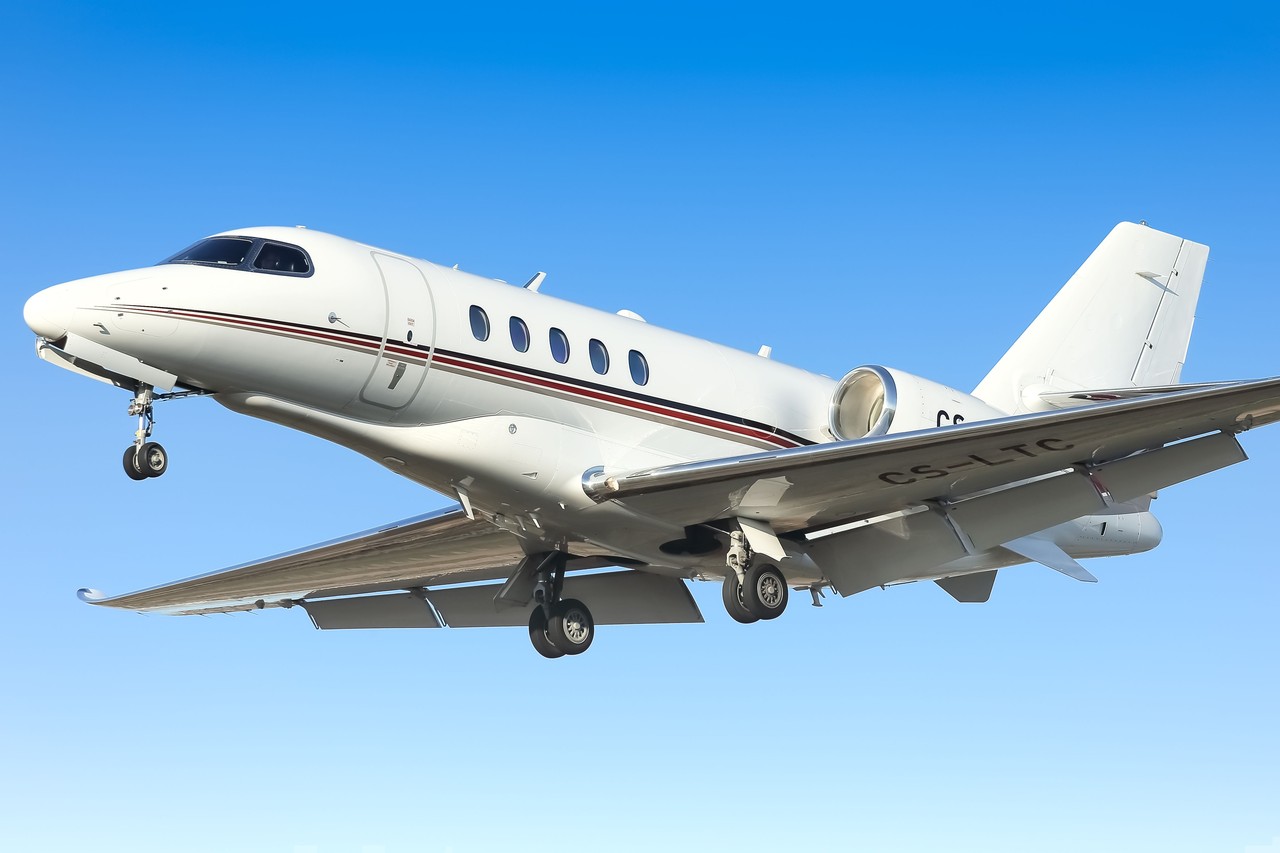
The Citation Latitude achieved unprecedented success in the competitive midsize business jet market, becoming the world's best-selling aircraft in its category within a decade of entering service. NetJets, the largest fractional ownership company, operates 162 Latitude aircraft as of June 2022, representing one of the most significant fleet purchases in business aviation history. By the end of its first production year in 2015, Cessna had delivered 16 aircraft, establishing immediate market acceptance that would define the aircraft's commercial trajectory.
The Manufacturer Legacy
Textron Aviation's Cessna division brought decades of business jet expertise to the Latitude program, building on the success of the broader Citation family that had delivered more than 7,500 aircraft over fifty years. The Citation fleet represents the largest business jet family in the world, establishing Cessna as the dominant force in corporate aviation. Textron Aviation continues manufacturing operations at the historic Wichita, Kansas facility, where the company has produced aircraft since the mid-20th century.
Design Innovation
The Citation Latitude introduced a revolutionary flat-floor cabin design that distinguished it from competitors in the midsize business jet category. Engineers retained the proven Model 680 Sovereign wing structure and cruciform tail configuration while developing an entirely new circular fuselage cross-section. This design breakthrough eliminated the typical cabin floor curvature found in most business jets, maximizing usable interior space and passenger comfort during long-range flights.
The aircraft combines the reliability of established Citation systems with modern avionics, featuring the Garmin G5000 glass cockpit that provides pilots with integrated flight management and navigation capabilities. The design philosophy emphasized transcontinental range capability while maintaining the operational flexibility that made earlier Citation models successful in diverse mission profiles.
Engine Performance
Two Pratt & Whitney Canada PW306D1 turbofan engines power the Citation Latitude, each producing 5,907 pounds of thrust for a combined output of 11,814 pounds. These modern turbofans deliver exceptional fuel efficiency and reliability, with overhaul intervals extending to 6,000 hours of operation. The engines enable the aircraft to climb at 4,050 feet per minute and reach Flight Level 430 in just 26 minutes, providing rapid access to optimal cruise altitudes.
The powerplant configuration supports maximum cruise speeds of 466 knots true airspeed while maintaining fuel economy essential for transcontinental operations. Maximum operating speed reaches Mach 0.80 above 29,833 feet, allowing efficient high-altitude cruise performance in jet airways traffic.
Pilot and Operational Characteristics
The Citation Latitude requires a two-pilot crew and accommodates up to 9 passengers in standard configuration, with optional 10-seat arrangements available for high-density missions. The aircraft's 30,800-pound maximum gross weight includes 1,700 gallons of fuel capacity, enabling the 2,700-nautical-mile maximum range that defines its transcontinental capability.
Operational versatility shows in the aircraft's runway performance, requiring only 3,580 feet for takeoff and 2,480 feet for landing. This capability allows access to shorter runways at corporate airports while maintaining the range necessary for coast-to-coast flights without fuel stops.
Pilots appreciate the aircraft's 45,000-foot service ceiling, which provides access to less congested airspace and more favorable winds aloft. The combination of high-altitude capability and modern avionics reduces pilot workload during complex instrument approaches and crowded terminal area operations.
Production Success and Market Position
Cessna announced the Citation Latitude program at the October 2011 NBAA convention, beginning a development timeline that culminated in the prototype's first flight on February 18, 2014. FAA certification followed on June 5, 2015, with initial customer deliveries beginning on August 27, 2015. The rapid progression from announcement to certification demonstrated Cessna's engineering efficiency and market responsiveness.
The aircraft continues in production today, maintaining its position as the preferred platform for fractional ownership programs and corporate flight departments. Market valuation for a 2016-built example reaches approximately $12 million, indicating strong residual values that support the aircraft's total cost of ownership proposition.
Current Operations
The Citation Latitude serves diverse mission profiles ranging from short-haul corporate shuttle flights to transcontinental business travel. Its combination of cabin comfort, operational flexibility, and proven reliability has established the aircraft as the backbone of many corporate aviation fleets. The type's success in fractional ownership programs demonstrates its suitability for high-utilization operations where dispatch reliability and passenger comfort directly impact business operations.