
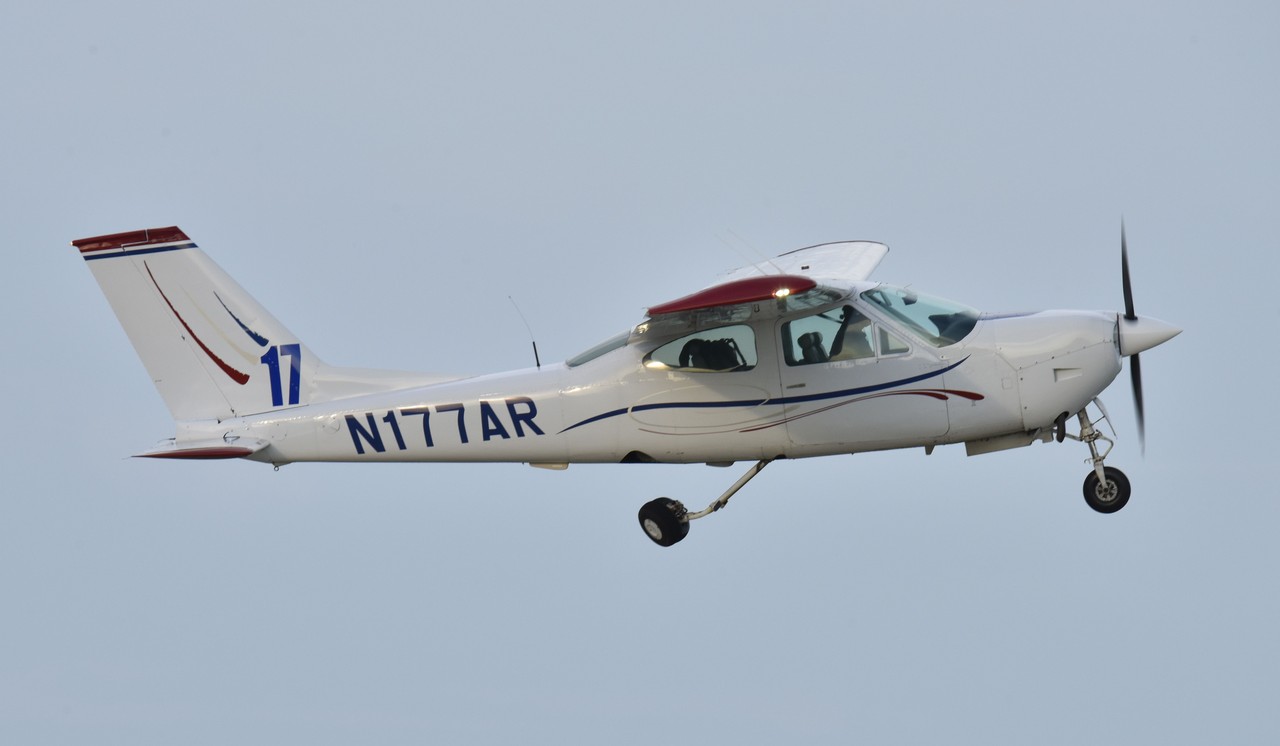
Service History
The Cardinal RG carved out a respected niche in the competitive retractable-gear market, directly challenging the Piper PA-28-200R Cherokee Arrow and Beechcraft Sierra. During its eight-year production run, Cessna delivered 1,366 aircraft from American factories, while Reims Aviation in France produced an additional 177 units under license as the F177RG, bringing total deliveries to approximately 1,543 aircraft. The model averaged 170 deliveries per year, demonstrating steady market acceptance despite never achieving the commercial dominance Cessna had envisioned.
The aircraft found favor among private owners and flight training organizations seeking a step up from fixed-gear trainers. Its spacious 43-inch-wide cabin and distinctive styling attracted pilots who valued both comfort and aesthetics in their flying machines.
The Manufacturer
Cessna Aircraft Company, founded in 1927 by Clyde Cessna in Wichita, Kansas, developed the Cardinal RG as part of an ambitious plan to modernize their single-engine lineup. The company had become America's dominant general aviation manufacturer by the 1970s, producing everything from basic trainers to business jets. Cessna was so confident in the Cardinal design that they initially planned to phase out the popular Skyhawk in favor of the more modern 177 series.
Textron Corporation acquired Cessna in 1992, and the company continues operations today as Textron Aviation. The Cardinal RG represented a pivotal moment in Cessna's history when the conservative manufacturer attempted to embrace radical design changes, though market realities ultimately forced a return to more conventional approaches.
Engine & Technical Details
The Cardinal RG drew power from a 200-horsepower Lycoming IO-360-A1B6 engine, a four-cylinder air-cooled powerplant that represented the reliable heart of 1970s general aviation. Lycoming Engines, originally part of Avco Corporation and later acquired by Textron, had established the IO-360 series as an industry workhorse powering thousands of aircraft across multiple manufacturers.
The aircraft's most distinctive feature was its electrically-powered hydraulic retractable landing gear system, which cycled in 15 to 20 seconds and added 136 kilograms to the aircraft's maximum weight. Early production models experienced gear reliability issues, leading Cessna to replace mechanical limit switches with more dependable magnetic switches in 1972. The company also eliminated fixed cabin steps, substituting foot pads on the main gear struts to reduce fuselage damage during inadvertent gear-up landings.
Pilot Perspective
Pilots praised the Cardinal RG's spacious cabin, excellent visibility, and distinctive ramp presence, though many found its performance gains over the fixed-gear Cardinal modest considering the added complexity and cost. The aircraft delivered a best rate of climb of 925 feet per minute at sea level and cruised at 142-143 knots at 7,500 feet while burning 10.5 gallons per hour.
With standard 60-gallon fuel capacity, the Cardinal RG provided four hours of endurance plus IFR reserves, translating to approximately 550 nautical miles of practical range. The 1972 model year brought slight performance improvements through a new propeller design, adding a few knots to cruise speed and improving climb rate.
Later modifications by the Lopresti family, renowned for their work on the Grumman Cheetah and Tiger as well as the Mooney 201, transformed the Cardinal RG's performance potential. Roy Lopresti, who had worked on NASA's Apollo lunar lander program at Grumman, developed a carbon fiber cowling with Super Clean Ram Air Module (SCRAM) technology that delivered up to 1.25 inches of additional manifold pressure, achieving six to seven knots of speed increase with improved engine cooling.
Production & Legacy
Production peaked in the mid-1970s before ending abruptly in 1978 when Cessna introduced the retractable-gear Skylane RG series. The company built approximately 100 Cardinal RGs in the final production year, then discontinued the model to avoid internal competition with their larger, more powerful 182RG variants. Cessna had originally planned turbocharged and 240-horsepower Cardinal variants but abandoned these projects in favor of the Skylane RG family.
The Cardinal RG's brief production run reflected broader challenges in the general aviation market, where manufacturers struggled to balance innovation with practical market demands. While the aircraft never achieved Cessna's ambitious sales projections, it succeeded in demonstrating the company's engineering capabilities and design vision.
Today, hundreds of Cardinal RGs remain active in private ownership, valued for their distinctive styling, solid construction, and reasonable operating costs. The type has developed a devoted following among enthusiasts who appreciate its unique position in aviation history as Cessna's most ambitious attempt at revolutionary single-engine design. Many examples have been upgraded with modern avionics and interior appointments, ensuring their continued viability in contemporary general aviation operations.