
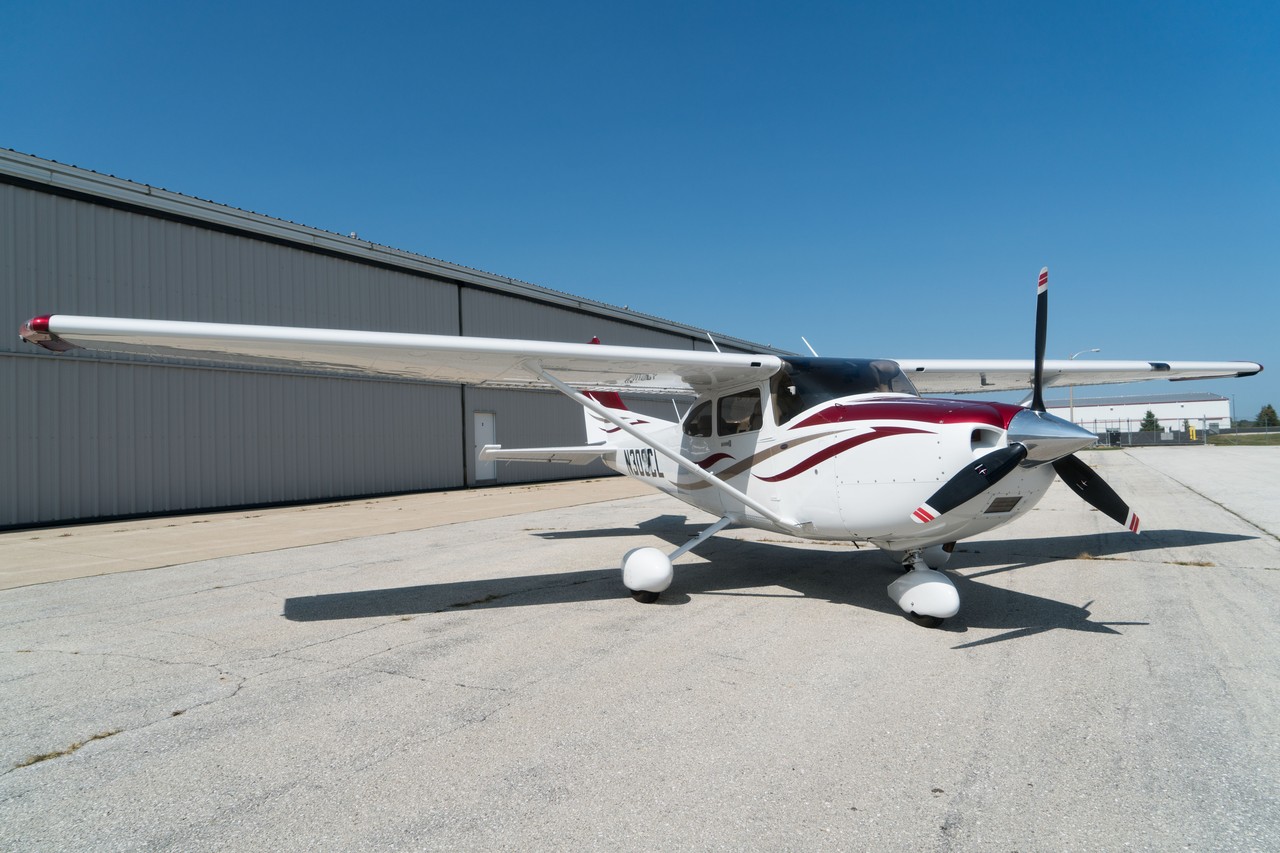
Performance Revolution in General Aviation
The T182 Turbo Skylane represented Cessna's answer to pilots demanding high-altitude performance without stepping up to twin-engine aircraft. During its initial production run from 1981 to 1986, Cessna built 895 units, with peak production of 339 aircraft in 1981. The turbocharged variant allowed pilots to maintain power at altitudes where normally aspirated engines would struggle, making it particularly valuable for operations in mountainous terrain and high-density altitude airports.
The Manufacturer's Legacy
Cessna Aircraft Company, founded in 1927 by Clyde Cessna in Wichita, Kansas, had established itself as the dominant force in general aviation by the time the T182 entered production. The company's 182 series, introduced in 1956 as a step-up from the 180, had already proven successful in the market. Textron acquired Cessna in 1992, and the company continues operations today as Textron Aviation, maintaining its position as a leading general aviation manufacturer.
Cessna temporarily halted production of single-engine aircraft from 1986 to 1996 due to liability concerns that plagued the entire general aviation industry. This hiatus interrupted T182 production after only six years, but the aircraft's reputation for performance and reliability ensured its eventual return.
Engine and Technical Innovation
The original T182 utilized a Lycoming O-540-L3C5D engine, a turbocharged six-cylinder powerplant producing 235 horsepower. This engine featured a fixed-wastegate turbocharging system that required active pilot management but delivered consistent power output up to the aircraft's service ceiling. The installation increased the aircraft's gross weight to 3,100 pounds, compared to 2,950 pounds for the normally aspirated 182.
Lycoming Engines, a division of Textron, manufactured the O-540 series engines that powered the T182. The fixed-wastegate system, while demanding greater pilot workload for proper throttle management, proved reliable and gave the aircraft its high-altitude capabilities that distinguished it from its naturally aspirated siblings.
Return to Production
Cessna certified an updated version, the T182T, on February 23, 2001, featuring significant improvements over the original design. The new variant incorporated a Lycoming TIO-540-AK1A engine with a variable wastegate system that eliminated much of the pilot workload associated with turbocharger management. This "set-and-forget" system improved reliability while maintaining the aircraft's ability to cruise at 155 knots and operate effectively at altitudes up to 20,000 feet.
The T182T featured enhanced corrosion-proofing, aerodynamic refinements, and modern avionics options that appealed to contemporary buyers. Production continued until 2013, when Cessna again discontinued the model, this time after a brief and unsuccessful attempt to introduce a diesel-powered variant.
Pilot Perspective and Performance
Pilots appreciated the T182's ability to maintain cruise performance at altitude, typically achieving speeds of 178 to 180 knots true airspeed. The aircraft's 88-gallon fuel capacity provided a range of approximately 900 to 1,000 nautical miles, making it an excellent choice for cross-country travel and instrument flight rules operations.
The turbocharger system allowed the T182 to outperform naturally aspirated aircraft at high-density altitude conditions, particularly important for operations in the western United States where many airports sit at elevations above 5,000 feet. Mountain flying capabilities made the aircraft popular among pilots operating in challenging terrain where engine performance at altitude could be critical for safety.
Design Philosophy and Configuration
Measuring approximately 29 feet in length with a 36-foot wingspan and standing 9 feet high, the T182 maintained the classic proportions of the 182 family while incorporating the additional cooling and induction systems required for turbocharging. The aircraft retained the traditional four-seat configuration with one pilot and three passengers, though useful load considerations often limited full passenger capacity when carrying maximum fuel.
Cessna's engineering team, building on the foundation laid by chief engineer Dwight Wallace's work on early 182 models, focused the T182 design on providing high-altitude performance without the complexity and cost of twin-engine aircraft. Wing root vents and other cooling modifications accommodated the additional heat generated by the turbocharged engine installation.
Current Status and Legacy
Hundreds of T182 and T182T aircraft remain in active service today, valued by owners for their combination of speed, altitude capability, and single-engine operating economics. The aircraft proved that turbocharged singles could provide viable alternatives to twin-engine aircraft for many high-altitude operations, influencing subsequent general aviation design philosophy.
While Cessna has not announced plans to resume T182 production, the aircraft's legacy continues through the thousands of 182-family aircraft that remain the backbone of general aviation training and personal transportation. The T182's successful integration of turbocharging technology helped establish turbocharged singles as a legitimate market segment that continues to serve pilots requiring high-altitude performance.