
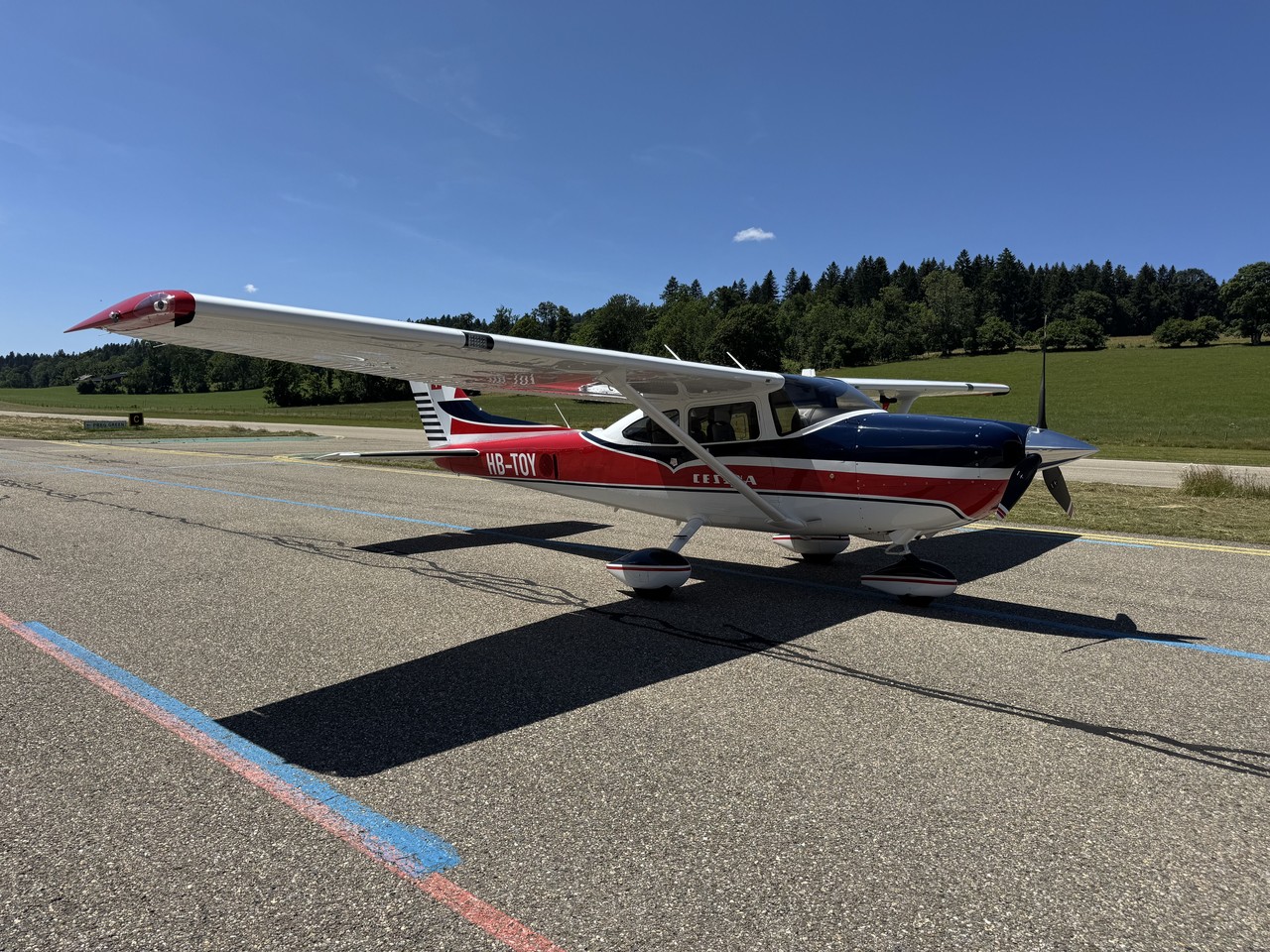
Development and Design Philosophy
Cessna's engineering team, under the leadership of chief engineer Dwight Wallace during the 1970s Skylane evolution, developed the TR182 to address the growing demand for higher-performance general aviation aircraft. The design objectives were ambitious yet practical: increase cruise speed by 15 knots through retractable landing gear while adding turbocharging capability for superior high-altitude performance. The aircraft utilized the proven electro-hydraulic gear system from the Cardinal RG and incorporated integral fuel tanks beginning in 1979.
The TR182 emerged as potentially the industry's first factory turbonormalized aircraft, featuring a manual wastegate system integrated with the reliable 235-horsepower Lycoming powerplant. This combination of proven airframe design with innovative powerplant technology represented Cessna's commitment to advancing single-engine performance without sacrificing the reliability that made the Skylane series successful.
The Manufacturer's Legacy
Cessna Aircraft Company, founded by Clyde Cessna in 1927, had established itself as a pioneer in mass-produced light aircraft following World War II. By 1985, the company had manufactured over 21,864 Cessna 182 variants, including the retractable-gear models, cementing its position as the world's leading producer of general aviation aircraft. The company operated continuously from its Wichita, Kansas facility until economic pressures, lawsuit concerns, and excess inventory forced a suspension of piston single-engine production in 1986.
General Dynamics acquired Cessna in 1985, followed by Textron's purchase in 1992, which renamed the division Cessna Aircraft Company under the Textron Aviation umbrella. Today, Textron Aviation continues operations from Wichita, though piston single production resumed only in 1997 with fixed-gear models—the retractable-gear variants never returned to the production line.
Engine and Performance Specifications
The heart of the TR182 was the Lycoming O-540-L3C5D, a six-cylinder horizontally-opposed piston engine rated at 235 horsepower. Manufactured by Lycoming, a division of Avco/Textron, this turbocharged powerplant featured a manual wastegate system that provided turbonormalized performance for high-altitude efficiency. The engine's reliability was exceptional, with a 2,000-hour time between overhauls and no requirement for mid-life top overhauls.
Maintenance proved remarkably straightforward, requiring only periodic lubrication of linkages, and the engine demonstrated proven durability even when subjected to hangar storage conditions. Overhaul costs in 1992 averaged approximately $15,500, including propeller and accessories, making long-term ownership economically viable for private operators.
Production and Market Position
Cessna produced the TR182 from 1979 to 1986, with combined production of R182 normally aspirated and TR182 turbocharged models reaching 2,032 aircraft. This relatively modest production run reflected the specialized nature of the retractable-gear market and the premium pricing that accompanied the aircraft's enhanced performance capabilities.
The TR182 served primarily private owners and flight schools rather than commercial operators. With seating for four occupants—one pilot plus three passengers—and 92 usable gallons of fuel capacity (552 pounds), the aircraft carved out a niche for pilots requiring the utility of turbocharging for high-terrain operations combined with the speed advantages of retractable landing gear.
Performance and Pilot Perspective
The TR182 delivered on its performance promises, achieving a maximum speed of 187 knots while providing the 15-knot cruise speed improvement over fixed-gear variants that Cessna had targeted. The aircraft's gross weight of 3,100 pounds and useful load of 1,291 pounds provided practical load-carrying capability, while the power loading of 13.19 pounds per horsepower ensured adequate performance margins.
Pilots consistently praised the TR182 for its combination of speed and utility, particularly appreciating the turbocharged engine's performance at altitude. The aircraft's handling characteristics remained true to the Skylane family's reputation for stability and predictability, while the retractable gear system provided the performance enhancement that distinguished it from its fixed-gear siblings.
Legacy and Current Status
The TR182 holds historical significance as Cessna's final piston single-engine design before the company's production hiatus, representing the culmination of decades of Skylane development. The aircraft pioneered affordable high-altitude general aviation flight through its turbonormalization system, influencing future aircraft design philosophies.
Hundreds of TR182 aircraft remain in active service today, more than thirty years after production ended, testament to the design's durability and continued relevance. While exact current numbers are unavailable, the aircraft maintains a devoted following among pilots who value its unique combination of speed, utility, and reliability. The TR182 stands as a rare and culturally significant variant within the broader Skylane family, representing a brief but important chapter in general aviation history when retractable-gear singles offered compelling performance advantages over their fixed-gear counterparts.