
Design Innovation and Development
The DC-6 emerged from Clyde Cessna's systematic refinement of his cantilever monoplane concept, serving as a scaled-down derivative of the larger six-seat CW-6. Cessna, a Kansas farmer who had built his first wood-and-fabric aircraft in June 1911, incorporated his signature cantilever wing design that eliminated the need for external bracing wires. This engineering approach, combined with an enclosed cockpit, represented significant advances in both aerodynamic efficiency and pilot comfort compared to the wire-braced biplanes that dominated 1920s aviation.
The aircraft rolled out in February 1929 in three distinct variants: the original DC-6 with a 170-horsepower Curtiss Challenger engine, the DC-6A Chief featuring a powerful 300-horsepower Wright R-975 Whirlwind, and the DC-6B Scout equipped with a 225-horsepower Wright J-6-7. All variants utilized nine-cylinder air-cooled radial engines, reflecting the powerplant preferences of the era.
Production Challenges and Market Impact
Cessna received type certification for both the DC-6A and DC-6B variants on October 29, 1929 – the same day as the Wall Street Crash that would devastate the American economy. This catastrophic timing proved disastrous for the DC-6's commercial prospects, as the ensuing Great Depression eliminated demand for private touring aircraft almost overnight. Despite initial optimism for the design, production ceased at approximately 20 examples of each major variant, totaling roughly 40 aircraft across the entire program.
The DC-6's wing area of 268 square feet provided stable flight characteristics, with performance figures that were competitive for its era: a maximum speed of 155 miles per hour, cruise speed of 130 miles per hour, and a practical range of 600 miles. The aircraft's stall speed of just 54 miles per hour made it forgiving for pilots transitioning from slower, less sophisticated aircraft.
Military Service
Despite its civilian origins, the DC-6 found limited military application when the United States Army Air Forces impressed eight examples into service during the 1930s. Four DC-6A variants received the military designation UC-77, while four DC-6B aircraft became UC-77A models. These aircraft served in utility transport roles, though their small numbers meant they had minimal impact on military aviation development compared to larger, purpose-built military transports.
The Cessna Legacy
The DC-6's significance extends far beyond its modest production numbers, representing a crucial stepping stone in Cessna's evolution toward becoming aviation's most prolific manufacturer. Clyde Cessna's design philosophy, demonstrated in the DC-6's cantilever wing and enclosed cockpit, would influence decades of subsequent Cessna aircraft development.
The Cessna Aircraft Company continued growing through the 20th century, achieving remarkable milestones including production of its 100,000th single-engine airplane in 1975. Corporate ownership evolved significantly: General Dynamics Corporation acquired Cessna in 1985, before Textron Inc. purchased the company in 1992. Under Textron ownership, Cessna expanded further by acquiring the bankrupt Columbia Aircraft Company in 2007 for $26.4 million, demonstrating the enduring strength of the brand that began with aircraft like the DC-6.
Technical Innovation
The DC-6's engineering represented 1920s state-of-the-art design, particularly in its cantilever wing structure that eliminated the drag-inducing external bracing common to contemporary aircraft. The enclosed cockpit provided weather protection that open-cockpit designs could not match, making the DC-6 suitable for serious cross-country touring rather than just local recreational flying.
Engine options reflected the rapid powerplant development of the late 1920s. The Wright Whirlwind engines powering the DC-6A and DC-6B variants were among the most reliable available, with the R-975's 300 horsepower providing exceptional performance for a four-seat aircraft of that era.
Historical Distinction
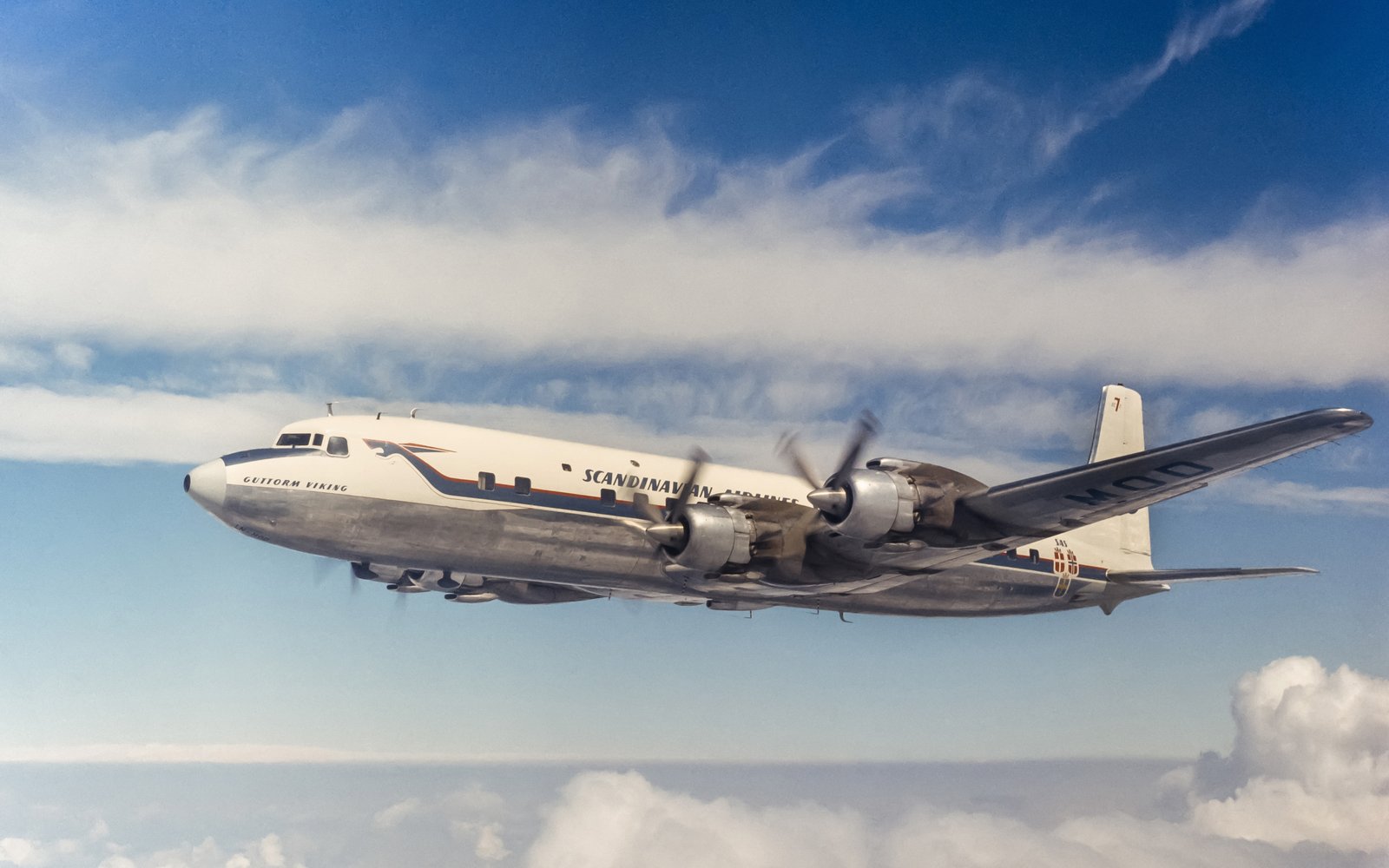
The Cessna DC-6 should not be confused with the much larger and more famous Douglas DC-6 airliner, which entered service in 1946 and achieved production of over 700 examples. The Cessna DC-6's legacy lies not in operational longevity or production volume, but in its role as an early example of the design excellence that would eventually make Cessna the world's leading general aviation manufacturer.
Today, surviving DC-6 examples are extremely rare, with most of the 40 aircraft produced having been lost to accidents, scrapping, or deterioration over the past nine decades. The few remaining examples serve as important artifacts of early American aviation development and the foundational years of one of aviation's most successful companies.