
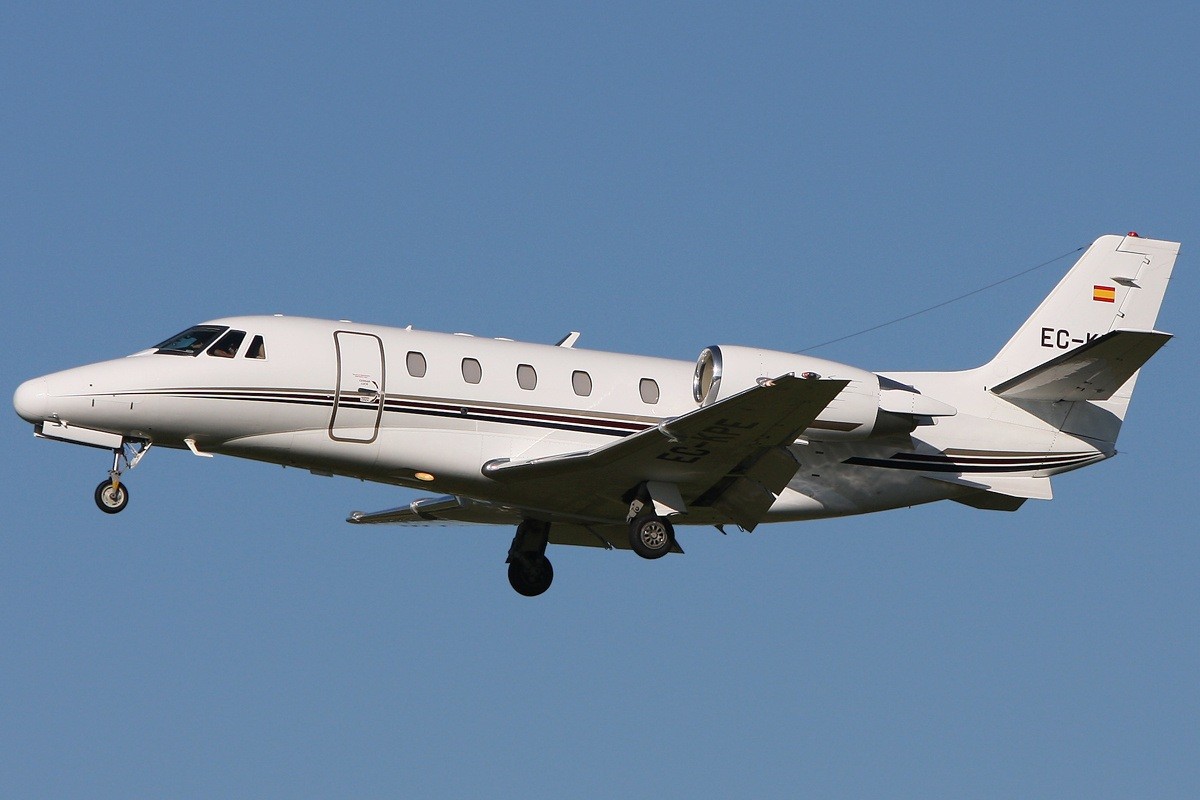
Production and Development
The Citation Excel emerged from Cessna's innovative approach to aircraft design, combining proven components from existing Citation models into a new configuration. Engineering teams adapted the Citation X fuselage, shortening it by approximately 2 feet, while incorporating the unswept supercritical wing from the Citation S/II/Ultra series and the tail assembly from the Citation V. This hybrid approach allowed Cessna to leverage existing tooling and certification data while creating an entirely new market segment.
Following FAA certification in April 1998, production commenced at Cessna's Wichita facility with remarkable efficiency. The company achieved a production rate of one aircraft every three days, delivering the 100th Citation Excel by August 2000. This rapid manufacturing pace reflected strong market demand for a midsize business jet that bridged the gap between light and heavy corporate aircraft.
The Manufacturer Legacy
Cessna Aircraft Company, founded by Clyde Cessna in 1927, had established itself as a pioneer in business aviation long before the Excel's development. The company's Citation family, beginning with the Citation I in the late 1960s, fundamentally changed corporate travel by making jet aircraft accessible to smaller companies and individuals. By the 2020s, Cessna had delivered over 7,000 Citations across all variants, making it the world's most successful business jet family.
The Excel's development occurred during a transformative period for Cessna. After Textron Inc. acquired the company in 1992, significant investment revitalized the product line following financial challenges that had halted general aviation production from 1992 to 1997. Under Textron ownership, Cessna regained its market leadership position, eventually becoming part of Textron Aviation in 2014, where it continues operations today.
Engine and Performance Specifications
Powering the Citation Excel are two Pratt & Whitney Canada PW545A turbofan engines, each producing 3,804 pounds of thrust. Later variants incorporated the PW545B and PW545C engines, with the PW545C delivering 4,119 pounds of thrust for improved hot-weather and high-altitude performance. These engines, part of Pratt & Whitney Canada's PW500 series that entered production in the mid-1990s, provided the reliability and fuel efficiency essential for business aviation operations.
The aircraft's supercritical airfoil design represented a significant technological advancement for the Citation family. This wing design optimized high-speed cruise performance while maintaining excellent low-speed handling characteristics essential for accessing shorter business aviation airports. The Excel could operate from runways as short as 3,560 feet, expanding the number of airports accessible to business jet operators.
Operational Characteristics
With a maximum cruise speed of 441 knots and service ceiling of 45,000 feet, the Citation Excel offered performance capabilities that satisfied demanding business travel schedules. Its 1,858-nautical-mile range enabled nonstop flights between major business centers, such as New York to Denver or London to Moscow. The aircraft typically operates with a two-pilot crew, though single-pilot operations are possible with appropriate certification and equipment.
The Excel's cabin, measuring 18.7 feet in length, provided seating for up to 12 passengers in various configurations. Most operators configured the cabin for 8 to 9 passengers, balancing passenger comfort with baggage capacity. The cabin's 5.7-foot height allowed most passengers to stand upright, a significant advantage over smaller business jets.
Commercial Success and Evolution
Cessna produced 308 Citation Excel aircraft before transitioning production to the improved Citation XLS variant in 2004. The XLS incorporated numerous refinements, including updated avionics, improved interior appointments, and enhanced performance capabilities. Combined Excel and XLS production exceeded 600 aircraft, demonstrating sustained market acceptance of the design concept.
Major operators included fractional ownership companies like NetJets Europe and Wheels Up, charter operators such as DC Aviation and Atlas Air Service, and numerous corporate flight departments. Joy Air operates four Citation Excels in active service, representing the type's continued relevance in contemporary business aviation.
Current Status and Legacy
Today, approximately 31 Citation Excel and XLS aircraft remain actively tracked in regular service across 19 operators worldwide. The type maintains strong residual values, with 10-year-old XLS variants trading near $4 million in the pre-owned market. This value retention reflects the aircraft's enduring utility and Cessna's reputation for manufacturing quality.
The Citation Excel's significance extends beyond its production numbers. It demonstrated that business jet manufacturers could successfully combine existing components to create new market categories, a development approach that influenced subsequent aircraft programs across the industry. The Excel's success validated the midsize business jet market segment, encouraging competitors to develop similar aircraft and ultimately expanding business aviation accessibility for companies requiring capability beyond light jets but not requiring the capacity of heavy business aircraft.