
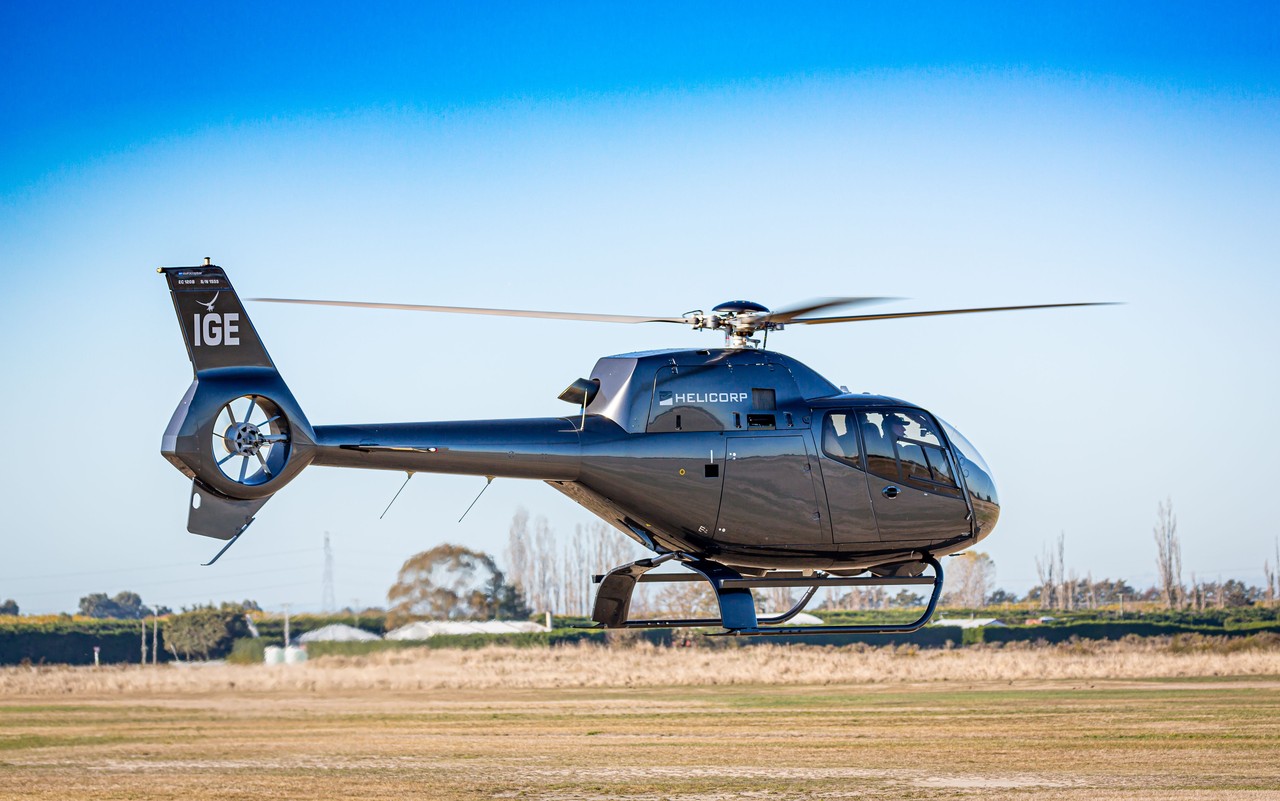
International Collaboration Success
The EC-120 represented an unprecedented level of international cooperation in rotorcraft development. Launched officially in February 1990, the project brought together four partners: Eurocopter France holding 61 percent ownership and project leadership, China National Aero-Technology Import & Export Corporation with 24 percent, Singapore Technologies Aerospace contributing 15 percent, and later Harbin Aviation Industries for Chinese production. This distribution allowed each partner to contribute specialized expertise while sharing development costs and market access.
Development and First Flight
Design work concluded by mid-1993, with assembly of the first prototype beginning in early 1995 at Eurocopter's Marignane facility. The first prototype, registered F-WWPA with construction number 1, achieved its maiden flight on June 9, 1995. A second prototype followed on July 17, 1996, supporting the certification program that culminated in JAR 27 approval on June 16, 1997.
The aircraft featured innovative design elements including a heavily glazed nose section providing exceptional pilot visibility, a streamlined fuselage, and an engine compartment positioned above the passenger cabin. This configuration drove a three-bladed main rotor system that became the helicopter's signature feature.
Production and Manufacturing
Production commenced on a limited scale in 1997, with the first production aircraft (F-WWPL, construction number 1005) flying on December 5, 1997. Initial market response proved encouraging, with more than 100 orders received by October 1998, prompting Eurocopter to increase production from four to six helicopters monthly.
The international work-sharing arrangement saw Eurocopter handling the main rotor, gearbox, final assembly, avionics, hydraulics, and electrical systems. CATIC manufactured the fuselage, fuel system, and undercarriage, while Singapore Technologies Aerospace produced composites, cabin doors, and tail units. This distribution leveraged each partner's manufacturing strengths while maintaining quality standards.
Chinese Military Service
China emerged as a major operator, ordering 150 HC-120 helicopters for the Army Aviation Unit's pilot training programs. To support this requirement, a second assembly line was established in Harbin on June 11, 2004, with capacity for 20 helicopters annually. The first Harbin-built HC-120 flew on December 29, 2004, marking successful technology transfer.
Commercial Operations
By 2008, Eurocopter had delivered more than 550 Colibris to customers worldwide. The aircraft found success in various commercial roles, from executive transport to law enforcement. In 2004, the United States Department of Homeland Security's Customs and Border Protection selected the EC-120B for its Light Sign Cutter requirement, initially ordering 15 helicopters in 2006 with five additional aircraft following.
Technical Innovation
The EC-120 was powered by a single Turbomeca Arriel turboshaft engine, providing reliable performance in the light utility category. In 2006, French company Regourd Aviation obtained EASA certification for a modified variant called the "Voyager," featuring autopilot, glass cockpit displays, and integrated avionics systems.
Airbus Helicopters continued developing the design, conducting flight tests in 2015 with demonstrator F-WMXC powered by a 4.6-liter high-compression diesel engine. This represented efforts to improve fuel efficiency and reduce environmental impact.
Eurocopter's Evolution
The EC-120 project coincided with significant changes in European aerospace. Eurocopter had formed when Aerospatiale was absorbed into the Eurocopter brand in October 1992. Later rebranding as Airbus Helicopters created continuity for the EC-120 program, which was redesignated H-120 in later years.
Global Reach
Production expanded beyond France and China, with additional assembly lines established in Australia and Brazil. Over 700 H-120 Colibris were ultimately delivered across more than 50 countries, serving over 400 operators. This global presence demonstrated the aircraft's versatility and the success of the international partnership model.
Production Conclusion
By the 2010s, annual orders had declined significantly, with only a few EC-120 helicopters ordered each year. Facing competition from Robinson's helicopter line and focusing resources on newer models like the H-125 and H-130, Airbus Helicopters terminated production in September 2017. Approximately 742 aircraft had been manufactured during the 22-year production run, establishing the EC-120 as a successful example of international aerospace cooperation while serving diverse civilian and military roles worldwide.