
Market Dominance and Commercial Success
The EC-130 transformed the commercial helicopter industry by capturing the aerial tourism market with unprecedented effectiveness. By May 2008, this helicopter had overtaken the Bell 206 as the best-selling single-engine rotorcraft globally, a remarkable achievement for an aircraft barely a decade old. In 2012, Flight International recognized the EC-130 as one of Eurocopter's best-selling rotorcraft, with 238 orders placed in 2011 alone—representing a 40 percent increase over the previous year. By 2015, the aircraft served 279 operators worldwide and had accumulated more than 1,177,000 total flight hours.
Launch Operations and Early Service
Blue Hawaiian Helicopters became the launch customer in June 2001, marking the beginning of the EC-130's commercial service career. The Hawaiian operator's success with the type demonstrated the aircraft's capability in demanding tourist operations over scenic terrain. Maverick Helicopters emerged as the world's largest single operator, building a fleet of 28 EC-130s that accumulated 60,000 combined flight hours by February 2008. By March 2015, Maverick's fleet had reached 300,000 flying hours, and the company served as launch customer for the improved EC-130 T2 variant.
The 100th EC-130 helicopter was delivered in December 2004 to Kendall-Jackson Wine Estates of California, illustrating the aircraft's appeal beyond traditional tour operators to corporate customers seeking passenger comfort and operational efficiency.
Manufacturing Evolution and Global Production
Eurocopter, originally formed from the merger of Aerospatiale in the early 1990s, developed the EC-130 as an evolution of the AS350 Écureuil family. The company later rebranded as Airbus Helicopters and continues manufacturing the aircraft today under the H130 designation. Australian test pilot Steven Page flew the first prototype on June 24, 1999, from an airfield in France, launching what would become a global production program.
Production expanded internationally to meet growing demand. In 2013, Airbus Helicopters achieved a production rate of 50 EC-130 T2 variants, with plans to increase output to 65 aircraft annually by 2014. That same year, Helibras assembled the first EC-130 T2 in Brazil, followed by the first Australian-assembled unit in December 2013. Most recently, Airbus signed a contract with Mahindra Aerostructures in April 2025 to produce main fuselage assemblies in India, with first delivery scheduled for March 2027.
Engineering Innovation and Design Philosophy
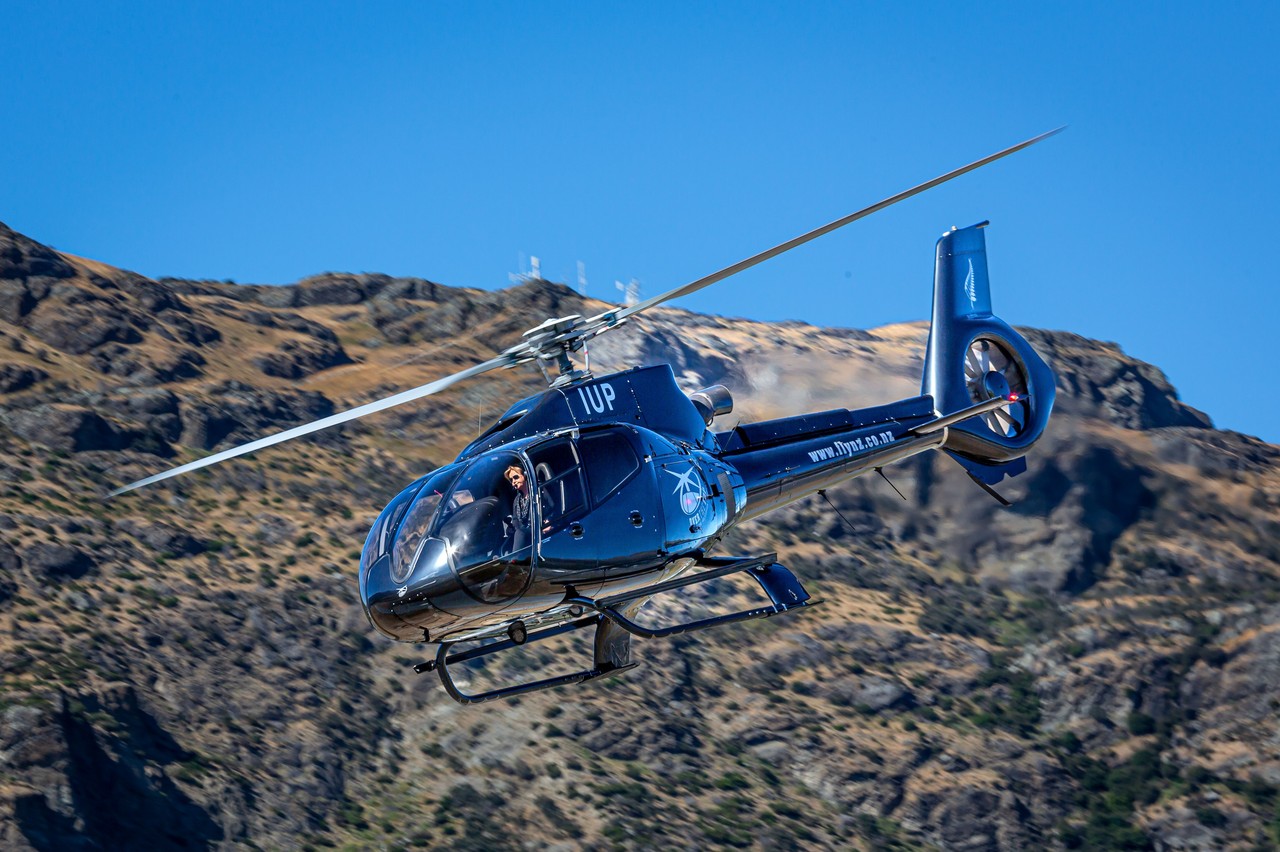
The EC-130's development centered on maximizing passenger cabin space while maintaining the proven reliability of the AS350 platform. Engineers adopted a Fenestron anti-torque device—an enclosed tail rotor system—replacing the conventional tail rotor to improve safety and reduce noise levels. This innovation proved particularly valuable for tourist operations in populated areas and noise-sensitive environments.
Key technical advances included a dual-hydraulic system for enhanced safety redundancy and Full Authority Digital Engine Control (FADEC) for simplified engine management. The wide main body provided considerably greater internal cabin space compared to the AS350, accommodating six or seven passengers in comfortable seating arrangements optimized for sightseeing operations.
Power Plant and Performance Characteristics
The single Turbomeca Arriel 2 turboshaft engine, producing 848 horsepower, provides the EC-130 with impressive performance capabilities. The helicopter achieves a cruise speed of 235 kilometers per hour and maintains a service ceiling of 23,000 feet with a rate of climb reaching 1,800 feet per minute. Its 640-kilometer range enables extended tour operations without refueling stops, while the never-exceed speed of 178 miles per hour provides operational flexibility.
The FADEC system simplifies pilot workload and enhances engine reliability, contributing to the aircraft's reputation for operational dependability across diverse climatic conditions and altitudes.
Market Evolution and Technical Advancement
By 2007, Latin American and North American markets generated the strongest demand for the EC-130, reflecting the aircraft's particular suitability for tourist operations in scenic regions. The introduction of the EC-130 T2 variant in 2012 incorporated further refinements based on operational experience, maintaining the type's competitive position in an evolving market.
Airbus developed the ACH130 as a VIP transport variant, expanding the aircraft's appeal beyond tourism to corporate transportation. In 2021, the company tested hybrid electric assist technology in an H130 to extend autorotation reaction time up to 30 seconds during engine failure scenarios, demonstrating ongoing commitment to safety enhancement.
Operational Legacy and Future Development
The EC-130's success contributed significantly to the broader Écureuil family achievement of 30 million combined flight hours by August 2016. The aircraft's spacious cabin and excellent external visibility established new standards for passenger comfort in single-engine helicopter operations, influencing subsequent designs across the industry.
With production continuing and technological development progressing through hybrid propulsion research, the EC-130 maintains its position as a cornerstone of commercial helicopter aviation, particularly in tourism and VIP transport roles where passenger comfort and operational reliability remain paramount.