
The Unfulfilled Promise
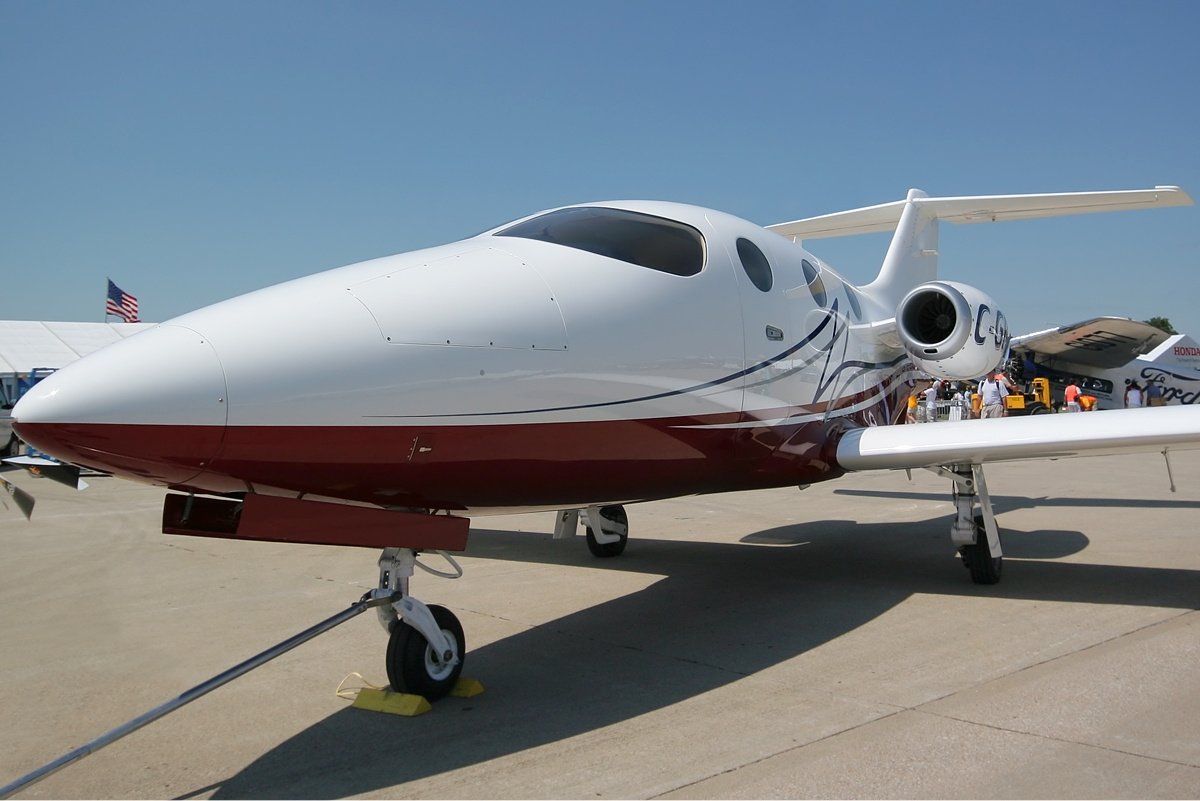
The Epic Elite emerged during the mid-2000s very light jet boom, when manufacturers across the industry rushed to capitalize on what appeared to be an insatiable demand for affordable, owner-operated jets. Epic Aircraft, founded in 2004 by Fred E. "Rick" Schrameck, had already established credibility in the experimental aircraft market with their LT turboprop kit, which began deliveries in 2006. The Elite represented Schrameck's vision of a "family" of large, sleek composite aircraft that would span from turboprops to jets.
Design Philosophy and Innovation
The Elite's design team in Bend, Oregon, conceived the aircraft as a derivative of their Dynasty project, itself based on the proven LT turboprop platform. This approach allowed Epic to leverage existing composite manufacturing expertise while venturing into uncharted territory for a kit aircraft manufacturer. The decision to use twin Williams FJ-33 turbofans reflected careful consideration of the VLJ market's needs - these engines had proven themselves reliable in certified aircraft like the Cessna Citation Mustang and offered the Full Authority Digital Engine Control systems that simplified operation for owner-pilots.
The performance targets were aggressive for a homebuilt jet: maximum cruise speeds exceeding 400 knots and a service ceiling of 41,000 feet would have positioned the Elite competitively against certified VLJs costing significantly more than the projected $2.35 million price point. The pressurized cabin and composite construction promised both comfort and efficiency that traditional metal homebuilts could not match.
The Brief Flight Test Program
In 2007, test pilots Dave Morss and Len Fox successfully completed the Elite's maiden flight, spending over 40 minutes evaluating the prototype's initial handling characteristics. This flight represented the culmination of Epic's engineering efforts and validated the basic airworthiness of their jet design. However, the limited flight test program never expanded beyond these early evaluation flights, leaving critical questions about the aircraft's full performance envelope unanswered.
Manufacturing Plans and Market Strategy
Epic initially announced the Elite as a homebuilt kit to be introduced in late 2007, following the successful model established by their LT turboprop program. The company's strategy involved leveraging the Experimental Amateur-Built category to bring the aircraft to market quickly, with plans for eventual certified production targeted for 2009. A Canadian facility in Calgary was identified for certified manufacturing, while kit production would continue at Epic's 100,000-square-foot Bend, Oregon facility.
This dual-path approach reflected industry trends where manufacturers like Lancair and Cirrus had successfully transitioned experimental designs into certified aircraft. The kit market offered immediate revenue with lower regulatory barriers, while certification promised higher volumes and broader market acceptance.
The Williams FJ-33 Powerplant
The Elite's twin Williams FJ-33 engines represented a crucial design decision that balanced performance, reliability, and cost considerations. Each engine produced 1,550 pounds of thrust, providing the twin-engine safety margins demanded by jet operators while maintaining reasonable fuel consumption. Williams International had developed the FJ-33 specifically for the emerging VLJ market, and by 2007, the engine had accumulated substantial service experience in applications ranging from military drones to the Eclipse 500 and Cessna Citation Mustang.
The FJ-33's compact size and advanced FADEC systems made it particularly suitable for owner-operated aircraft, eliminating much of the complexity traditionally associated with turbine engine management. This technological advancement was essential for Epic's vision of bringing jet performance to the experimental aircraft market.
Epic Aircraft's Turbulent History
The Elite's development occurred during a period of rapid growth and ultimate crisis for Epic Aircraft. Founded in 2004, the company had successfully delivered LT turboprop kits starting in 2006, building a reputation for innovative composite construction and impressive performance. However, the ambitious expansion into jets, coupled with the 2008 financial crisis, created unsustainable financial pressures.
On August 2009, Epic Aircraft filed for Chapter 11 bankruptcy due to mounting debts and unpaid obligations. This financial collapse effectively ended the Elite program, leaving the single prototype as the only example of what might have been a pioneering homebuilt jet. The bankruptcy also halted LT kit production and left customers with incomplete projects.
Resurrection and Refocus
In April 2010, Russian businessman Vladislav Filev, owner of S7 Airlines, acquired Epic Aircraft through a Cyprus-based firm. After visiting the Bend facility in November 2011 and experiencing a demonstration flight in an LT, Filev committed resources to reviving the company. However, the new ownership chose to focus exclusively on certifying a turboprop design rather than pursuing the Elite jet program.
This strategic decision proved prescient. Epic ceased LT kit sales in 2012-2013 and concentrated on developing the E1000 certified turboprop. The E1000 achieved first flight on December 19, 2015, received FAA certification in early 2019, and began deliveries in 2020. By 2024, Epic employed over 450 people and was producing the advanced E1000 GX variant.
Legacy and What Might Have Been
No Epic Elite aircraft fly today, and no examples are preserved in museums. The single prototype's fate remains undocumented, likely scrapped or abandoned during the company's bankruptcy proceedings. The Elite represents one of numerous VLJ projects that failed to reach market during the turbulent 2000s, joining aircraft like the Piper PiperJet and various other ambitious designs that fell victim to economic realities.
The Elite's significance lies not in its achievements but in its representation of the experimental aviation community's willingness to tackle increasingly sophisticated projects. While Epic ultimately found success with certified turboprops rather than homebuilt jets, the Elite demonstrated that small manufacturers could credibly design modern jet aircraft, even if bringing them to market proved impossible.
Today, Epic Aircraft continues operating from its Bend, Oregon facility, having built approximately 54 LT kits between 2006 and 2018, plus around 59 certified E1000 aircraft as of 2024. The company's survival and ultimate success with the E1000 program validates the engineering capabilities that created the Elite, even though the jet itself never fulfilled its promise.