
Service History
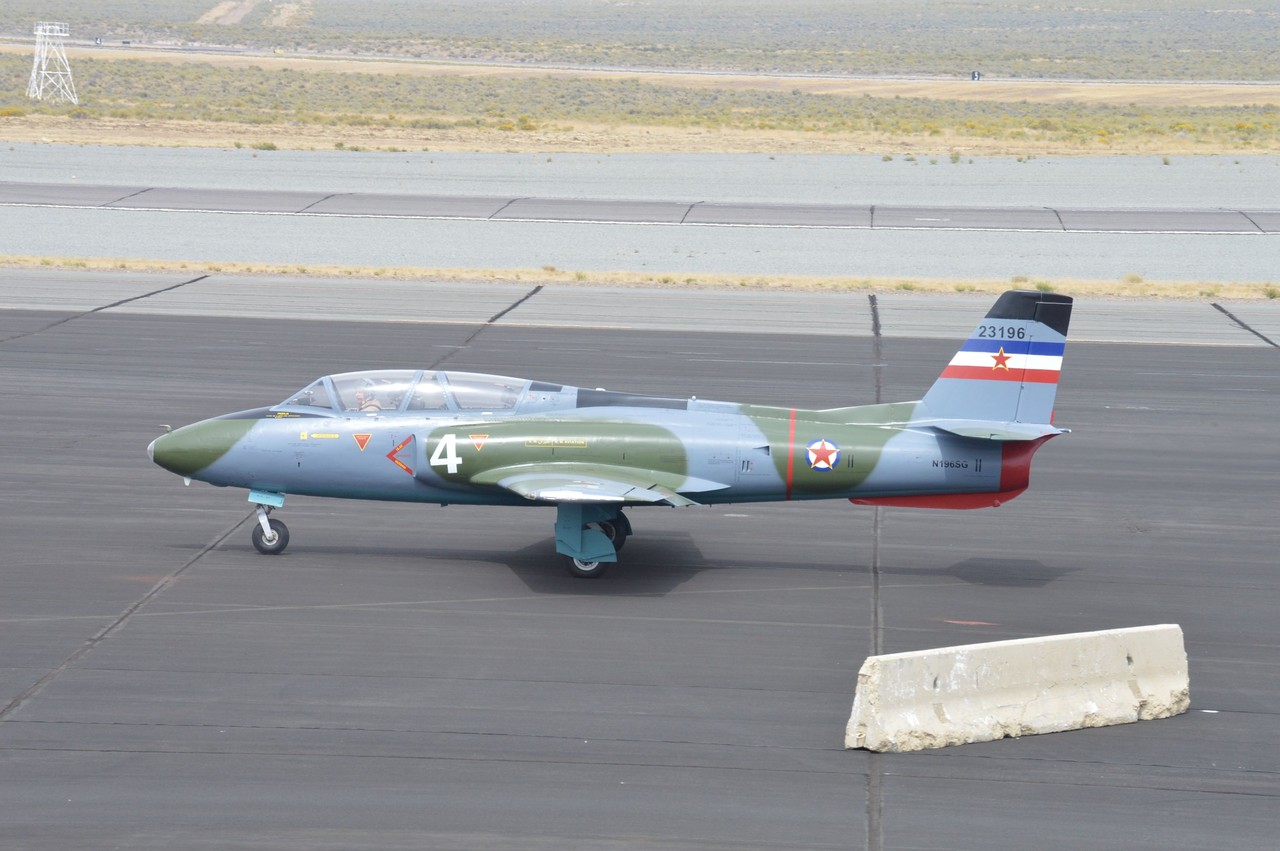
The G-2 Galeb dominated Yugoslavia's advanced jet training role for nearly five decades, completely replacing the American Lockheed T-33 Shooting Star in Yugoslav Air Force service. Of the 248 aircraft produced between 1963 and 1985, the Yugoslav Air Force operated 132 examples under the military designation N-60. The aircraft's reliability and versatility made it highly sought after internationally, with Libya acquiring over 116 aircraft, making it the largest export customer. Zambia purchased six aircraft, while Zaire also operated the type, demonstrating the Galeb's appeal beyond the Warsaw Pact nations.
Combat Operations
Despite its primary training role, the Galeb proved its combat worthiness during Yugoslavia's civil war of the 1990s, where Serbian forces employed both Galebs and the related Jastreb variant in operational sorties. The aircraft's secondary ground attack capability, built into the original design, allowed it to transition seamlessly from training to combat missions. During Libya's 2011 civil conflict, at least one Libyan Galeb was shot down by a French Rafale fighter after intentionally violating the United Nations-imposed no-fly zone, marking one of the type's final combat encounters.
The Manufacturer
SOKO (Serbska Oružna Fabrika), based in Mostar, Yugoslavia, undertook the Galeb project as their first original aircraft design after years of producing foreign designs under license. The Aeronautical Technical Institute (VTI) led the design effort beginning in 1957, responding to a specific Yugoslav Air Force requirement for a domestically-produced jet trainer. Remarkably, SOKO secured cooperation from British aerospace manufacturers, with Rolls-Royce sponsoring the project and supplying the engine technology. This collaboration represented one of the few successful East-West aerospace partnerships during the height of the Cold War, demonstrating Yugoslavia's unique non-aligned position.
Engine & Technical Innovation
The heart of the Galeb was its license-built Rolls-Royce Viper turbojet engine, which provided exceptional reliability throughout the aircraft's service life. The powerplant choice proved prescient, as the Viper's proven track record contributed significantly to the Galeb's operational success. SOKO incorporated several advanced features unusual for a trainer aircraft, including British-manufactured ejection seats and a fully pressurized cabin system that allowed high-altitude operations. The aircraft's straight-wing configuration, increasingly rare in the jet age, provided excellent low-speed handling characteristics essential for training operations while maintaining the structural simplicity that kept maintenance costs manageable.
Design Philosophy
Captain Ljubomir Zekavica piloted the prototype Galeb 1 on its maiden flight July 31, 1961, marking the culmination of four years of intensive development work. The design team deliberately chose conventional straight wings over the swept or delta configurations popular in contemporary military jets, prioritizing stability and forgiving handling over maximum performance. This decision proved wise, as the Galeb's docile flight characteristics made it an ideal trainer while its robust construction allowed operations from grass runways, a crucial capability for Yugoslavia's dispersed airfield network.
Production Legacy
Serial production commenced in 1964, with the first G-2A entering Yugoslav Air Force service on July 30, 1965. Manufacturing continued for nearly two decades, with the final aircraft completed in mid-1983 for Libyan export. The production run of 248 aircraft represented a substantial achievement for Yugoslav industry, establishing SOKO as a credible aircraft manufacturer on the international stage. The Galeb's success directly led to the development of the G-4 Super Galeb, which first flew on July 17, 1978, and entered production in 1982 with approximately 90 examples built.
Enduring Impact
The G-2 Galeb's service life extended approximately 50 years from its first flight, testament to the soundness of its basic design and the quality of Yugoslav manufacturing. The aircraft filled a crucial gap in the international training aircraft market, offering nations an alternative to American or Soviet designs during the Cold War's rigid alliance structures. Today, the Galeb stands as Yugoslavia's most successful indigenous aircraft design and remains a symbol of the technical competence achieved by the country's aviation industry. Several examples survive in museums, preserving the legacy of this pioneering Eastern European jet trainer that proved domestic aerospace industries could compete successfully on the global stage.