
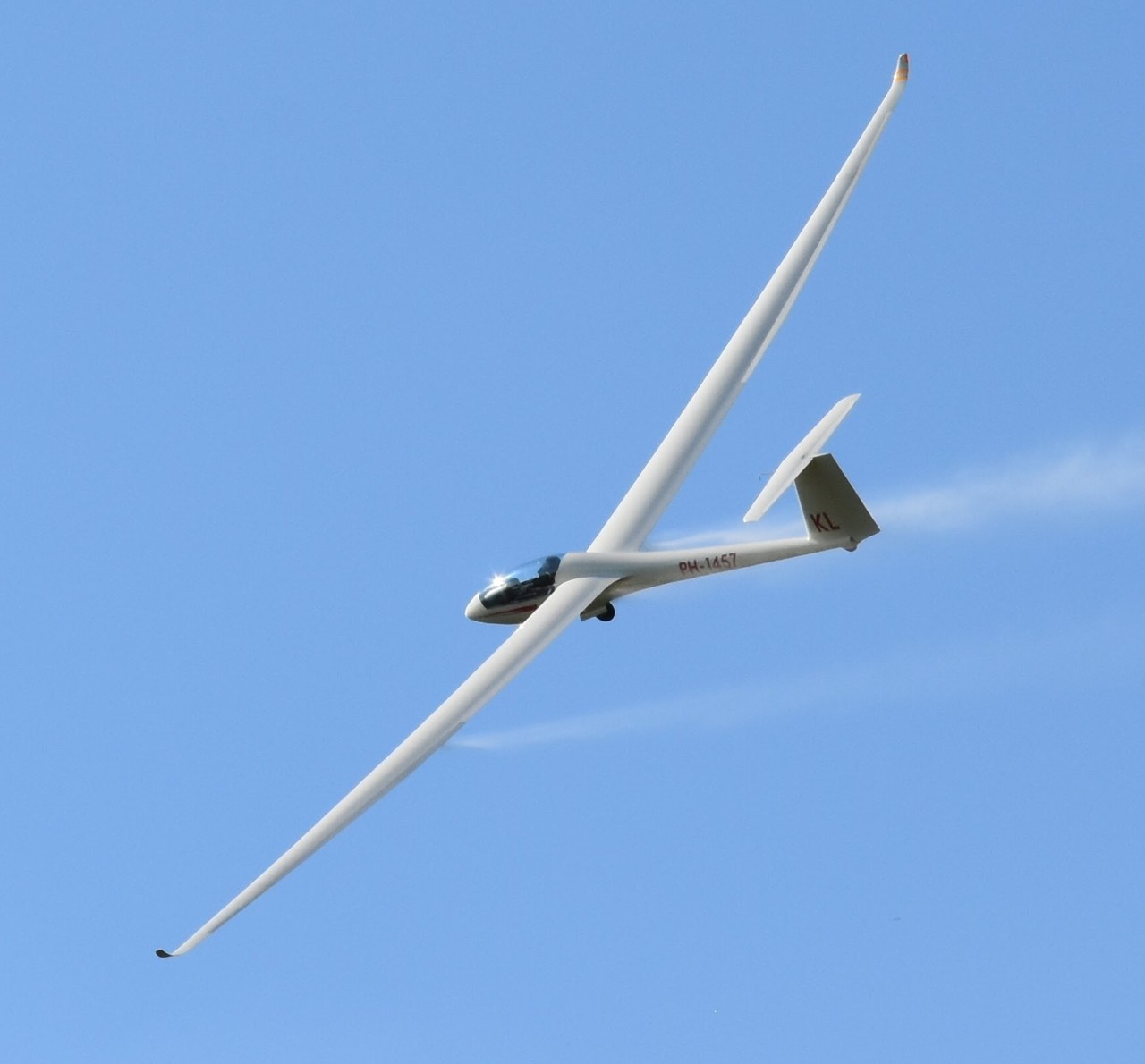
Development and Design Innovation
The LS-8T emerged from Rolladen-Schneider's experimental work with their successful LS-6-c glider in the early 1990s. Engineers modified an existing LS-6-c by removing the flap system, adjusting the wing's angle of incidence, and adding distinctive winglets. This prototype demonstrated superior performance against contemporary standard-class sailplanes during competitive trials, including the German Championships at Neustadt-Glewe, validating the design concept.
The production LS-8 design materialized in 1994 with significant refinements over the prototype. Most notably, the aircraft featured completely redesigned ailerons and achieved substantial weight reduction through elimination of the complex flap system. This simplification not only reduced manufacturing costs but also improved aerodynamic efficiency by creating cleaner wing surfaces.
Engine Installation and Technical Innovation
Peter Wright, drawing from Formula 1 engine technology expertise, designed the original turbo variant's powerplant installation. The prototype LS-8-t featured an innovative configuration where the Solo 2325 engine remained fixed within the fuselage while the propeller extended rapidly through a pneumatic mechanism connected by a belt drive system. Carbon fiber aerofoil-section pylons housed the propeller assembly, with pneumatic doors controlling air intake and exhaust flows.
This sophisticated system allowed pilots to start the engine using an electric starter motor before deploying the propeller with the powerplant already running. A small alternator continuously recharged both the battery and pneumatic reservoir during operation. However, Rolladen-Schneider ultimately determined this complex arrangement too expensive and mechanically intricate for series production.
The production LS-8T adopted a more conventional approach, retaining the reliable Solo 2325 single-cylinder engine but simplifying the deployment mechanism. Modern versions manufactured by DG Flugzeugbau incorporate the company's proprietary DEI NT engine control system and feature electric rather than hydraulic propeller extension.
Manufacturing History and Corporate Transition
Rolladen-Schneider launched LS-8 series production in 1995, building approximately 36 examples of the LS-8-b and LS-8-t variants combined by the early 2000s. By December 2005, total production across all LS-8 subtypes reached 491 aircraft. Despite this commercial success, Rolladen-Schneider faced financial difficulties and eventually ceased operations.
Following what industry sources describe as "a slightly acrimonious court battle," DG Flugzeugbau acquired the LS-8 design rights and manufacturing capabilities. DG subsequently implemented modifications including updated mainwheel assemblies, revised turbo systems, and different model designations while maintaining the aircraft's fundamental design characteristics.
Performance and Operational Characteristics
The LS-8T weighs 245 kg empty and can accommodate a maximum takeoff weight of 525 kg, providing substantial water ballast capacity of 202 kg for competitive soaring. Measuring 6.72 meters in length with a height of 1.33 meters, the aircraft offers wingspan configurations of either 15 meters for standard-class competition or 18 meters for enhanced performance.
Pilots appreciate the LS-8T's combination of competitive capability and forgiving flight characteristics. The aircraft demonstrates gentle handling qualities that make it suitable for both club flying and serious competition work. Maximum speed reaches approximately 280 km/h, while the sustainer engine provides valuable climb capability for returning to home airfields or escaping challenging weather conditions.
Competition Success and Market Position
The LS-8 series achieved remarkable success in both competition soaring and leisure markets. Its performance credentials attracted serious competitors, while the aircraft's docile handling characteristics appealed to recreational pilots seeking high-performance capabilities without demanding flight characteristics. Rolladen-Schneider specifically developed the longer-wing variants and turbo configuration to address diverse market segments.
The aircraft's competition potential stemmed from its exceptional glide performance and responsive controls, enabling pilots to maximize thermal efficiency and cross-country speeds. Simultaneously, its predictable stall characteristics and stable flight envelope made it accessible to less experienced pilots transitioning from training gliders.
Current Status and Legacy
DG Flugzeugbau continues manufacturing the LS-8 series today, maintaining the design's relevance in modern soaring competitions. The original prototype LS-8-t, converted back to standard configuration, remains active on the British BGA register as the LS-8-PW. This aircraft holds unique distinction as the only LS-8 currently listed on the CAA EASA Annex II register due to its prototype status and use of unidirectional carbon fiber wing skins.
Production variants returned to woven carbon fiber construction after manufacturers encountered increased costs and handling difficulties with unidirectional materials. The LS-8T's enduring popularity demonstrates the fundamental soundness of Rolladen-Schneider's original design philosophy, combining competitive performance with operational practicality in a configuration that remains relevant decades after its introduction.