
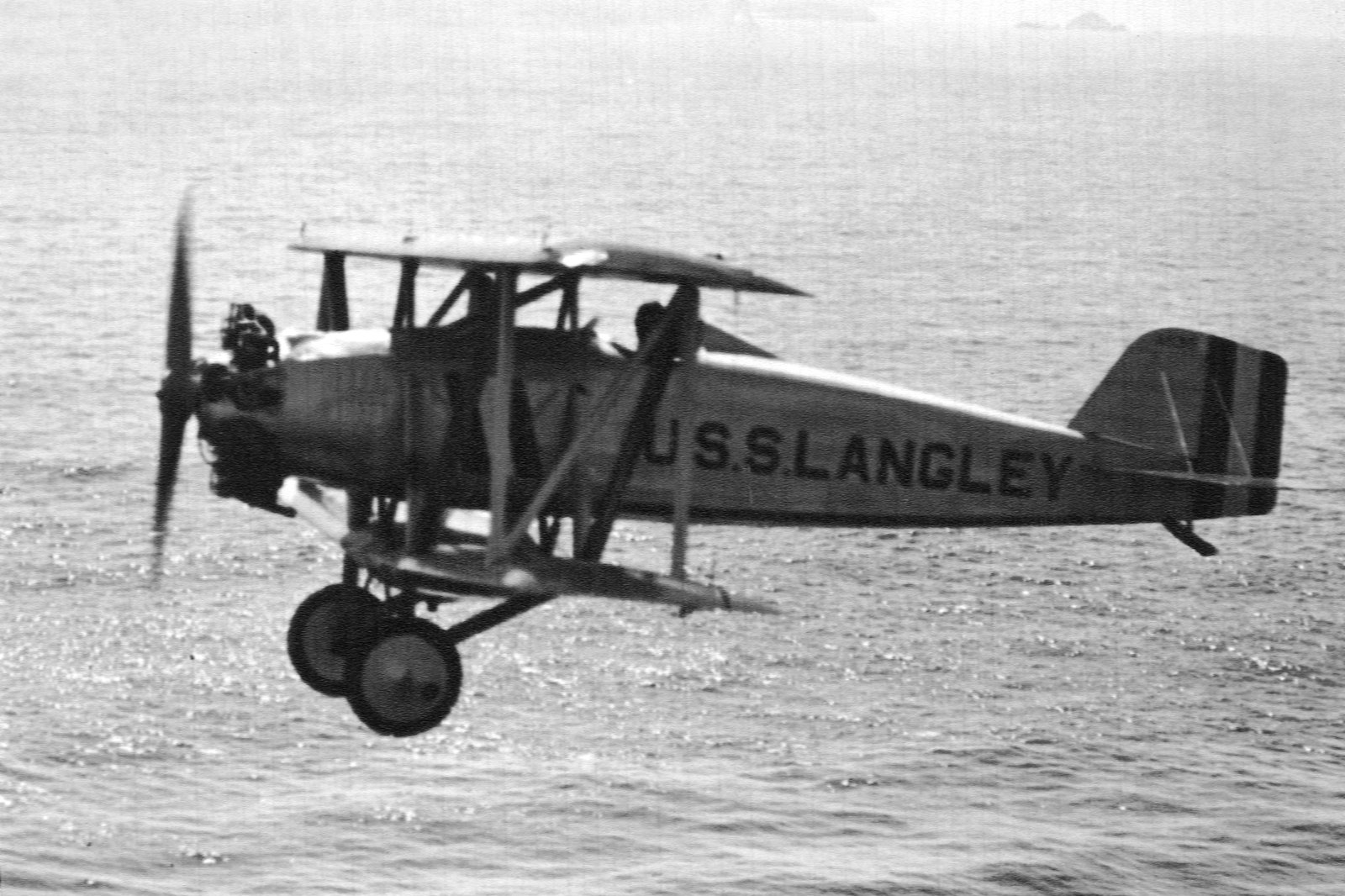
The Naval Aircraft Factory TS-1 (also known as the Naval Aircraft Factory/Curtiss TS-1) holds a significant place in aviation history as the first American fighter aircraft designed from its inception for carrier-based operations, rather than being an adaptation of an existing landplane. Developed by the U.S. Navy's Bureau of Aeronautics, the aircraft entered service in 1922 and remained in use through the late 1920s.
Production of the TS-1 was split between two entities. The Naval Aircraft Factory (NAF), established in 1917 at the Philadelphia Naval Shipyard, produced the initial prototypes and a small batch of aircraft. To meet Navy requirements, Curtiss (the Curtiss Aeroplane & Motor Co.) was contracted to build the majority of the fleet. Of the 46 total airframes completed, 34 were manufactured by Curtiss, leaving 12 produced by the NAF. While the NAF's aircraft production role ended after World War II, the Curtiss lineage continues today through the Curtiss-Wright Corporation.
Technically, the TS-1 was a two-bay biplane featuring an open cockpit and fixed landing gear. A key design versatility was its ability to be converted into a twin-float seaplane, allowing it to be launched via catapult or recovered by crane from battleships, cruisers, and destroyers. It was powered by a single 200 hp (150 kW) Lawrance J-1 nine-cylinder air-cooled radial piston engine. For armament, the fighter was equipped with two fixed, forward-firing 0.30 in (7.62 mm) Browning machine guns.
In operational service, the TS-1 was instrumental in developing early U.S. Navy carrier doctrine. It operated from the USS Langley (CV-1), the Navy's first aircraft carrier, where Fighter Squadron VF-1 utilized the type to refine deck handling, takeoff, and landing tactics around 1923. Beyond carrier decks, the TS-1 served in observation and spotting roles with VO-1 and was deployed to field bases in Haiti by 1927. Performance specifications included a maximum speed of 131 mph, a service ceiling of 14,400 ft, and a range of 468 miles. The elemental design of the TS-1 eventually served as the basis for the subsequent Curtiss F4C fighter.