
Design and Development
The F-22 Pinguino emerged from the drawing board of renowned Italian aircraft designer Stelio Frati, marking his 22nd aircraft design. Frati conceived the Pinguino as a departure from his earlier SF.260, prioritizing docile handling characteristics and ease of use over pure high-end performance. The design philosophy centered on creating a two-seat aerobatic trainer that would appeal to a broader market while maintaining full aerobatic capability.
Under the technical direction of Pasquale De Rosa, General Avia developed the aircraft through prototype testing and approximately 30 pre-production models. De Rosa's engineering expertise proved crucial in optimizing manufacturing processes, reducing assembly time from 6,000 hours to 2,000 hours through hundreds of certified modifications. This dramatic improvement in production efficiency demonstrated the Italian manufacturer's commitment to precision engineering.
The Manufacturer
General Avia operated from its factory in Perugia, Italy, during the 1990s, representing the Italian aviation industry's emphasis on aesthetic excellence and engineering precision. The company built aluminum airframes to standards comparable to business jets, reflecting a philosophy that prioritized quality and beauty over pure commercial considerations. However, this approach ultimately proved commercially unsustainable.
By 1998, General Avia was described as being on "life support" before declaring bankruptcy shortly thereafter. The company's demise marked the end of another ambitious Italian aviation venture that valued artistry and technical excellence above market pragmatism. Today, General Avia no longer exists, leaving the F-22 as a testament to Italian craftsmanship from aviation's golden age of independent manufacturers.
Engine Variants and Performance
The F-22 family utilized Textron Lycoming flat-four air-cooled piston engines across multiple variants, each tailored to specific performance requirements. The base F-22/A featured a Lycoming O-235-N2C producing 116 horsepower with 105 liters of fuel capacity. The F-22/B upgraded to 160 horsepower from the same O-235-N2C engine while increasing fuel capacity to 135 liters and offering retractable landing gear as an option.
The high-performance F-22/C variant mounted a Lycoming O-360-A1A engine generating 180 horsepower, supported by 160 liters of fuel capacity. This variant achieved a maximum speed of 305 kilometers per hour (190 mph) and could climb at 7.5 meters per second. The specialized F-22/R Sprint featured either an O-320-D1A or O-320-D2A engine producing 160 horsepower, equipped with a constant-speed propeller and retractable landing gear as standard equipment.
General Avia also developed the experimental F-220 Airone prototype, powered by a 200-horsepower Lycoming IO-360-A1A engine with 245 liters of fuel capacity. This four-seat variant featured cabin doors and represented the company's attempt to expand the design's market appeal.
Flight Characteristics and Certification
The F-22 earned praise for its precise handling during aerobatic maneuvers, excelling in rolls, loops, and spins while maintaining docile characteristics during normal flight operations. Pilots appreciated the aircraft's forgiving landing qualities and predictable behavior throughout its flight envelope. The design achieved certification for aerobatic flight with load factors of +6g to -3g, meeting the demanding requirements for professional aerobatic training.
International recognition came through certifications in Italy, the United States, United Kingdom, Netherlands, France, and New Zealand. The aircraft received FAA Type Certificate Data Sheet A75EU and later EASA Specific Airworthiness Specification SAS.A.053, issued on August 20, 2010. These certifications validated the design's safety and performance across multiple regulatory environments.
Operational Service
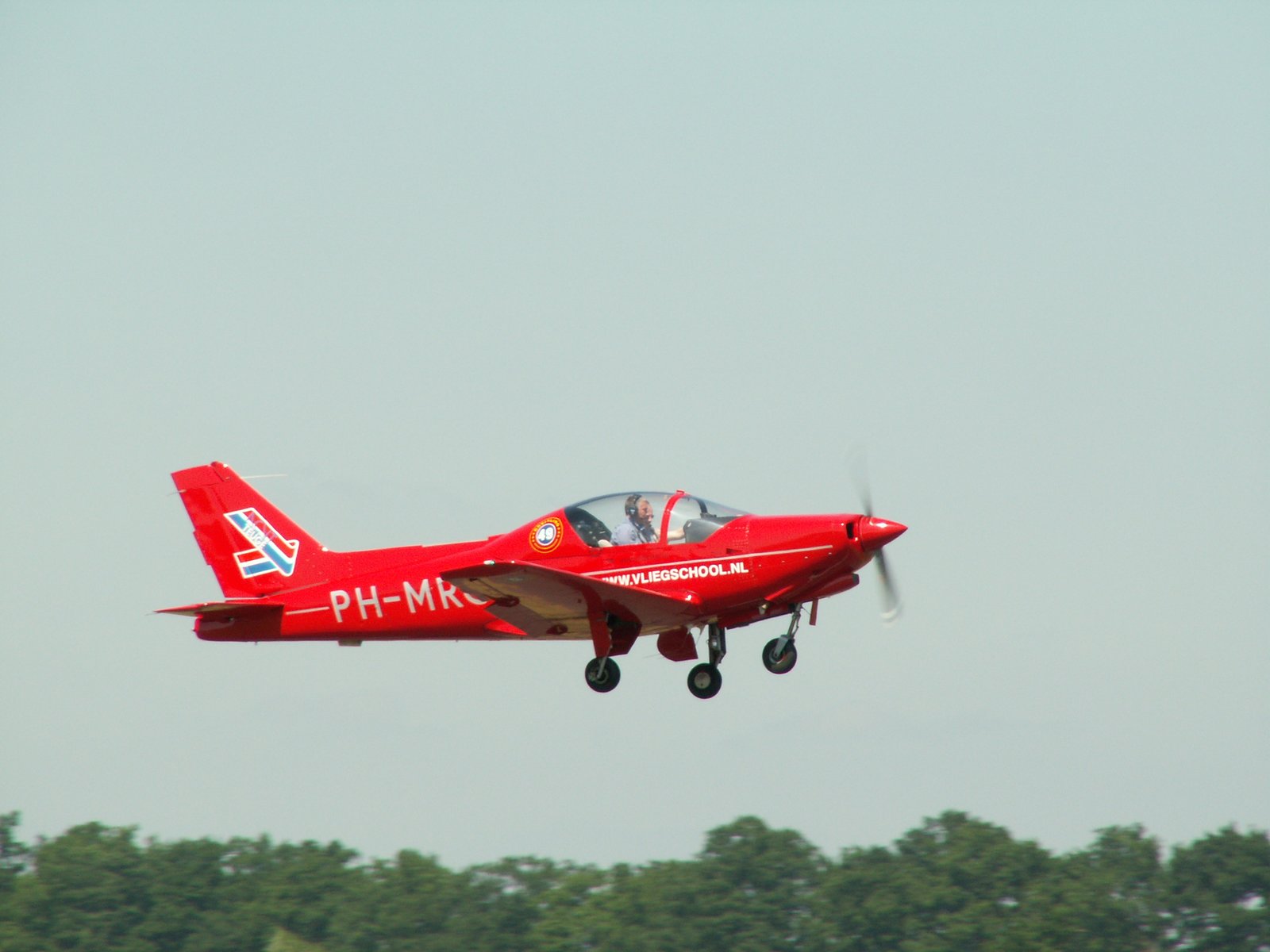
The F-22 found service as a military trainer in several countries, though specific air forces remain undocumented in available records. The Dutch aerobatic team Red Sensation operated the F-22/C variant, demonstrating the aircraft's capabilities in competitive aerobatic flight. This high-profile use showcased the Pinguino's precision and reliability under demanding conditions.
Civilian operators included organizations like ACVT Teuge - Aero Company in the Netherlands, which operated F-22C Sprint construction number 023, registered as PH-MRG. The aircraft served primarily in training roles and private touring applications, where its combination of performance and aesthetics appealed to discerning pilots.
Production and Legacy
General Avia's production run remained limited, constrained by the company's financial difficulties and the specialized nature of the aerobatic training market. Following the prototype phase and approximately 30 pre-production aircraft, mass production commenced but ended with the company's bankruptcy in the late 1990s. Individual construction numbers like 023 indicate serial production reached at least the low dozens.
Today, surviving F-22 Pinguinos represent Stelio Frati's legacy of elegant aircraft design, admired for their beauty and precise handling characteristics. While the type never achieved commercial success, aviation enthusiasts recognize the F-22 as embodying Italian craftsmanship and engineering artistry. The aircraft's limited production and the manufacturer's demise have made surviving examples increasingly rare, with potential noted for future revival under different ownership.
The F-22 Pinguino stands as a testament to 1990s light aircraft development, prioritizing handling excellence and aesthetic appeal in an era increasingly dominated by cost considerations and mass production techniques.