
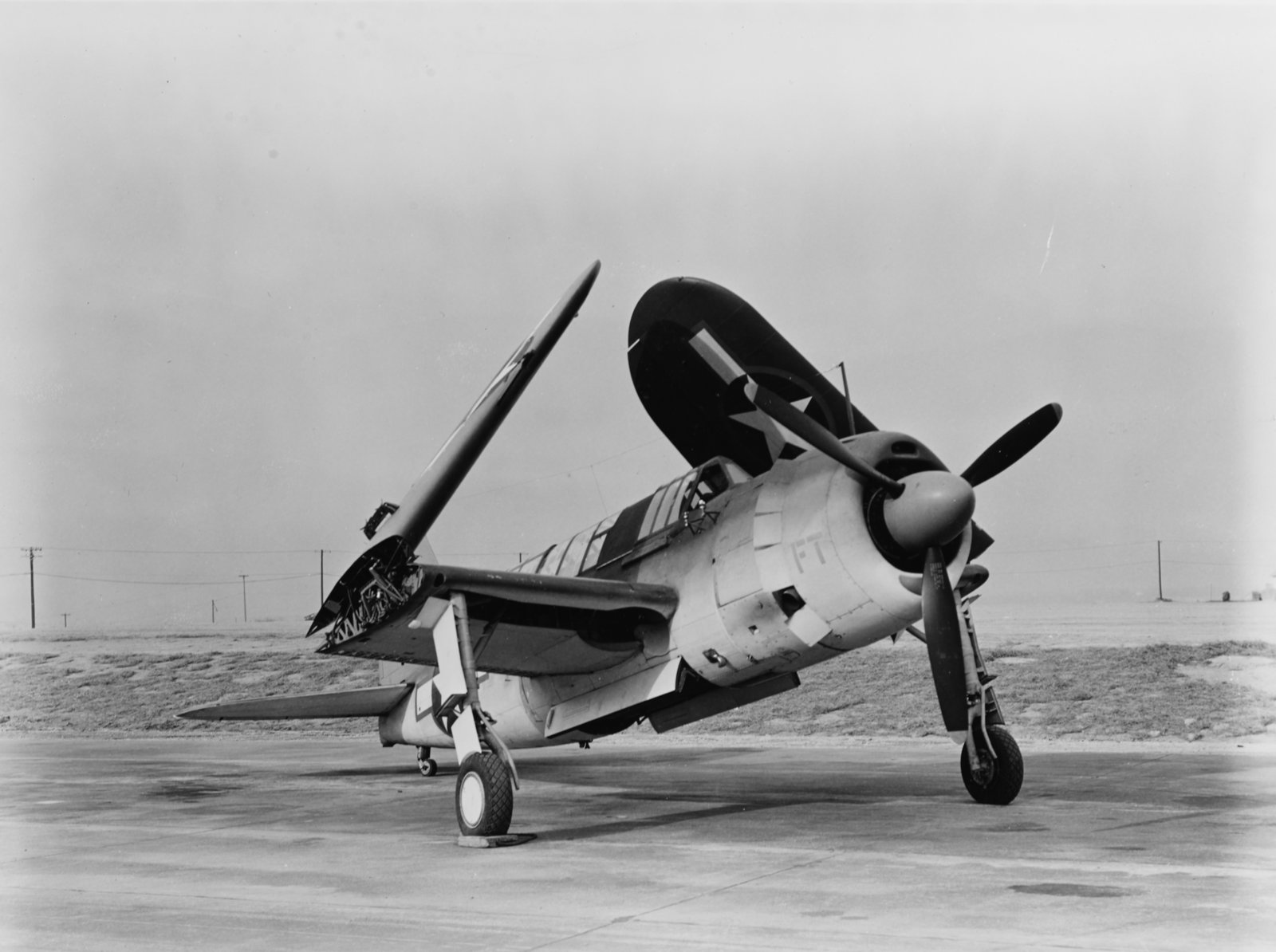
The Brewster SB2A Buccaneer (Brewster Model 340) was a two-seat, single-engine, mid-wing scout and dive bomber developed by the Brewster Aeronautical Corporation during World War II. Intended as a modernized naval strike aircraft, it featured an all-metal construction and an internal bomb bay designed to carry a 1,000 lb bomb load (either one 1,000 lb or two 500 lb bombs) to reduce drag. The aircraft was armed with up to eight .30-caliber machine guns: two in the forward fuselage, four in the wings, and two in a dorsal turret operated by the observer-gunner.
Production took place between 1942 and 1944, with a total of 771 aircraft built. The program began with significant orders, including a British order for 750 aircraft in July 1940 (designated the Bermuda) and a U.S. Navy order for 140 bombers on December 24, 1940. Additionally, the Dutch government-in-exile ordered 162 aircraft for the Dutch East Indies, though these were eventually taken over by the U.S. Navy as SB2A-4s. While France and Australia also placed orders, the French order was transferred to Britain and the Australian order was cancelled before delivery.
Technically, the SB2A-4 was powered by a Pratt & Whitney R-2600-8A 14-cylinder radial piston engine producing 1,700 hp. This configuration allowed for a maximum speed of 275 mph at 12,000 ft and a service ceiling of 25,400 ft. However, the aircraft became overweight during development, leaving it underpowered and structurally weak. The prototype XSB2A-1 first flew on June 17, 1941, but the production models proved unsuitable for their intended combat roles.
Despite the large production numbers, no SB2A or Bermuda is recorded as having flown in combat. The U.S. Navy utilized them primarily as target tugs and ground maintenance trainers. The U.S. Marine Corps used SB2A-4s as trainers for the first night-fighter unit, VMF(N)-531. The U.S. Army Air Forces received 108 Bermudas (designated A-34), but found them unsuitable even for training, using them as utility "hacks" or artillery targets. The RAF similarly found the Bermuda unfit for combat, converting most to target tugs.
This failure, combined with severe management and quality-control issues at Brewster's plants in Long Island City, Newark, and Johnsville, led to the dissolution of the Brewster Aeronautical Corporation on April 5, 1946. Today, only two examples are known to exist, including one at the Pima Air & Space Museum.