
Service History
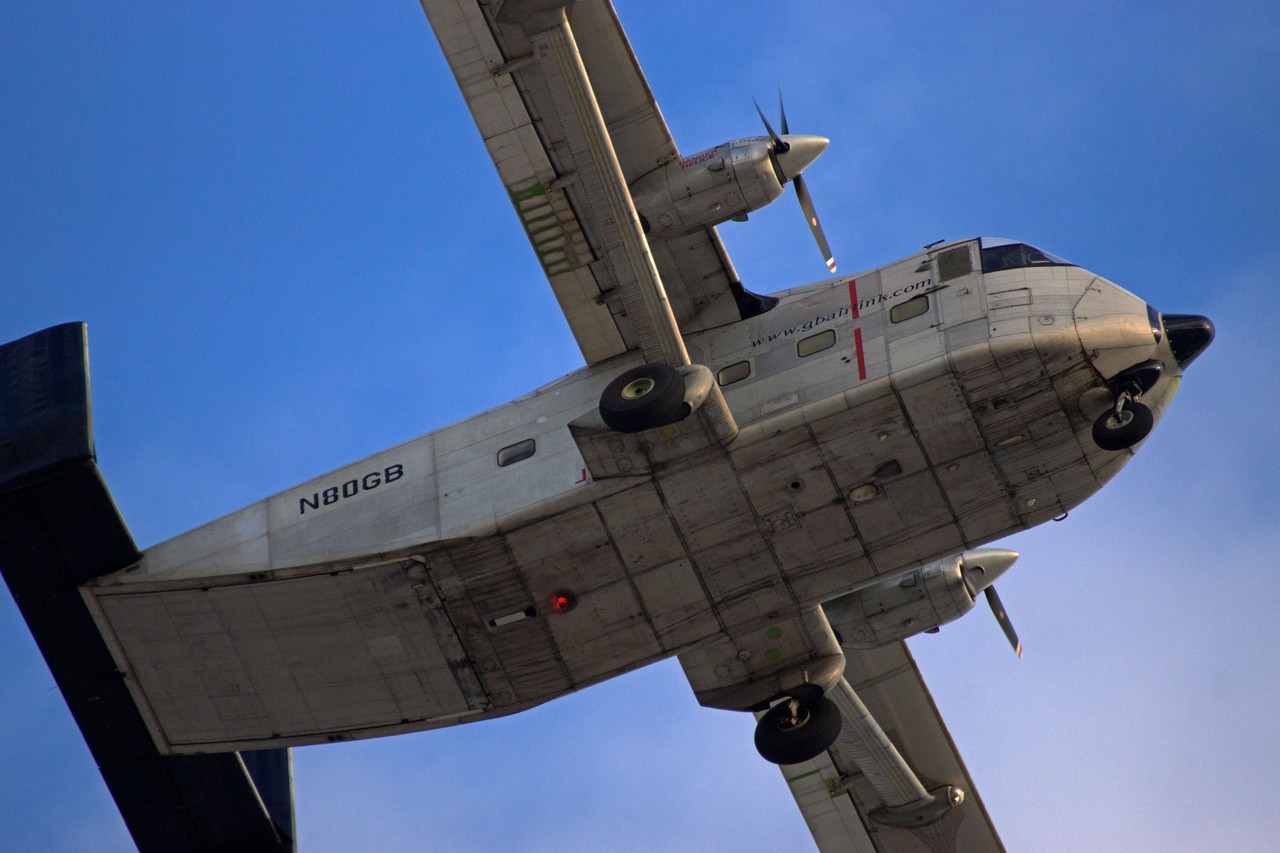
The Skyvan carved out a unique niche in aviation by providing reliable STOL capability to operators who needed to access unimproved airfields worldwide. Of the 154 aircraft produced, 60 were military variants (designated Skyvan 3M) delivered to 19 countries, while the remainder served civilian roles ranging from commuter airlines to specialized operations. The type became particularly beloved by skydiving schools, with companies like Skydive Perris operating five of the approximately 40 aircraft that remain in existence today. Its ability to operate from short, unpaved strips made it invaluable for bush operations, cargo transport, and passenger service to remote locations that larger aircraft could not reach.
Military Operations
The Skyvan 3M military variant proved its versatility in conflicts and peacekeeping operations across multiple continents. During the 1982 Falklands War, the Argentine Air Force employed Skyvans for transport missions. The aircraft could carry 16 paratroopers for airborne operations or 22 fully equipped troops for tactical transport, with medical evacuation capability for 12 stretchers when configured for casualty evacuation. Military operators included the air forces of Argentina, Austria, Botswana, Ecuador, Ghana, Indonesia, Nepal, Singapore, Thailand, United Arab Emirates, and Yemen, among others. As of recent records, both Guyana and Oman continue operating Skyvans in military service, demonstrating the type's exceptional longevity and reliability.
The Manufacturer
Short Brothers, founded in 1908 by Oswald Short and brothers Eustace and Gordon, established itself as a pioneer in early aviation through balloon manufacturing and later aircraft production. The Belfast-based company gained prominence building flying boats and bombers during both world wars. Following nationalization by the UK government in the 1970s, Shorts became part of Bombardier Aerospace in 1989. The company's Belfast operations were acquired by Spirit AeroSystems in 2021, continuing the aerospace manufacturing tradition that began over a century ago. All 154 Skyvans were manufactured at Sydenham Airport (now George Best Belfast City Airport) in Belfast, Northern Ireland.
Engine Development and Technical Innovation
The Skyvan's path to success involved overcoming significant powerplant challenges. The first prototype (G-ASCN) initially flew with Continental GTSIO-520 piston engines producing 390 shaft horsepower each, but Short Brothers recognized that turboprop power was essential for the aircraft's mission requirements. Early production aircraft used Turbomeca Astazou II turboprops rated at 520 shaft horsepower, but these engines proved inadequate in hot and high-altitude conditions, limiting sales particularly in the crucial U.S. market. The solution came with adoption of the Garrett TPE331 (later Honeywell TPE331) turboprop engines, each producing 715 equivalent shaft horsepower. This powerplant change transformed the Skyvan into a reliable performer capable of global operations.
Design Philosophy and Pilot Experience
The Skyvan's unconventional appearance reflected its designers' focus on utility over aesthetics. The high-aspect-ratio wing, supported by struts and derived from earlier designs including the Miles Aerovan, provided excellent short-field performance. The square-section fuselage maximized cargo volume while the large rear cargo door and beaver-tail ramp facilitated rapid loading and unloading operations. Fixed landing gear simplified maintenance while reducing operating costs, crucial factors for operators working in remote locations with limited ground support facilities. The aircraft required a two-person crew and featured a cabin height of 6 feet 6 inches, allowing personnel to move about freely during flight operations.
Production Legacy and Current Status
Deliveries began in 1966 and continued for exactly two decades, with the final aircraft delivered to the Omani Air Force in April 1986. The relatively modest production run of 154 aircraft reflected the Skyvan's specialized market position rather than any deficiency in design. The type's influence extended beyond its own production numbers through its role in developing Short's subsequent 330 and 360 series aircraft, which adapted the Skyvan's utility transport concept to larger, more commercially viable configurations. The Short 330 later served the U.S. military as the C-23 Sherpa.
Today, approximately 40 Skyvans remain in existence worldwide, with the majority serving civilian operators, particularly skydiving schools that value the aircraft's large rear door and stable flight characteristics. The type's continued operation more than 60 years after its first flight testifies to the soundness of its fundamental design concept and the quality of its construction. Museums and collectors preserve examples of this distinctive aircraft that proved that unconventional appearance could conceal exceptional utility and reliability.